Room Divider Without Drilling? The Honest Answer - and What a Steel-and-Glass Partition Actually Needs
The short answer: a room divider that requires absolutely no drilling exists only as a freestanding folding screen or movable partition panel. A proper, permanent steel-and-glass wall is a different product entirely - it is anchored to the floor, wall, or ceiling with screws and fixings. The made-to-measure room divider from Manufaktur X belongs firmly in that second category: custom-built, bolted in place, and designed to last. This guide explains both options honestly, so you can decide which one actually fits your situation.
Two Very Different Products That Share a Name
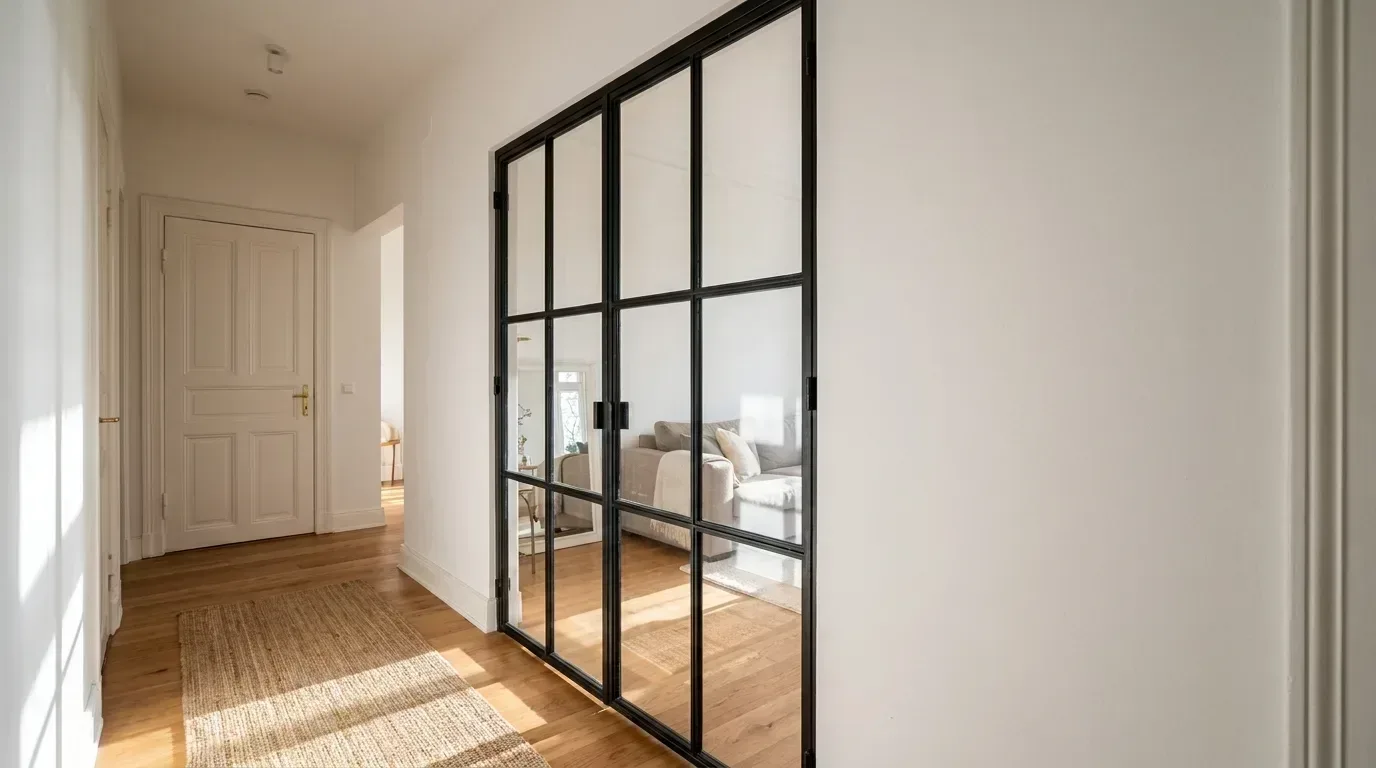
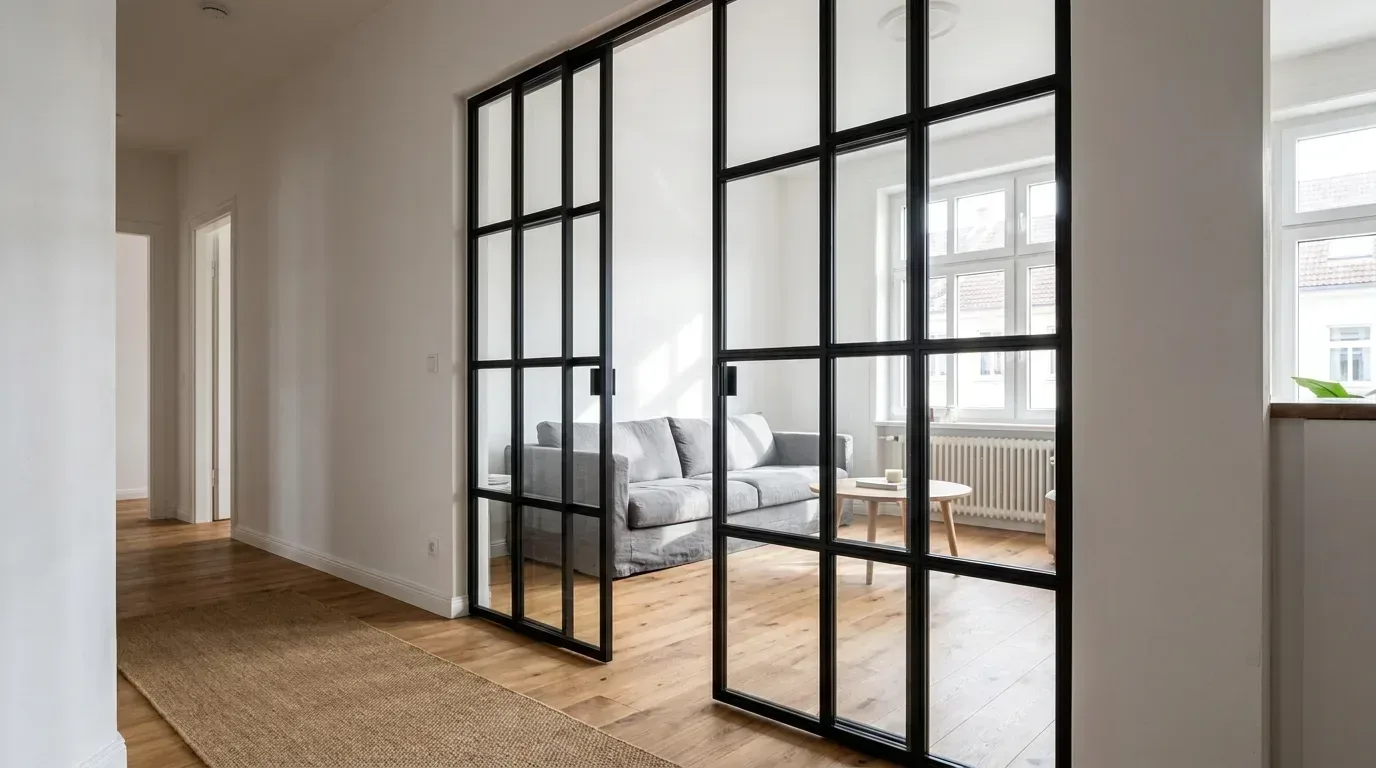
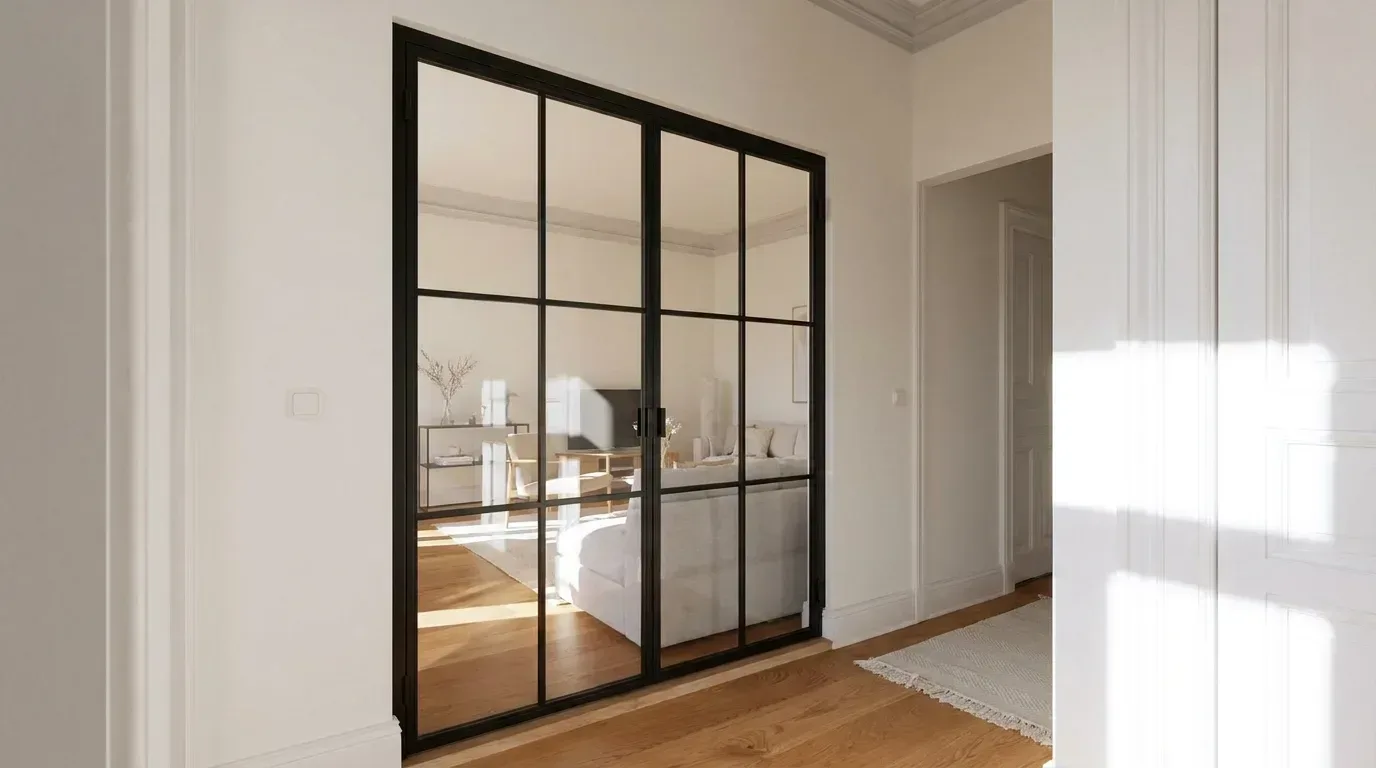
When people search for a "room divider without drilling," they usually have one of two things in mind. The first is a freestanding folding screen - a decorative panel that stands on its own base and can be moved at any time. The second is a floor-to-ceiling steel-and-glass partition that divides a room cleanly and permanently. Both are called "room dividers," but they solve completely different problems.
Manufaktur X makes the second kind. Our room divider is a structural steel-and-glass wall, powder-coated and fixed in place. If you specifically need something you can reposition next week or take with you when you move, that is a different product - and one we do not manufacture. We think it is worth being upfront about that rather than letting you find out after you have already spent time configuring.
The Drill-Free Option: Freestanding Folding Screens
A genuine no-drill solution means a freestanding screen: a folding panel or room divider that relies entirely on its own base or footprint to stay upright. No holes, no fixings, no permanence. You can move it this afternoon, lend it to a friend, or fold it away when guests arrive. For a temporary dressing area behind a bed, a loose visual buffer in a studio, or a flexible arrangement that changes with your needs, it is a practical choice.
The trade-offs are real, though. A freestanding screen is inherently less stable than a fixed wall - it can tip, especially in homes with children or pets. It rarely reaches the full ceiling height, leaving a gap at the top that undermines the sense of separation. And because it relies on visual suggestion rather than a true structural boundary, it works as a soft divider rather than a defined room edge. For open-plan flats where you want to create a genuine home office or a separate sleeping area that actually feels separate, a folding screen tends to fall short.
Why a Fixed Steel-and-Glass Wall Needs to Be Drilled
A powder-coated steel frame carrying large glass panels across a full room height generates significant load - both its own dead weight and the dynamic forces of daily use. Anchoring that frame into the floor and the adjoining wall is not a bureaucratic requirement; it is simply what keeps a heavy, glass-filled structure stable over years of use. The fixings are what hold everything plumb, prevent any lateral movement, and ensure the glass panels sit securely in the frame.
In practical terms, this means drilling into the floor slab and the side wall. The number and size of fixings depends on the overall dimensions of the partition. A wider or taller wall needs more anchor points, not fewer. There is no clamping system, no tension rod, and no adhesive alternative that achieves comparable long-term stability for a full-height glass wall of this scale.
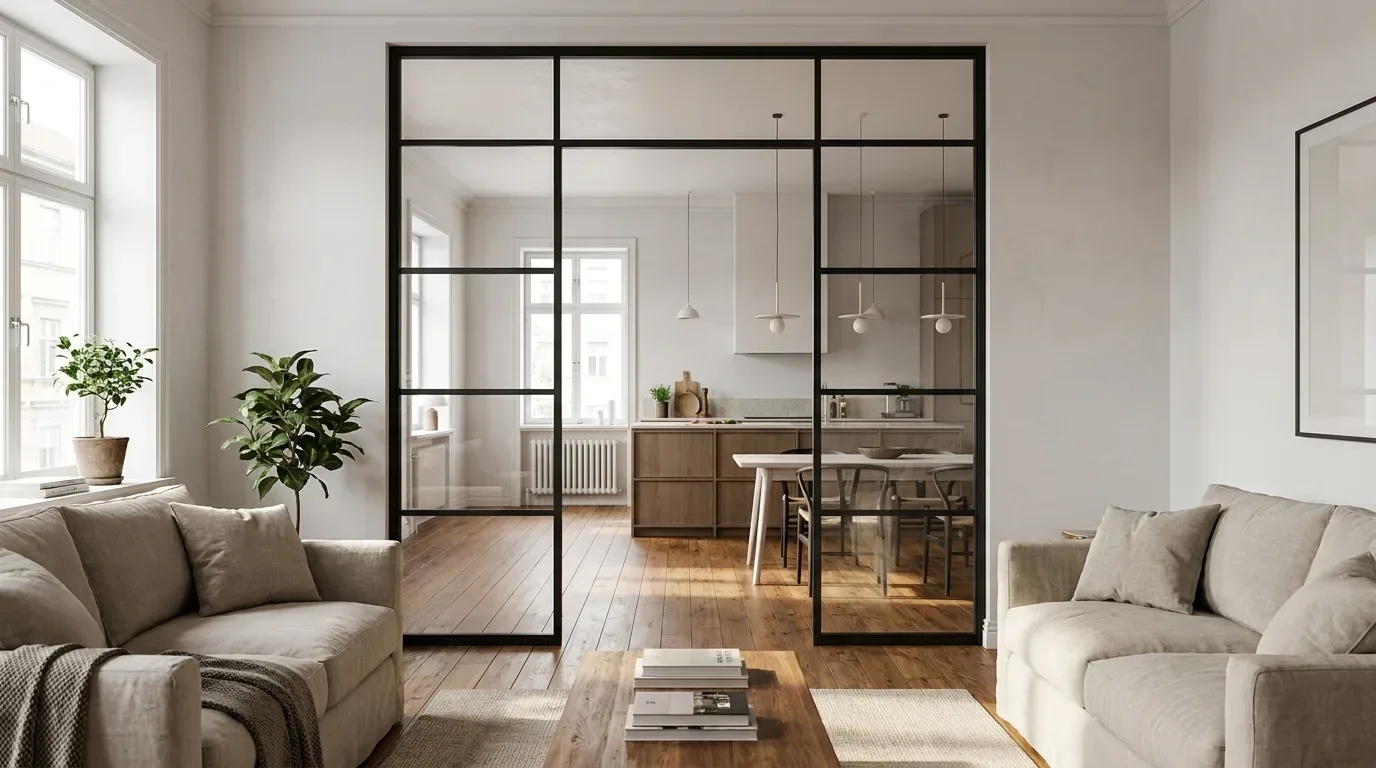
In our experience, customers who initially hope to avoid drilling almost always come around once they see the finished installation. The solidity of a properly anchored steel-and-glass partition - the way it stands completely still, defines the space clearly, and lets light pass without any visual wobble - is the quality that no freestanding screen can replicate.
Freestanding Screen vs. Fixed Steel-and-Glass Partition: A Direct Comparison
| Feature | Folding Screen (no drilling) | Fixed Steel-and-Glass Wall (drilled) |
|---|---|---|
| Fixing method | None - freestanding | Screwed into floor, wall, or ceiling |
| Drilling required | No | Yes |
| Stability | Low - can tip over | High - permanently stable |
| Height | Usually well below ceiling height | Floor-to-ceiling, made to your exact measurement |
| Separation effect | Decorative, soft visual screen | Clear, defined spatial boundary |
| Repositionable | Yes, at any time | No - permanent installation |
| Available from Manufaktur X | No | Yes |
Renting Your Home? What Drilling Actually Means in Practice
Across most European countries, tenants are permitted to drill into walls and floors for normal domestic purposes - hanging shelves, fitting curtain rails, mounting lights - provided the holes are properly filled and the surface is made good when the tenancy ends. A handful of fixing holes filled with plaster and painted over typically qualifies as fair wear and tear, not damage.
That said, tenancy law varies between countries and even between individual lease agreements. If your building is a listed or heritage property, or if your lease contains unusually restrictive clauses about structural alterations, it is worth checking with your landlord before installation. A brief written confirmation that the fixings are acceptable - and that you will restore the surfaces on departure - removes any ambiguity. Most landlords agree without difficulty; a floor-to-ceiling glass partition is an upgrade, not an intrusion.
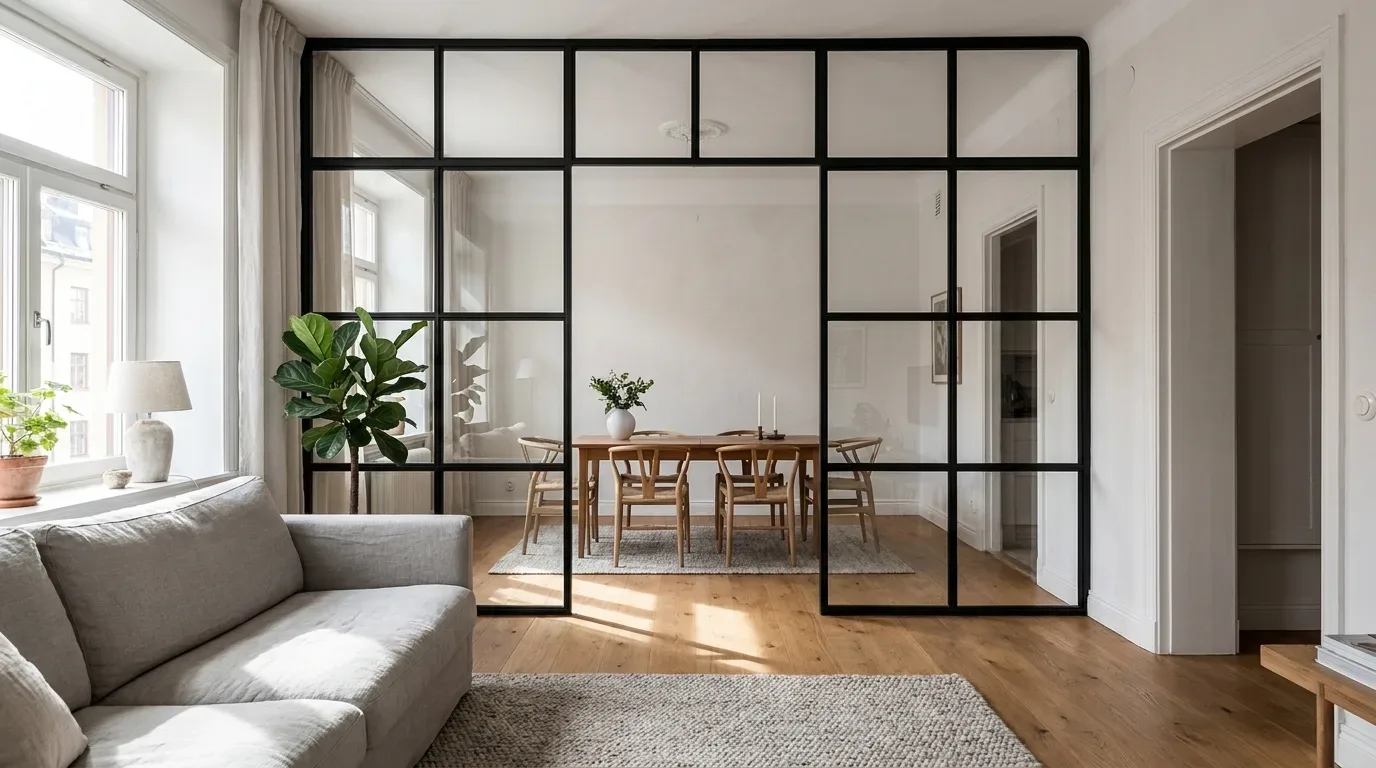
If fixed installation is genuinely ruled out, the freestanding screen remains the only drill-free alternative - with all the limitations described above.
When a Fixed Steel-and-Glass Partition Is the Right Choice
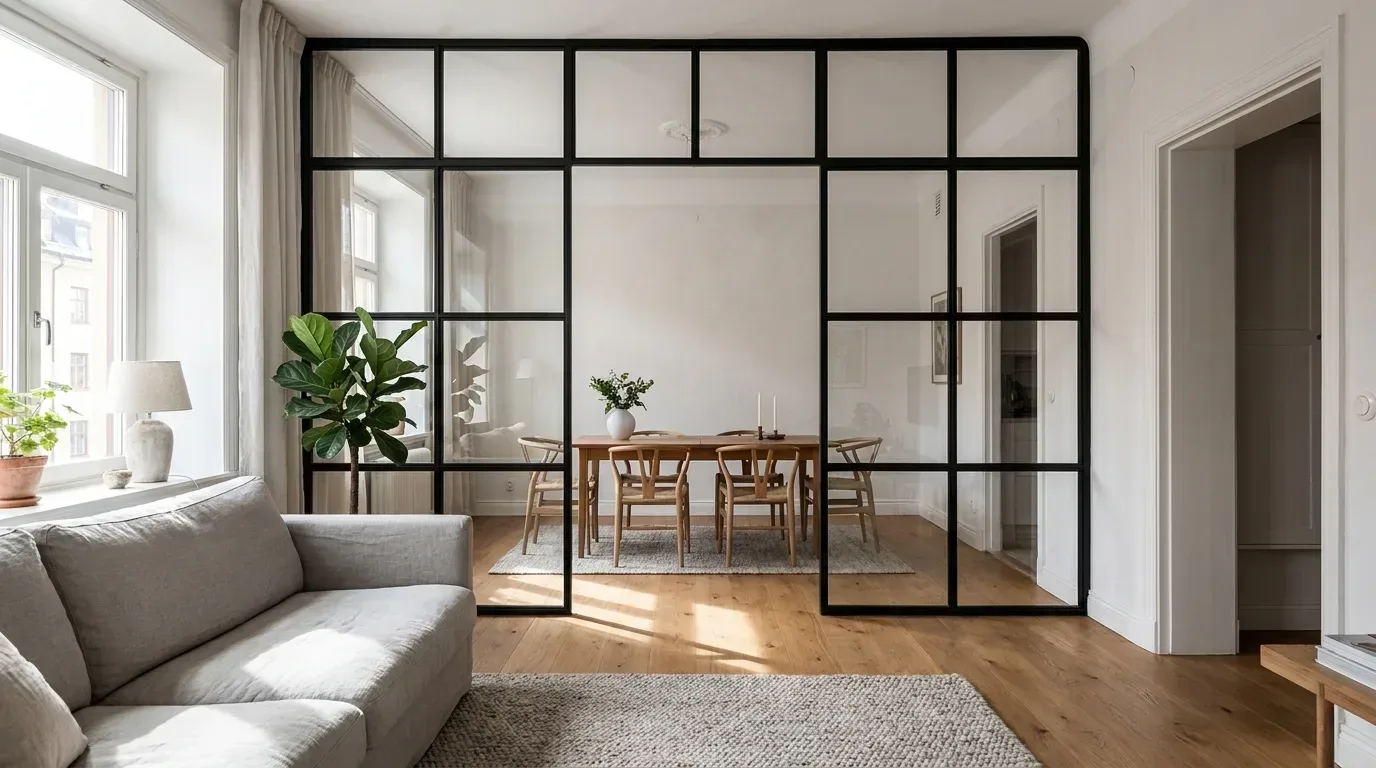
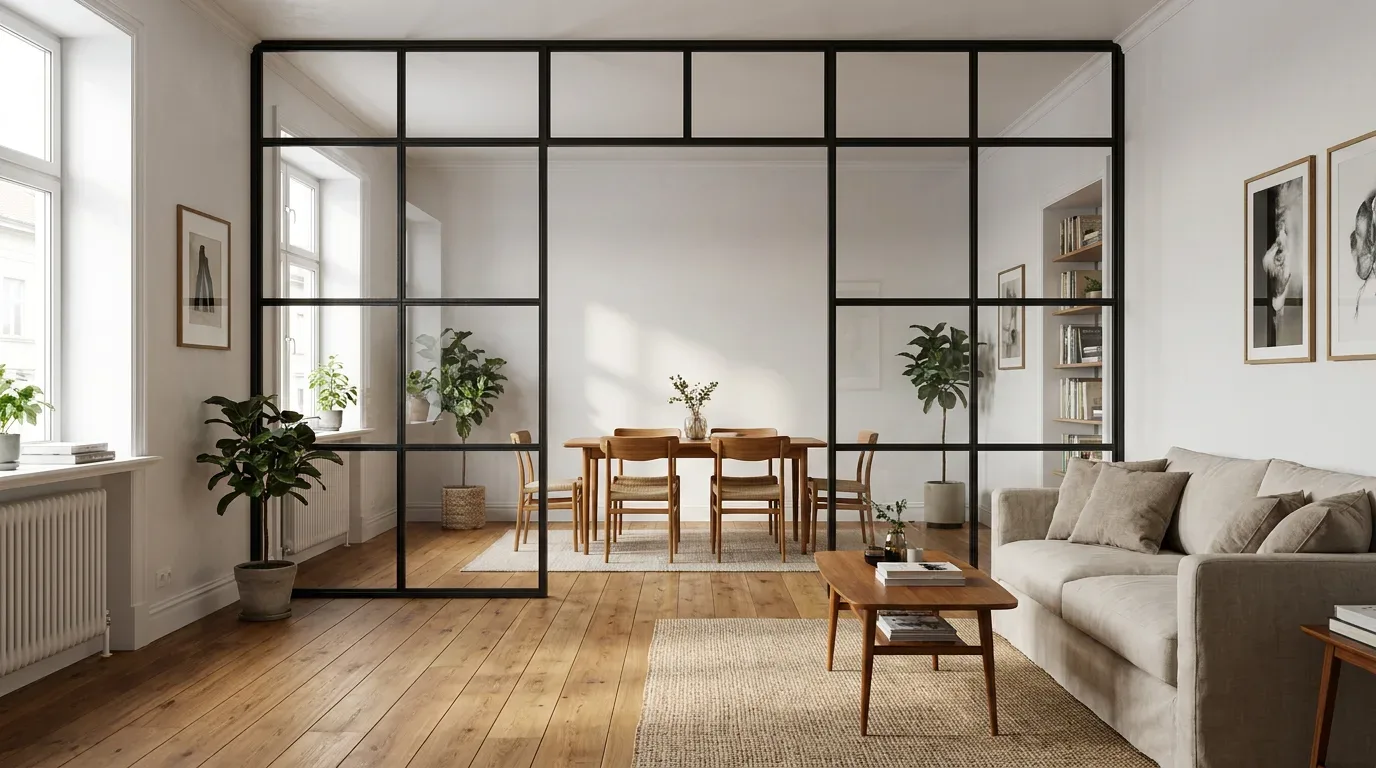
The fixed partition earns its place in open-plan living spaces where you want a real architectural boundary, not just a visual hint. Think of a period apartment in Barcelona or Amsterdam where the original floor plan is a single long room: a steel-and-glass wall can divide it into a living area and a home office without blocking daylight or making either space feel cramped. Or a new-build flat with 2.7 m ceilings where the developer left the kitchen and dining area as one undivided zone - a floor-to-ceiling partition creates distinct spaces while keeping the light flowing.
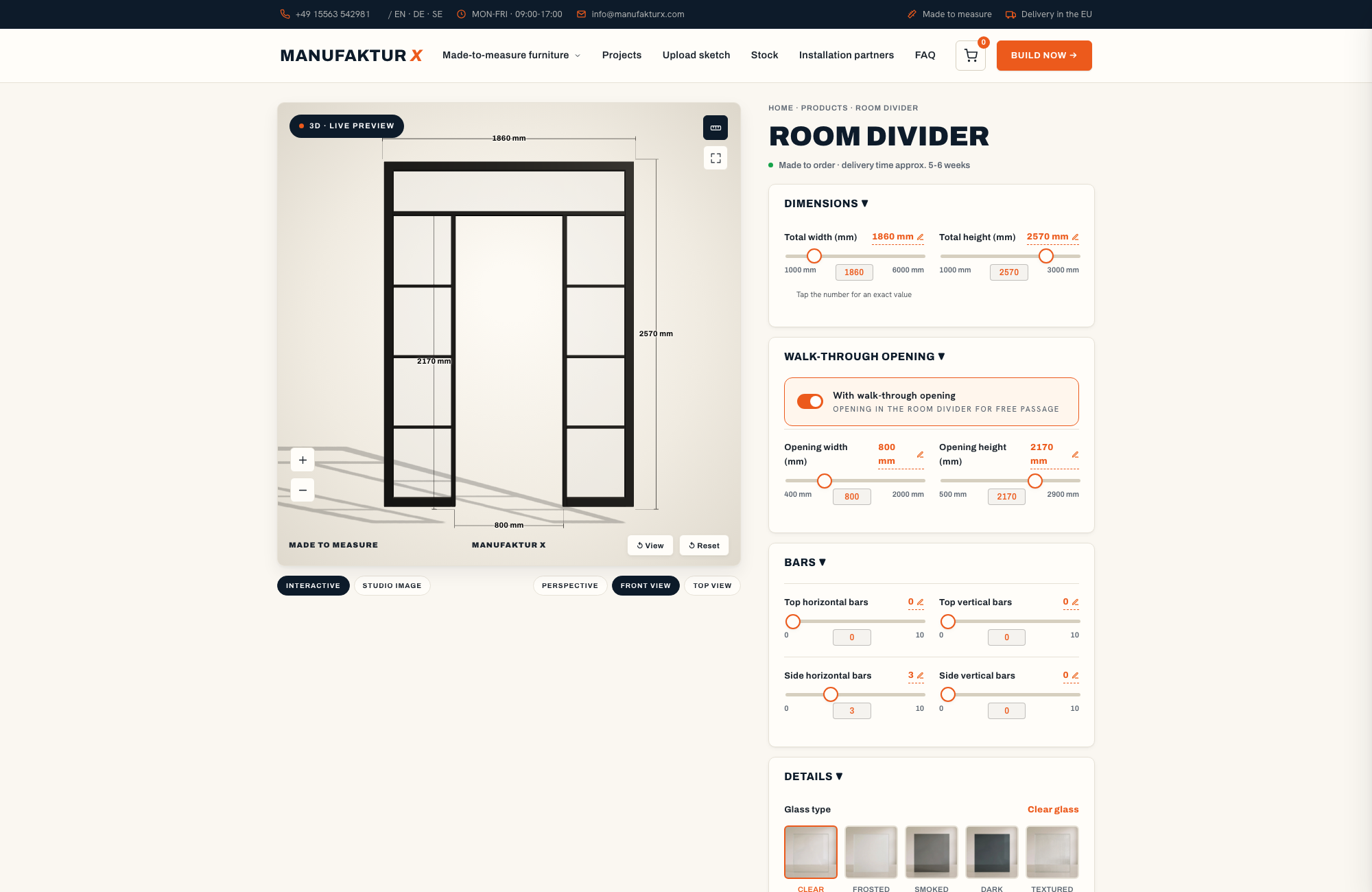
The room divider from Manufaktur X is configured entirely to your dimensions. You enter your exact desired width and height; the configurator calculates the price in real time. You can add an optional walk-through opening (with its own width and height) so people can move between areas without a door leaf - the opening simply reduces the glass area and lowers the price accordingly. Glass is available in clear, frosted, smoked, or dark smoked. Optional horizontal and vertical bar patterns (Sprossen) add visual texture; these are always evenly distributed across the frame. Side panels and a top panel can close off the remaining gaps to walls and ceiling. The steel frame is powder-coated in any RAL colour you choose - scratch-resistant, even in finish, and considerably more durable than painted metal.
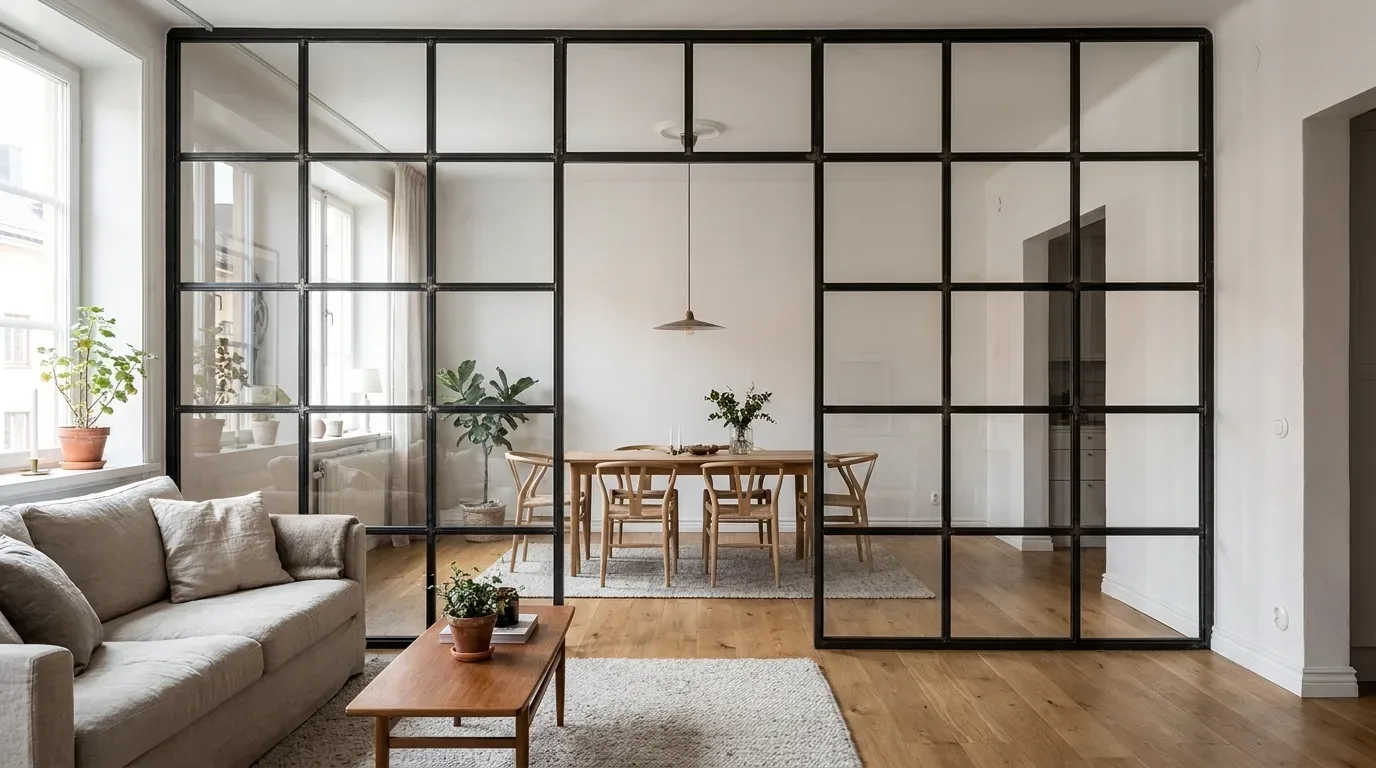
One technical note worth knowing: the frame is always present in the design. There is no frameless version, and the profile width is fixed. ESG (toughened) or VSG (laminated) safety glass is used throughout - the same standard applied to glazed elements in contemporary interior architecture across the EU.
If you also need a hinged door, that is a separate product: the made-to-measure loft door can be configured independently and installed alongside the partition. For a full overview of what Manufaktur X makes, the homepage covers the complete range.
Pricing: How the Cost of a Custom Room Divider Is Calculated
The price of a made-to-measure room divider is built from a small number of straightforward components: a base price, a per-square-metre rate for the glass area, a fixed amount per bar (Sprosse) if you add a pattern, and a flat supplement for non-clear glass types. There are no hidden percentage markups and no surprise charges at checkout.
| Product | Default configuration price | Note |
|---|---|---|
| Loft Door | 1,643 € | Steel and glass, default configuration 900 x 2040 mm |
| Room Divider | 2,212 € | Steel + laminated glass, custom width |
| Large Shelf | 3,200 € | Solid wood, steel frame, floor-to-ceiling |
| Dining Table | 2,370 € | Solid wood, steel frame |
| Coffee Table | 1,800 € | Solid wood, steel frame |
| Bench | 1,100 € | Solid wood, steel frame |
| TV Stand | 1,540 € | Solid wood, steel frame |
| Bedside Table | 995 € | Solid wood, steel frame |
| Hallway Wardrobe | 1,870 € | Solid wood, steel frame |
| Display Cabinet | 2,945 € | Solid wood, steel frame |
| Pipe Shelf | 1,065 € | Modular pipe shelf |
| Desk | 1,815 € | Solid wood, steel frame |
| Chest of Drawers | 5,040 € | Solid wood, steel frame |
The online configurator shows you the exact fixed price in real time as you adjust each parameter. The current price is shown live in the configurator. Add a walk-through opening and the glass area decreases - so the price decreases too. Every product is manufactured in the EU and delivered direct from the workshop. Production takes 5 to 6 weeks from order confirmation. You enter your exact desired dimensions directly - not a rough construction opening measurement - and the configurator works from there.
Frequently Asked Questions
Does Manufaktur X offer a drill-free version of the room divider?
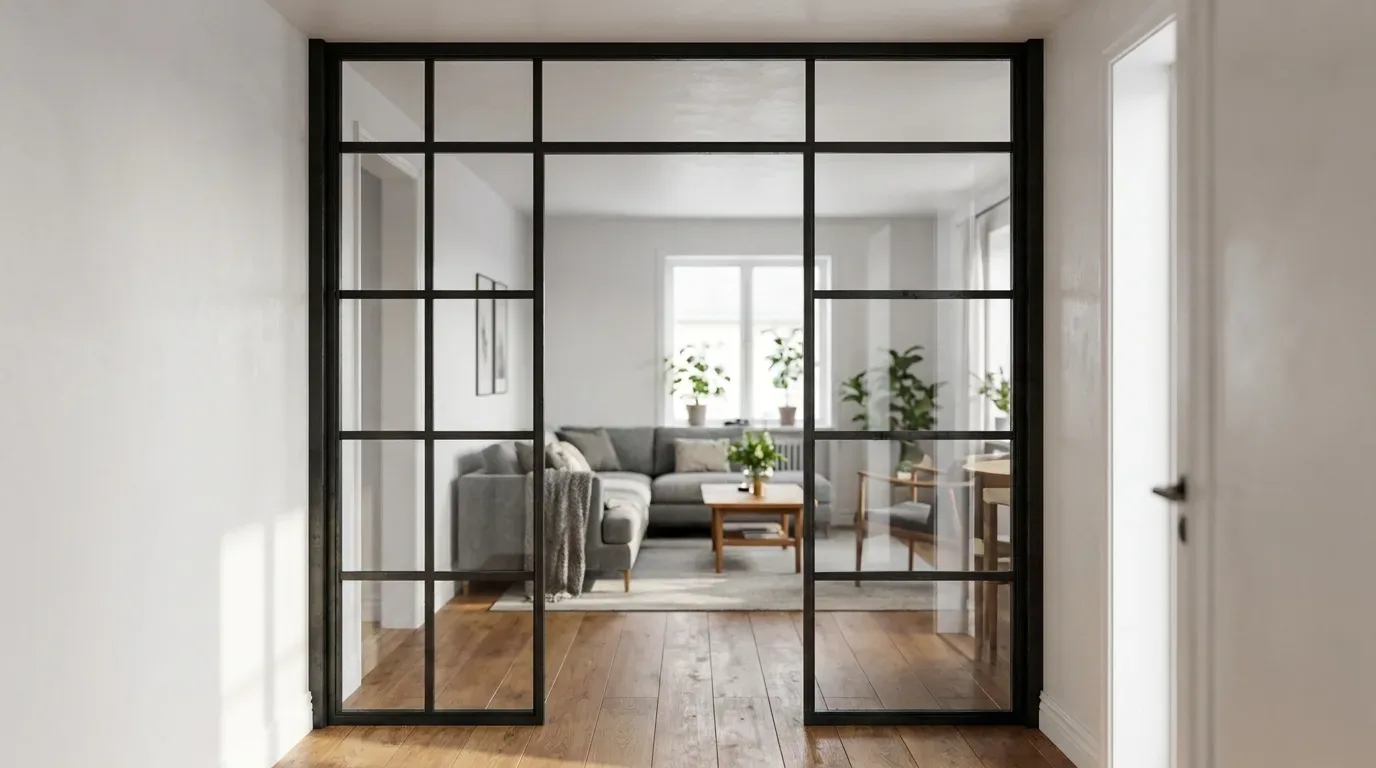
No. The Manufaktur X room divider is a fixed steel-and-glass partition that is anchored with screws. There is no clamping, tension, or freestanding variant. If drilling is not possible in your situation, a freestanding folding screen is the practical alternative - but that is not a product we make.
How many holes does installation actually involve?
The exact number depends on the width and height of your partition. A standard installation involves fixing channels along the floor and the adjoining side wall, with additional fixings at the top if a ceiling connection is included. In most cases, all fixing points can be filled cleanly with standard plaster filler and repainted if you ever need to restore the surfaces - the same process used for curtain rails or wall-mounted shelving.
Can I install the partition myself, or do I need a professional?
Installation requires drilling into concrete or masonry, aligning the frame precisely in both axes, and handling large glass panels safely - typically a two-person job. Whether you do it yourself or hire a fitter depends on your experience with structural fixings and your comfort working with heavy glass. The most common reason a custom partition does not fit correctly is inaccurate measurement before ordering, not a production fault. Measuring carefully - and checking twice - is the most important step.
What glass options are available for the room divider?
You can choose from clear, frosted, smoked, or dark smoked glass. The same glass type applies across the whole partition - individual panels cannot use different glass types. All glass is safety glass (ESG toughened or VSG laminated). If you want to add visual structure without reducing transparency significantly, a bar pattern (horizontal or vertical Sprossen) is available as an add-on; bars are always evenly spaced across the frame.
How long does production take?
Every room divider is made to order in the EU. Production takes 5 to 6 weeks from the point your order is confirmed. Delivery follows directly from the manufacturing facility - there is no intermediate warehouse or distributor in the chain.