Custom Furniture Planning: A Complete Guide Including Costs and Practical Tips
Planning custom furniture takes more than a rough idea of how you want something to look. Precise measurements, the right material choices, and a clear understanding of how production works are what determine whether the result genuinely fits your space - or whether delivery day brings compromises that cannot be undone. This guide by Manufaktur X walks you through the entire process: from assessing your needs and taking accurate measurements, through material selection and configuration, to placing your order and preparing for installation. Along the way, you will find concrete production details, common mistakes to avoid, and first-hand tips from the workshop.
When Does Custom Furniture Make Sense - and When Is Standard Good Enough?
Off-the-shelf furniture is designed around standard dimensions: shelving units typically max out at around 220 cm in height, dining tables rarely exceed 200 cm in length, and room dividers wider than 180 cm are almost impossible to find in retail ranges. If you live in a pre-war apartment with 2.8 m ceilings, a standard shelf leaves a gap of nearly 60 cm between the top panel and the ceiling - wasted space that no catalogue product can close. Add irregular floor plans, sloped attic ceilings, and deep alcoves, and the limitations of standard furniture become structural rather than aesthetic.
This is not a niche problem. Period apartments built before the 1960s are common across European cities - from Brussels and Vienna to Barcelona and Prague - and their layouts rarely conform to the grid dimensions that flat-pack furniture assumes. For these homes, a custom piece is often not a luxury option but simply the only proportionally and functionally sensible solution.
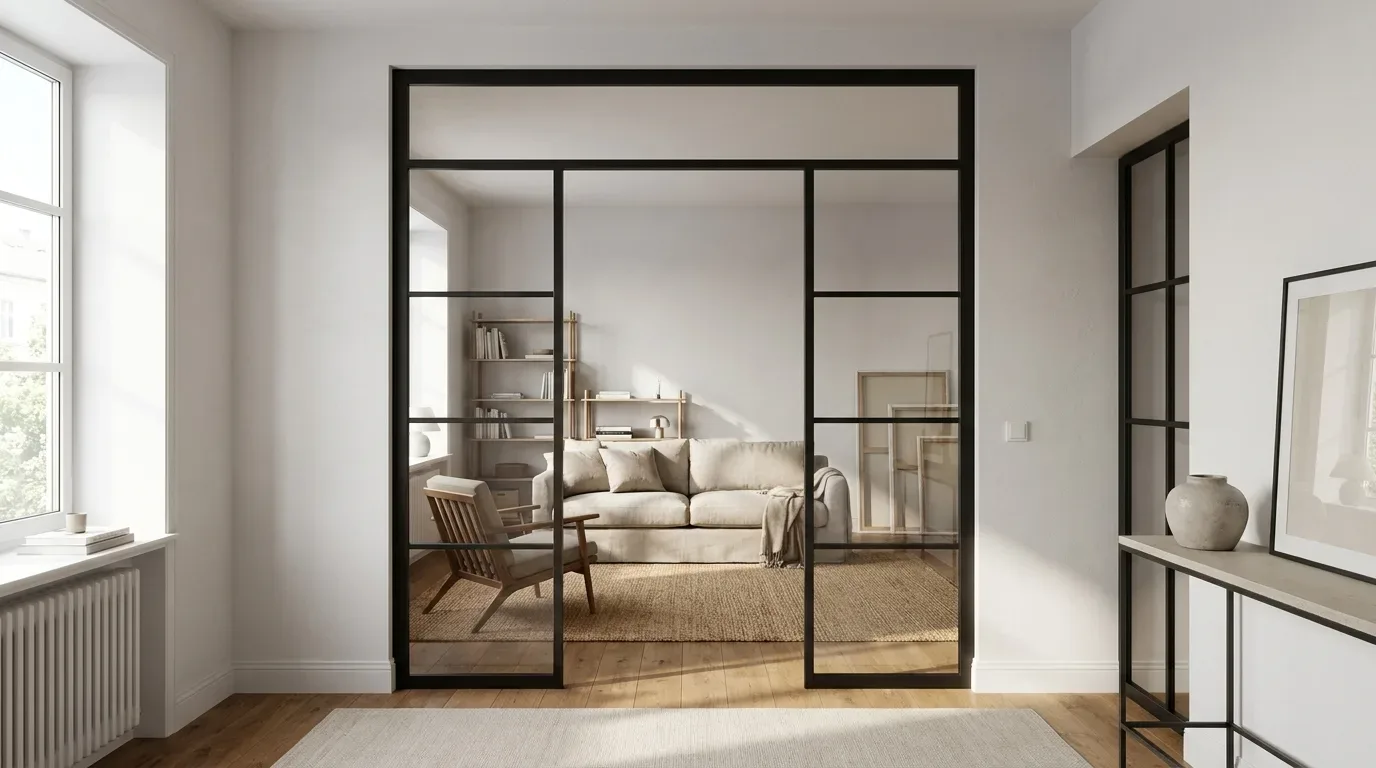
It is worth making one honest comparison here: IKEA and similar retailers offer excellent value for straightforward spaces with standard dimensions. If your room is rectangular, your ceiling is standard height, and your requirements are uncomplicated, a well-chosen off-the-shelf product may serve you perfectly well. The decision for custom furniture becomes clear when room geometry, unusual dimensions, or specific material requirements make a tailored solution the more practical choice.
Gaining Space Through Precise Fit
Consider an attic apartment with 2.6 m ceiling height and two sloped walls. A custom shelf with an angled top panel can recover approximately 0.8 m² of usable storage per slope - across both slopes, that is 1.6 m², the equivalent of a full shelving bay that a standard unit simply cannot reach. Similarly, a living room wall measuring 287 cm does not accommodate standard dining tables in proportionally correct lengths. A custom dining table configured to your exact dimensions closes that gap without compromise.
When Standard Furniture Is the Right Choice
Custom-made furniture is not the answer for every interior situation. If you are furnishing a room with standard proportions, have no particular requirements regarding wood species or surface finish, and expect the furniture to be used for a limited period, off-the-shelf products are the more economical path. The case for custom furniture is strongest when room geometry, non-standard dimensions, or specific material requirements make adaptation necessary - not as a style statement, but as a practical response to your space.
Durability as an Economic Argument
The difference between custom and standard furniture goes beyond dimension. Solid hardwood - oak, beech, or ash - can be sanded, re-oiled, and repaired after damage. MDF and particleboard surfaces cannot. A steel frame with RAL powder coating is corrosion-resistant and can be re-coated if needed. Powder coating - the process used on all Manufaktur X steel frames - is applied electrostatically and cured under heat, producing a surface that is scratch-resistant, consistent in colour, and significantly more durable than conventional paint. This matters for longevity.
Sustainability can be expressed as a concrete ratio: service life per euro invested. A solid wood and steel shelf that lasts 20 years and can be repaired along the way has a measurable annual cost that compares very differently to four successive flat-pack replacements over the same period.
The Five Steps to a Custom Furniture Order at a Glance
| Step | What to do |
|---|---|
| 1. Define your requirements | Analyse your space, usage patterns, functions needed, and design style |
| 2. Measure and choose materials | Measure at least three times, use the smallest reading, select wood species and finish |
| 3. Configure online | Build your piece in the 3D configurator, track the real-time price |
| 4. Review your configuration | Check all dimensions and technical details in your cart before ordering |
| 5. Order and prepare for installation | Complete your order, plan delivery logistics and assembly |
Step 1: Defining Your Needs and Space Requirements
Before any planning begins, you need an honest assessment of the room and what you actually want the furniture to do. Start with concrete questions: what activities happen in this space? How many people use it daily? What is the primary function - storage, room division, a work surface, or a combination?
- Functional requirements: How much storage capacity is needed? What work surfaces? Are there specific functions the piece must serve?
- Room characteristics: Where are the windows, doors, and power sockets? Are there alcoves, sloped ceilings, or radiators?
- Usage intensity: Will this be a dining table used by four people every day, or a coffee table used occasionally?
- Aesthetic preferences: Which style fits your existing interior - industrial, classic, Scandinavian, or something else?
- Adaptability: If you move in a few years, can the piece be reconfigured or disassembled for a different space?
Take photographs from multiple angles and use masking tape on the floor to mark out the planned footprint of the furniture. This simple step shows you immediately how much floor space the piece will occupy and whether sufficient circulation space remains around it. Note every detail: radiators, sockets, light switches, and door swing radii. These all become relevant when you open the configurator.
| Style direction | Typical palette | Typical materials |
|---|---|---|
| Modern | Greys, white, black | Steel, glass, smooth wood |
| Classic | Beige, brown, dark green | Oak, solid hardwood |
| Scandinavian | Light pastel tones | Light solid wood (ash, beech) |
| Industrial | Anthracite, rust red, natural wood | Steel, exposed concrete, solid wood |
Step 2: Taking Accurate Measurements - the Most Critical Part of the Whole Process
In our experience, the most common reason a custom piece does not fit after delivery is not a production fault - it is a measurement error made before the order was placed. Approximately 70% of loft door projects show a difference between the left and right wall measurements when the order is reviewed. In period apartments this discrepancy is often 10 to 20 mm; in older buildings it can be more. Measuring once and entering that single figure means ordering a piece that either cannot be installed because it is too large, or leaves a visible gap because it is too small.
How to Measure Correctly
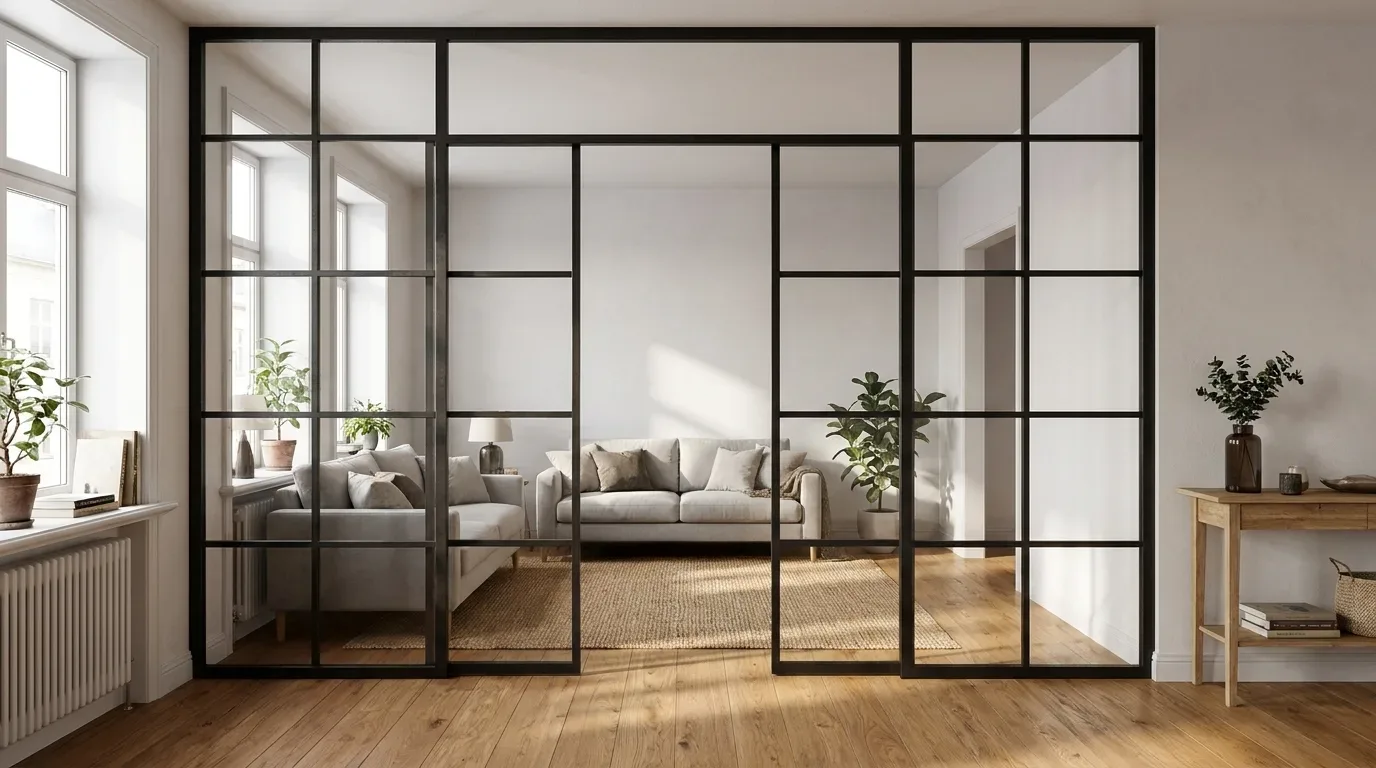
Measure height, width, and depth at a minimum of three positions - top, middle, and bottom, or left, centre, and right. Always use the smallest reading as the basis for your configuration. Manufaktur X produces exactly to the dimensions you enter in the configurator. There is no automatic tolerance adjustment and no correction from the production side after the order is placed.
- Height: Measure from floor to ceiling at the left, centre, and right positions
- Width: Measure the available wall span at the top, middle, and bottom
- Depth: Account for the distance to opposing walls or any obstructions
- Document obstacles: Sketch in door frames, window trims, radiators, sockets, skirting boards, and light switches
A laser measuring tool delivers more accurate readings than a tape measure, particularly over longer distances. Document all measurements with labelled photographs.
Installation Clearance: Why Approximately 5 mm Per Side Is Essential
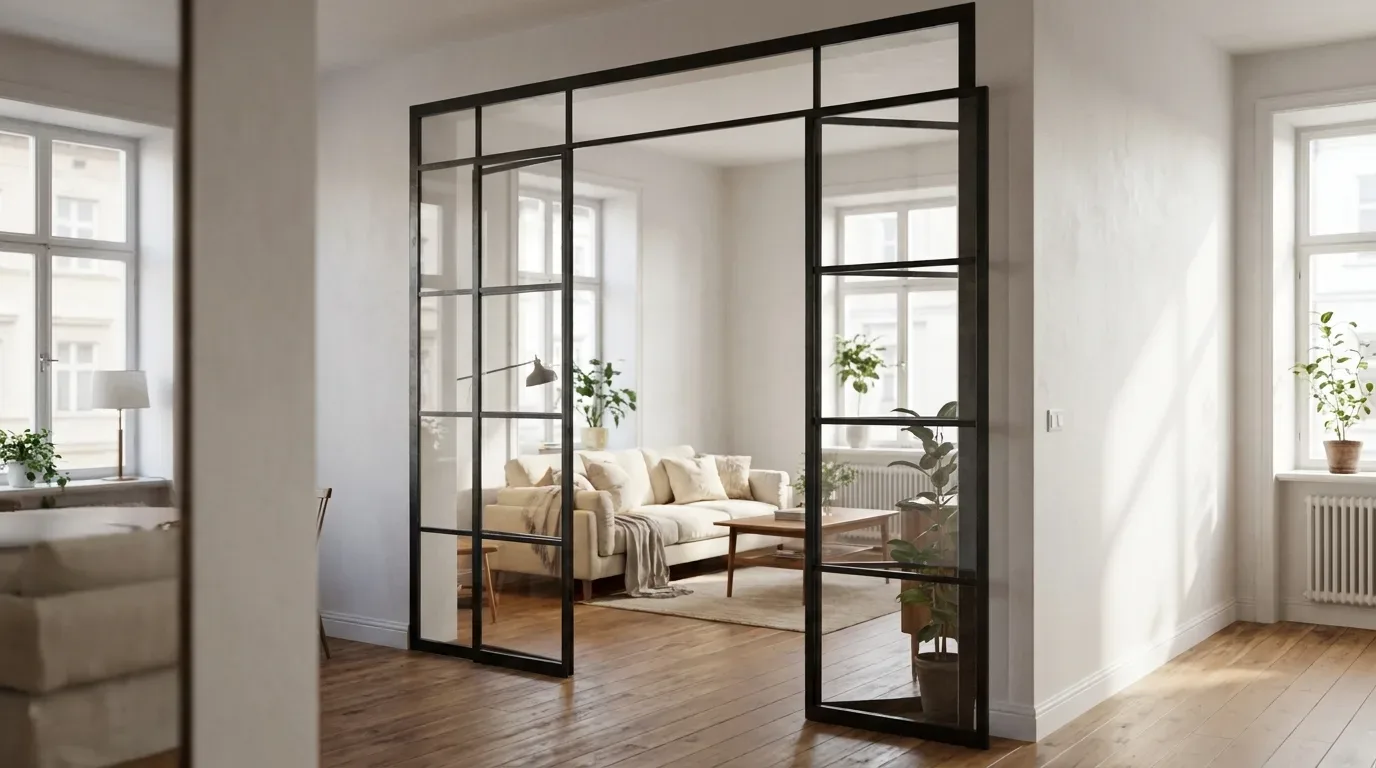
For loft doors in particular, installation clearance is one of the most frequently overlooked details. A door leaf manufactured exactly to the raw opening size cannot be installed - there is no room for the frame, seals, or alignment. Subtract approximately 5 mm per side (left, right, and top) from your smallest measured dimension. For an opening measuring 2,000 mm in width, the correct door dimension is 1,990 mm - not 2,000 mm. Skipping this step produces a piece that cannot be adjusted after delivery.
For shelves and tables, installation clearance does not apply in the same strict way - but the most frequent error is forgetting the skirting board. A skirting board of 12 mm height means a floor-to-ceiling shelf cannot be pushed flush against the wall unless the shelf depth accounts for it. Always measure the depth of the skirting board and decide in advance whether the shelf will stand in front of it or whether a cut-out is needed.
Step 3: Choosing Your Materials - Solid Wood, Steel, and (for Loft Doors and Room Dividers) Glass
Solid Wood: Oak, Beech, and Ash Compared
Solid wood is the central material across the Manufaktur X range - used for table tops, shelf boards, benches, and table bases alike. Unlike coated board materials such as MDF or particleboard, solid wood can be sanded, re-oiled, and repaired. This is not merely an aesthetic advantage - it is an economic one. A solid wood surface that can be sanded out after a deep scratch does not need to be replaced.
Manufaktur X works exclusively with three hardwood species, each with its own character:
| Wood species | Appearance and style | Typical use | Brinell hardness |
|---|---|---|---|
| Oak | Classic, expressive, bold grain | Shelves, tables, loft doors, high-traffic surfaces | approx. 3.7 |
| Beech | Timeless, even-toned, very stable | Work surfaces, benches, wide shelf boards | approx. 3.8 |
| Ash | Light, lively grain, bright tone | Coffee tables, contemporary interiors, benches | approx. 3.5 |
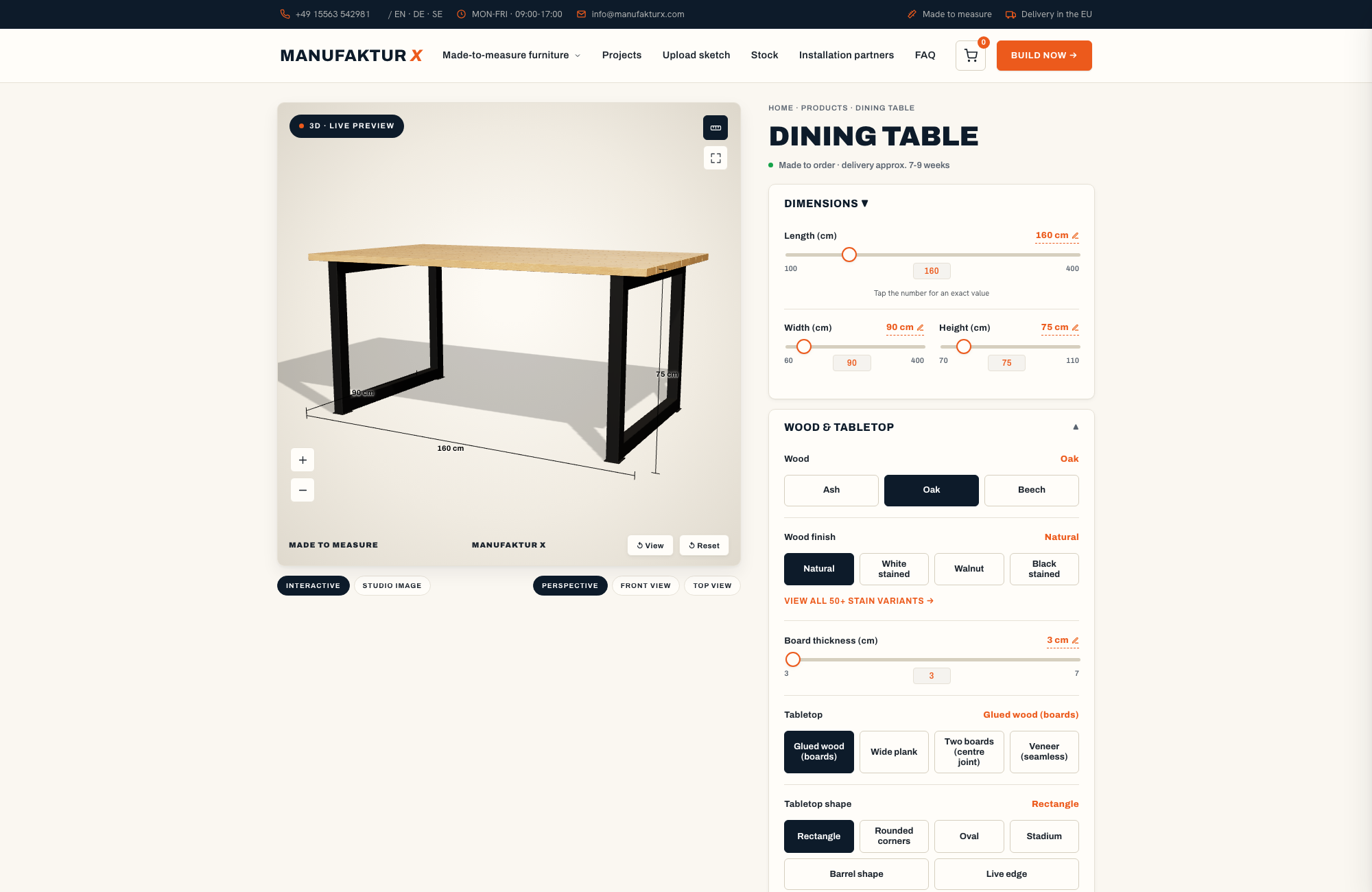
In terms of price, ash runs approximately 10-15% below oak, and beech approximately 5-10% below oak. These differences reflect availability and processing effort - not a quality hierarchy. For a dining table in daily use, oak or beech is the better choice given their higher Brinell hardness. Ash reads as lighter and more open in photographs - attractive for contemporary spaces, but less well suited than oak or beech for intensively used table surfaces.
One important clarification on build types: shelves (the large shelf and pipe shelf) are always produced in solid wood. Dining tables, coffee tables, and benches are available either as solid glued-board construction (Leimholz - genuine solid wood throughout) or with a veneer top. The configurator lets you choose between these two options, and the difference is reflected in the price. Both are real wood products - the distinction matters when it comes to long-term repairability, since a veneered surface has less material to sand back than a solid board.
For the surface finish, more than 50 stain tones are available - from untreated natural to mid-tone oiled finishes and deep patinas.
Oiled vs. Lacquered: What the Difference Means in Daily Life
An oiled solid wood surface absorbs the protective oil into the wood fibre, which means it remains treatable over time. Scratches can be sanded out and re-oiled without rebuilding the entire surface. The trade-off is that oiled surfaces are more sensitive to moisture than lacquered ones - a wet glass left on an untreated oak surface for 20 minutes will leave a pale ring. That ring can be sanded away, but it forms more easily than it would on a lacquered surface.
Lacquered surfaces are more resistant to moisture and staining, but harder to repair when scratched: a deep scratch in a lacquer coat often requires sanding the entire surface and re-lacquering. Manufaktur X uses an oil finish exclusively - a choice that treats solid wood as a living, maintainable material rather than a sealed substrate.
The stain choice should be considered alongside the steel colour. A light natural tone on ash creates a graphic, high-contrast effect next to RAL 9005 (jet black); the same tone next to RAL 7044 (silk grey) reads as quieter and warmer. The configurator shows both combinations in real time.
Steel Frames and RAL Powder Coating
All steel frames at Manufaktur X are fabricated from raw steel and finished with RAL powder coating - a process applied electrostatically and heat-cured, producing a surface that is corrosion-resistant, mechanically robust, scratch-resistant, and evenly coloured. The full RAL colour range is available. Powder coating is also an environmentally cleaner process than conventional wet paint, as it produces negligible solvent emissions.
An important note on RAL colour selection: powder-coated surfaces in reality can differ from their appearance on screen, depending on monitor calibration, ambient light, and surface texture. RAL 7016 (anthracite grey) can appear almost black on a monitor; in a room with indirect natural light, the same tone reads as clearly grey. Matt finishes are more susceptible to this discrepancy than gloss surfaces. Always assess colour samples in the actual light of the intended room - not from a screen.
Glass in Loft Doors and Room Dividers
Glass is relevant at Manufaktur X exclusively for custom loft doors and custom room dividers. For these products, five glass types are available: clear glass, frosted glass, smoked glass, dark smoked glass, and textured glass - each available as ESG (toughened single-pane safety glass) or VSG (laminated safety glass).
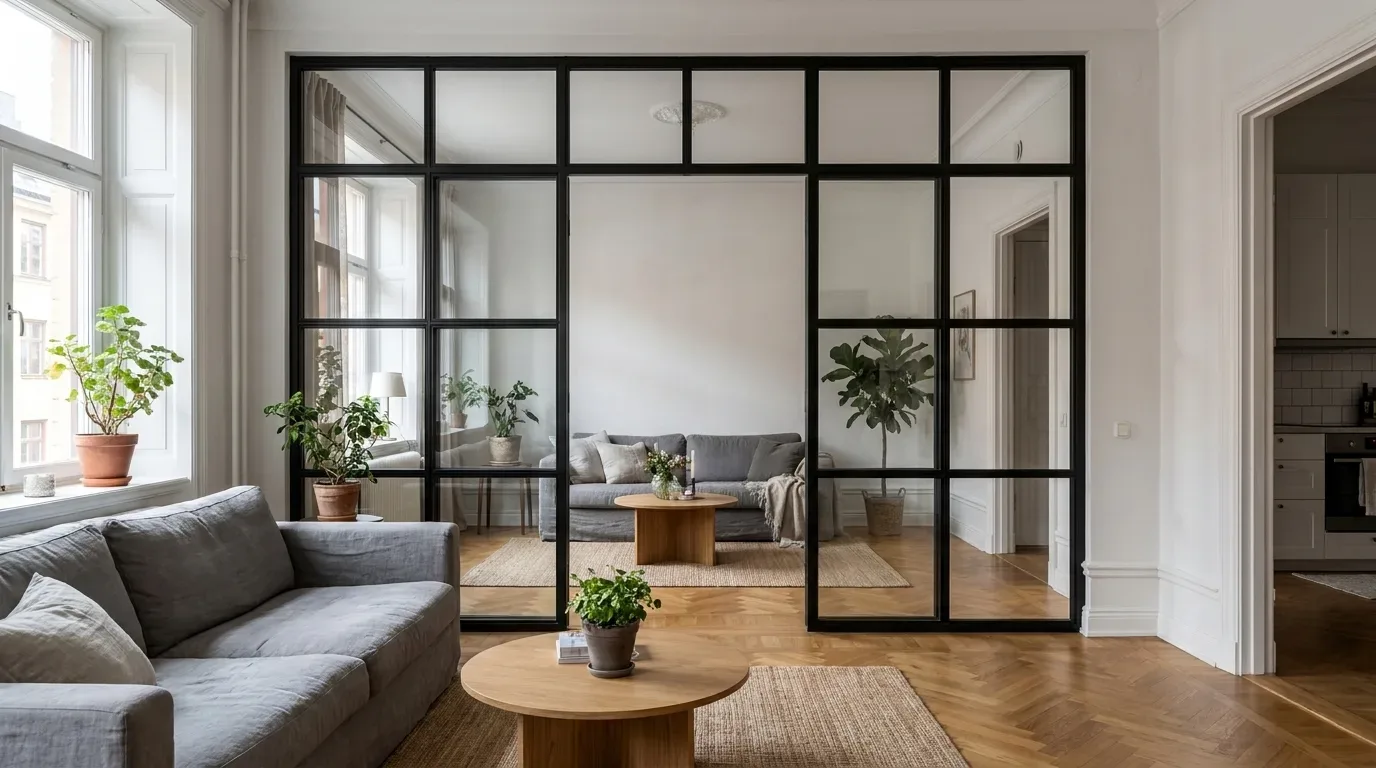
The practical difference: ESG fractures under overload into small, blunt fragments, significantly reducing the risk of injury. VSG consists of two glass layers bonded by a plastic interlayer; if the glass breaks, the interlayer holds the fragments together and prevents them from falling out. For larger panel dimensions, Manufaktur X recommends VSG - not because ESG is unsafe at those sizes, but because with a large glass area the fragment mass in the event of breakage is greater, and VSG is the more conservative choice in that scenario. Note that glass type and bar pattern (the visual grid of glazing bars) are separate choices - the pattern affects appearance, while the type determines the safety specification. Full details on glass options and handle fittings are available on the individual product pages.
Step 4: Designing Your Piece in the Online Configurator
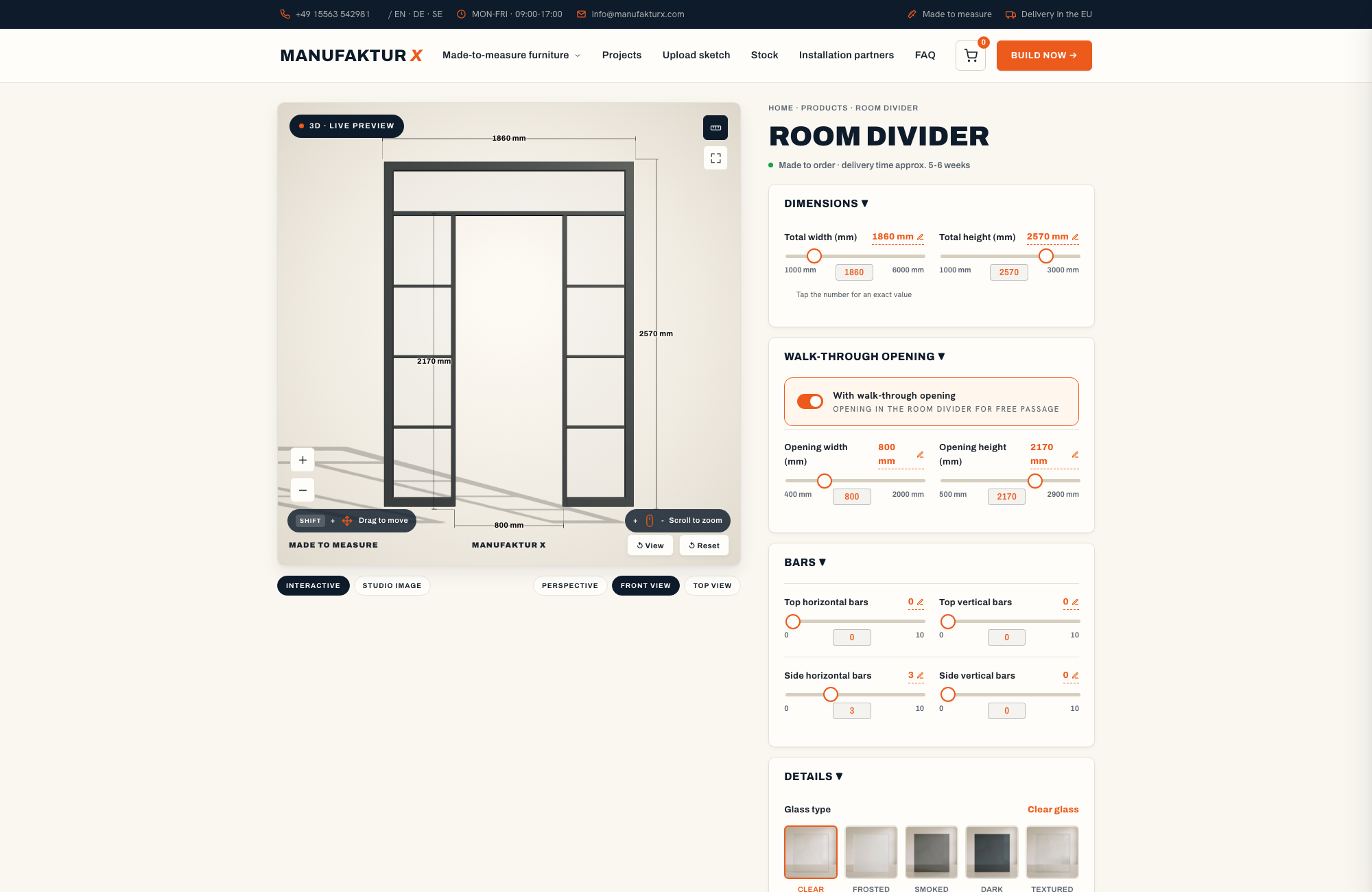
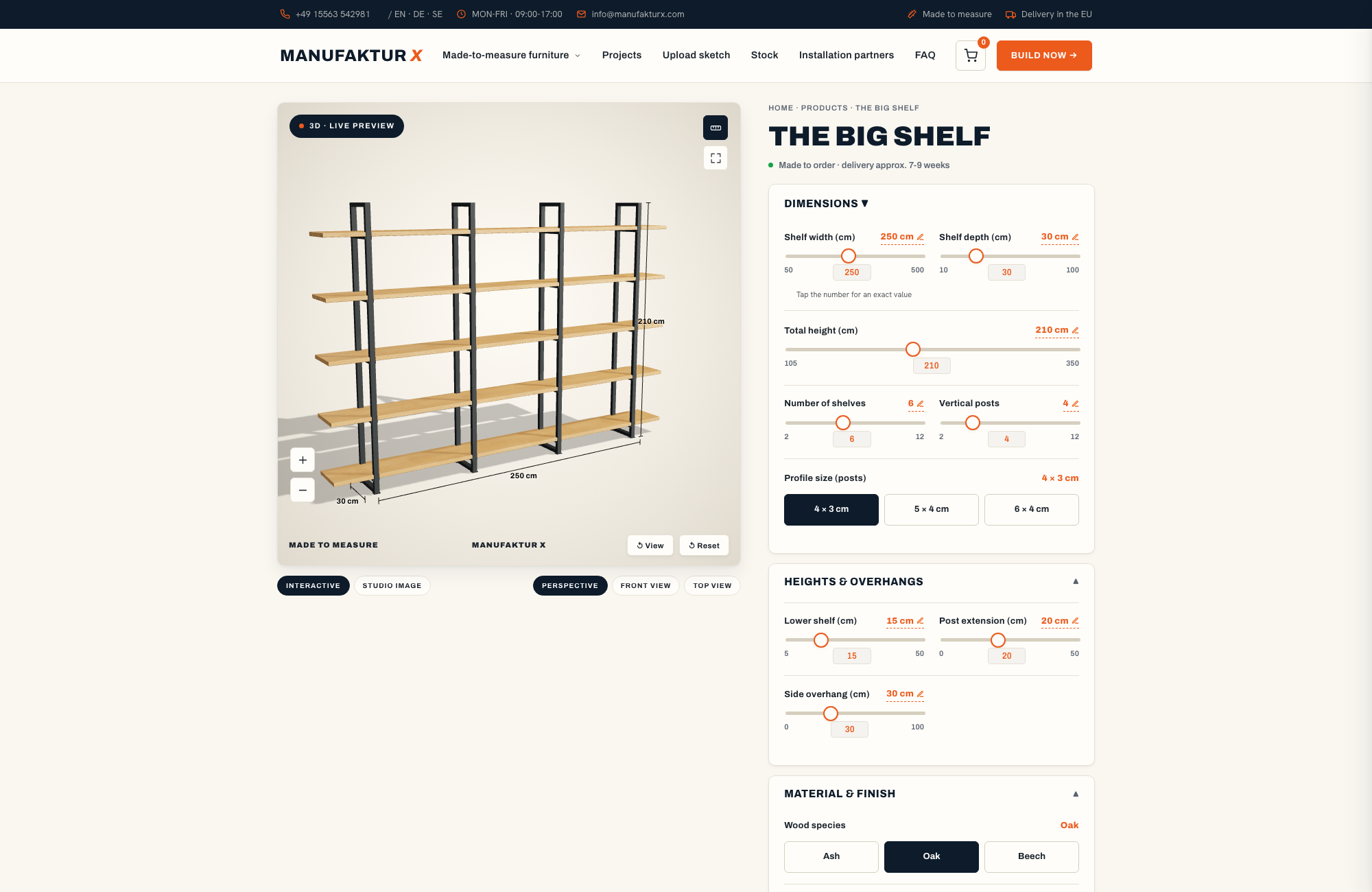
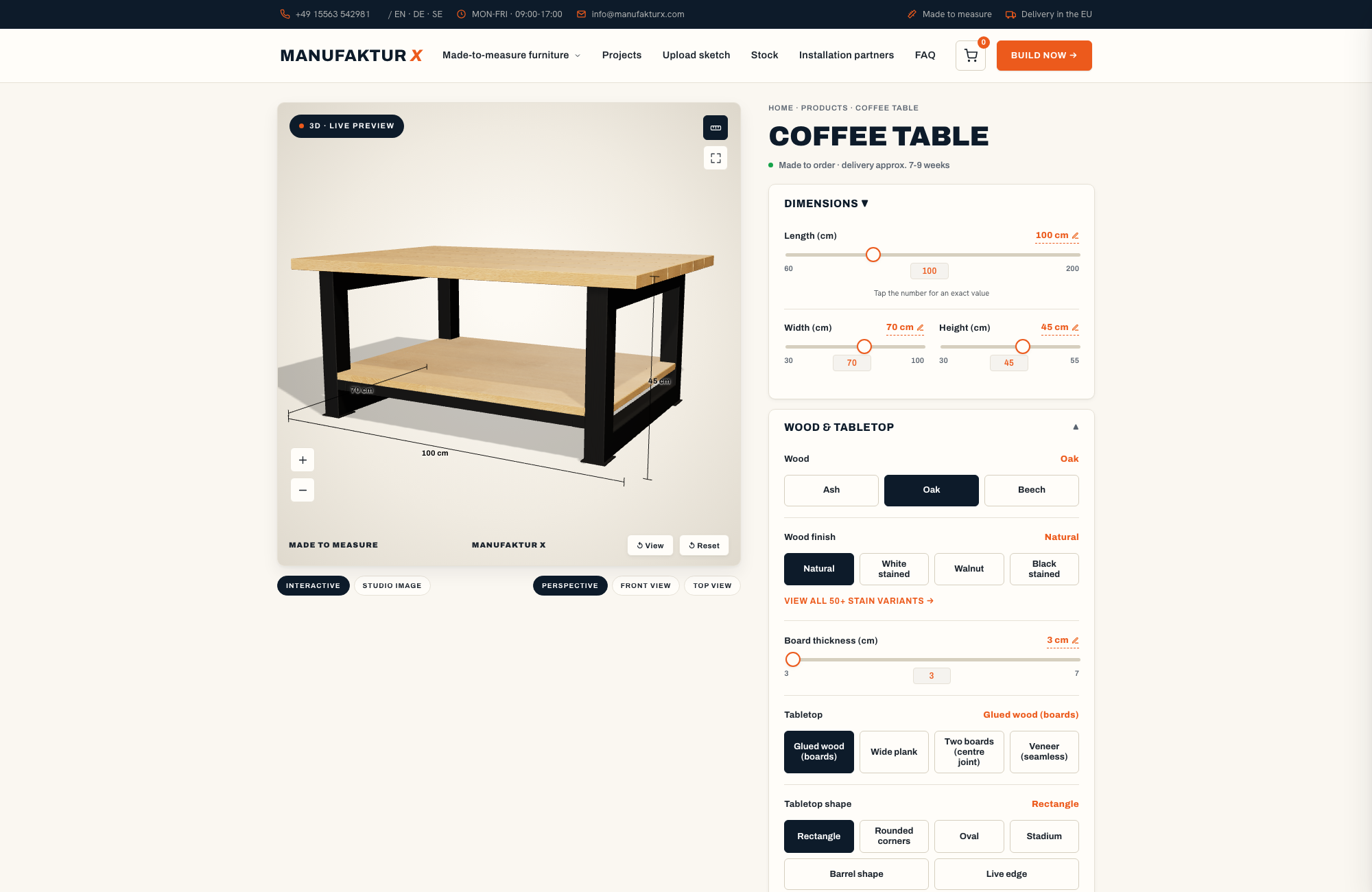
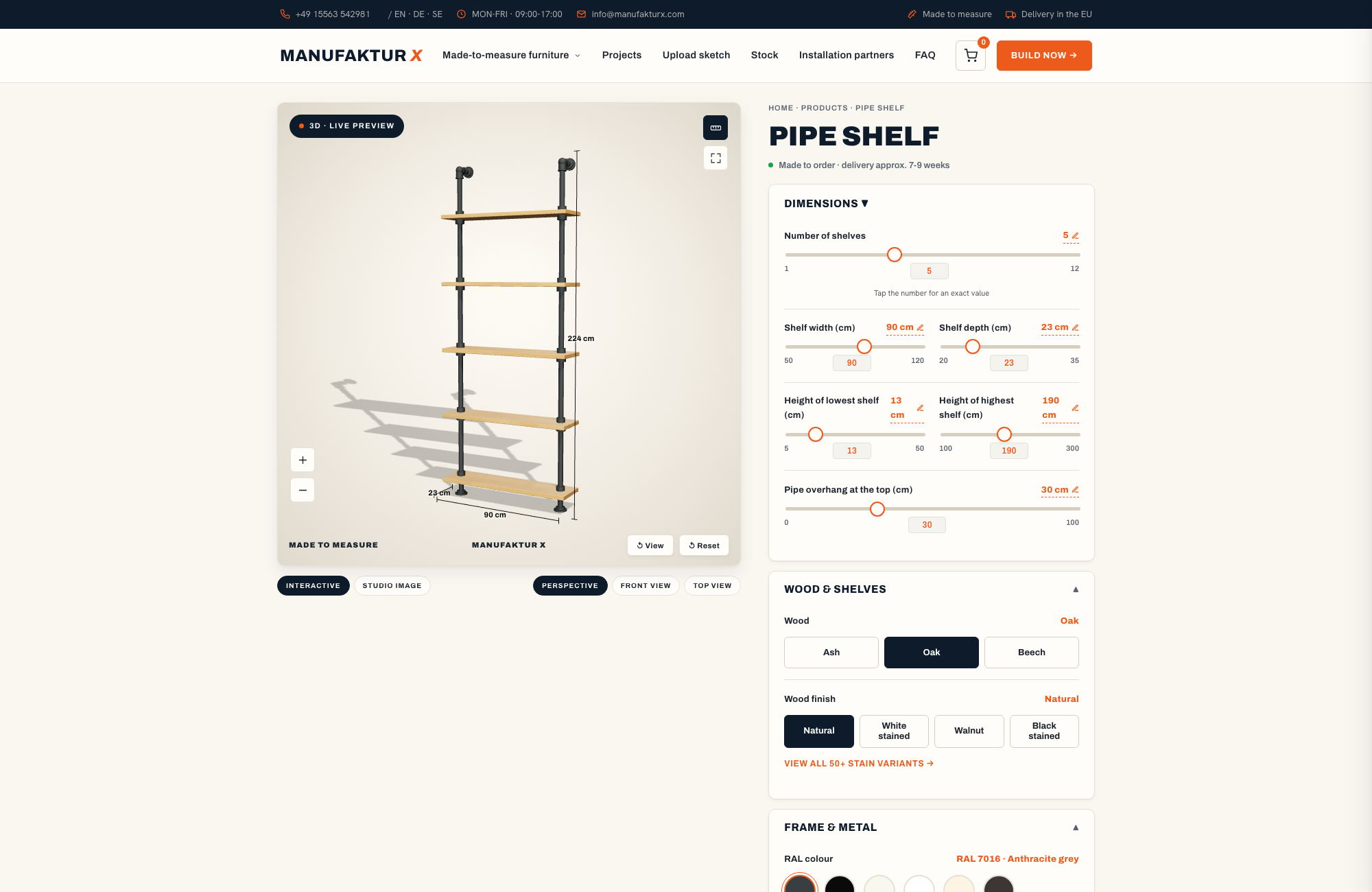
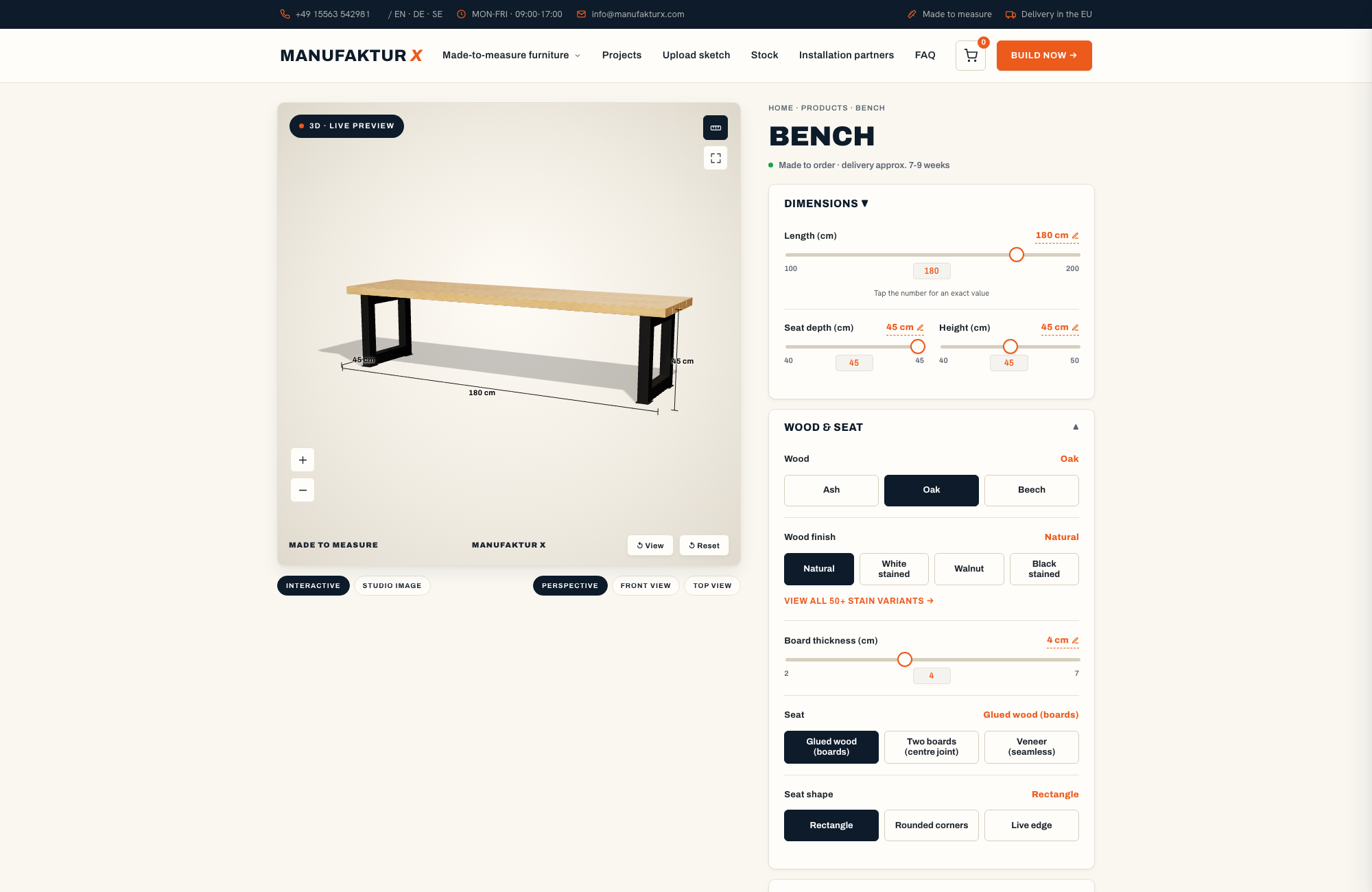
The Manufaktur X configurator lets you build your piece visually in real time, with every parameter adjustable. Each change is reflected immediately in the 3D preview and in the transparent fixed price - no hidden surcharges, no surprises. Delivery costs and lead times are visible in the cart before you commit to anything.
- Select your product: configure a custom loft door, configure a custom dining table, configure a custom large shelf, configure a custom bench, configure a custom coffee table, configure a custom room divider, or configure a custom pipe shelf
- Enter your exact desired dimensions - use the smallest measured value; for loft doors, subtract the installation clearance first
- Choose your wood species and stain tone
- Select your steel colour (RAL) and surface finish
- Adjust hardware details such as handles and hinges (relevant for loft doors and room dividers)
- Experiment with variants - compare different wood species, RAL tones, or dimension options side by side
Once you have a configuration you are happy with, cross-check it against a floor plan sketch. A table that is technically correct in the configurator can feel functionally wrong in the actual room if the gap between the table end and a nearby door is less than 90 cm. Always plan clearance routes - not just the footprint of the piece itself.
If your space is unusual or you are unsure whether your project is achievable within the standard configurator options, you can upload a sketch and request a custom quote - Manufaktur X reviews the feasibility and responds with a concrete proposal.
Step 5: Reviewing Your Configuration, Placing the Order, and Preparing for Installation
Before your piece enters production, it is worth a careful final review. This is the last point at which changes are possible without additional cost or delay.
Go through your configuration against your original measurements:
- Dimensions: Do the height, width, and depth match what you measured on-site?
- Obstacles: Have doors, windows, radiators, and sockets all been accounted for?
- Technical details: Are handles, feet, fittings, and opening directions exactly as you want them?
- Wood species and stain: Were these chosen based on actual usage requirements, not just how they look on screen?
- RAL colour: Has the colour been assessed under real room lighting, not just on a monitor?
The complete summary of your configuration - including all dimensions, materials, and delivery costs - is visible in your cart. Payment by instalment is available at checkout.
Preparing for installation: Check that staircases and doorways in your building are wide enough for transport. Protect floors and walls before the delivery team arrives. Plan enough time for assembly and organise any tools in advance - heavy solid wood and steel constructions require at least two people to handle safely. Photograph the condition of the furniture on arrival in case any delivery issues need to be reported.
Production and delivery time: All Manufaktur X products are produced in 5-6 weeks. The exact lead time is shown transparently in your cart at checkout.
Which Custom Piece Works Best in Which Room?
Custom furniture delivers its greatest advantage wherever standard solutions run out. Here is a practical overview:
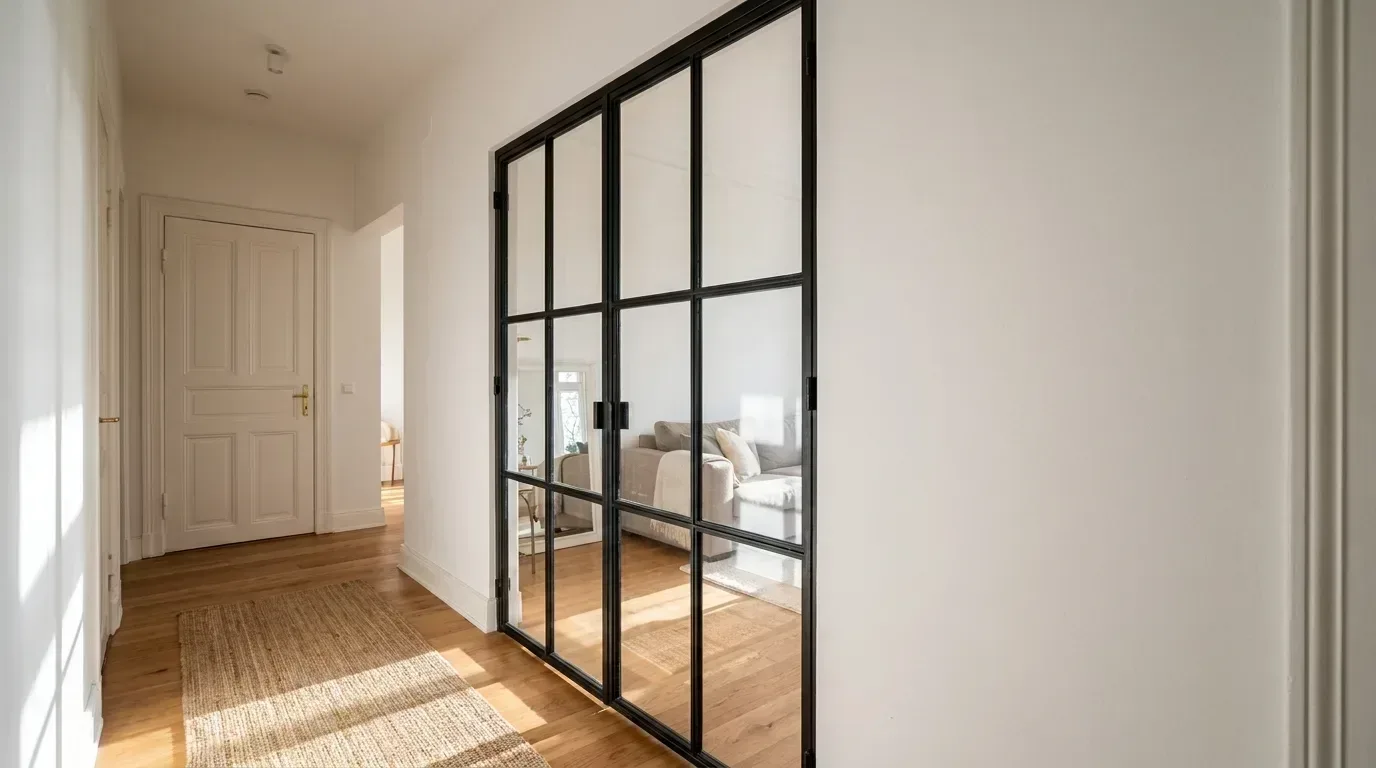
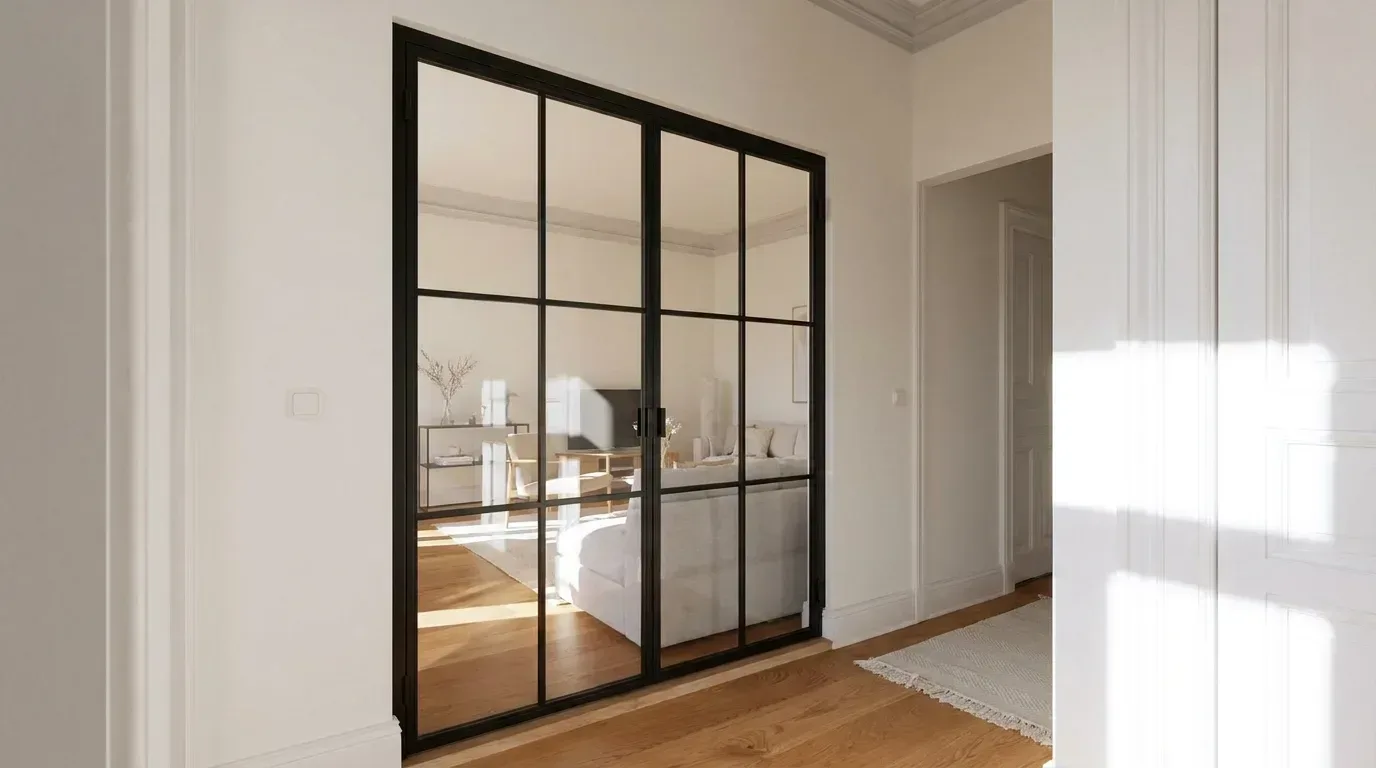
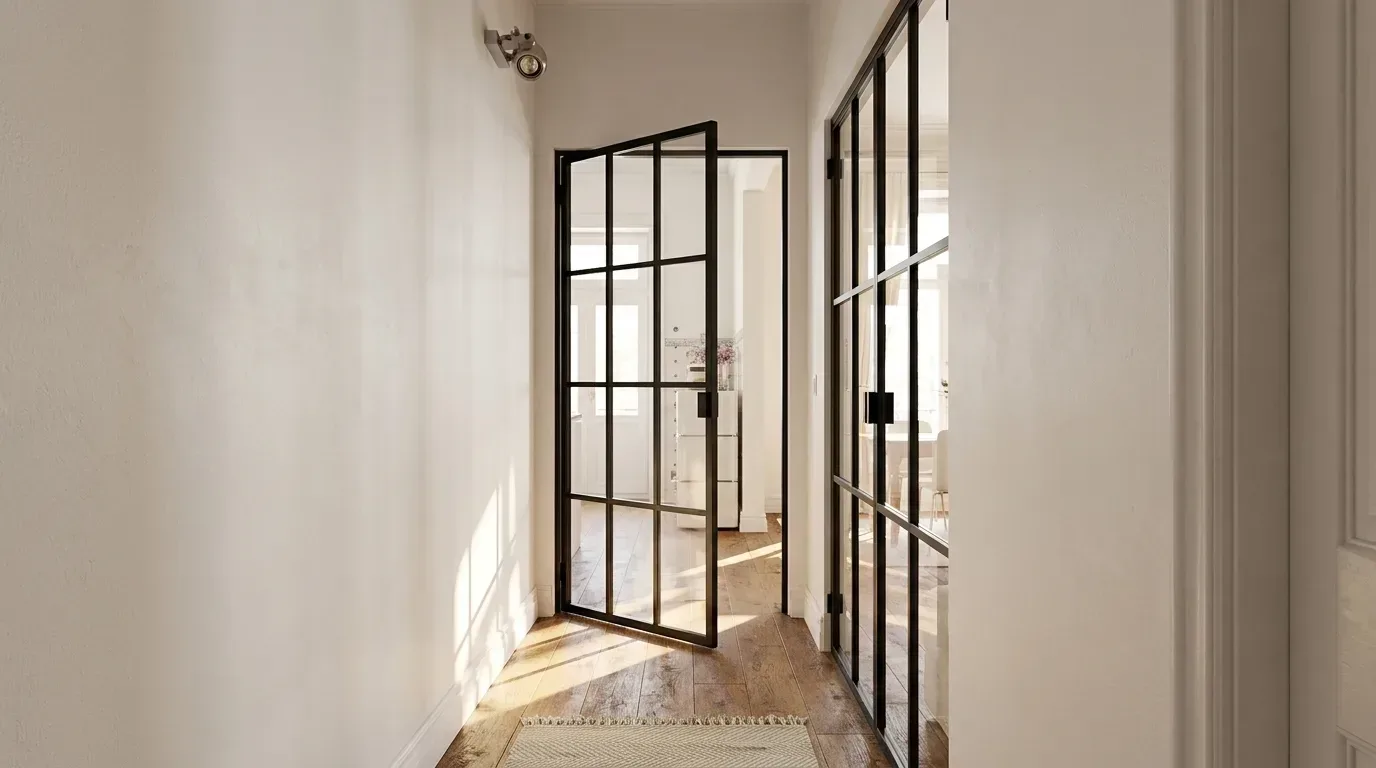
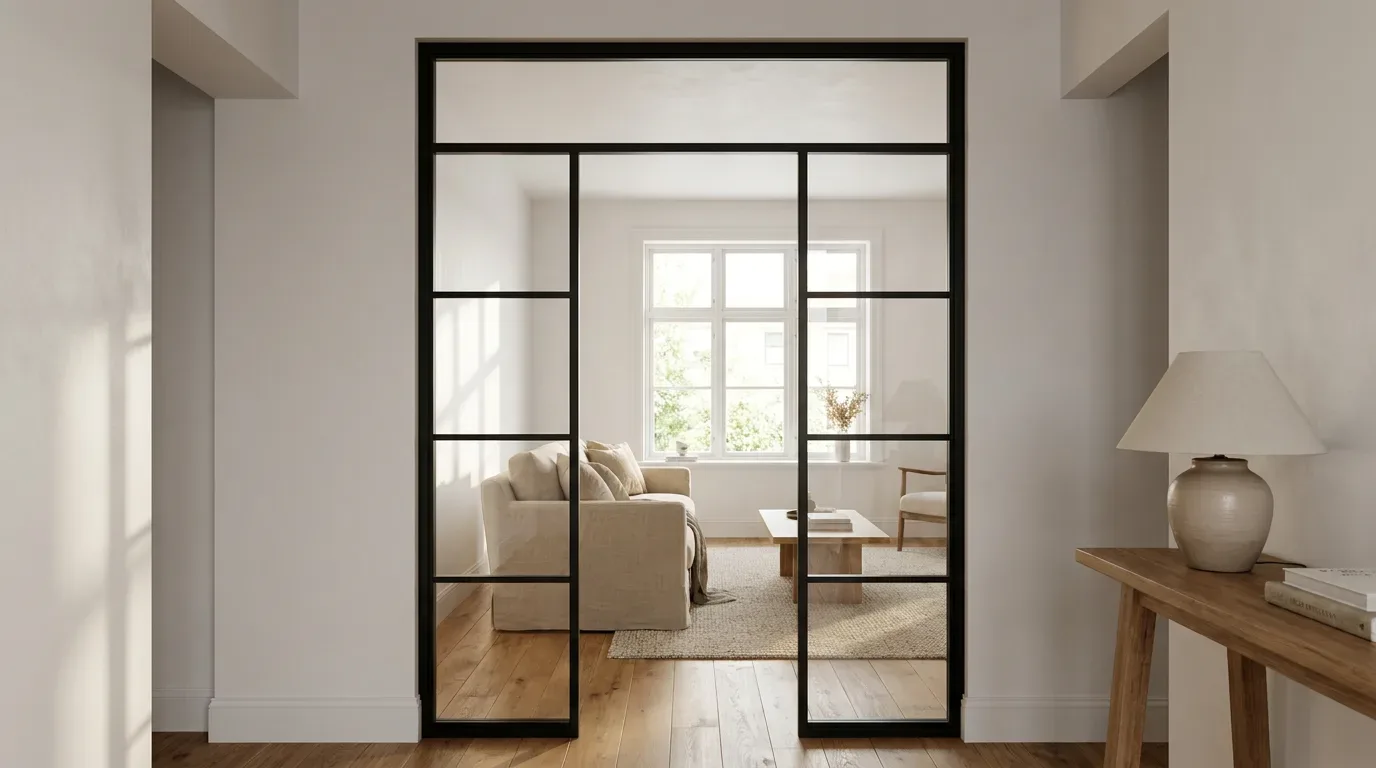
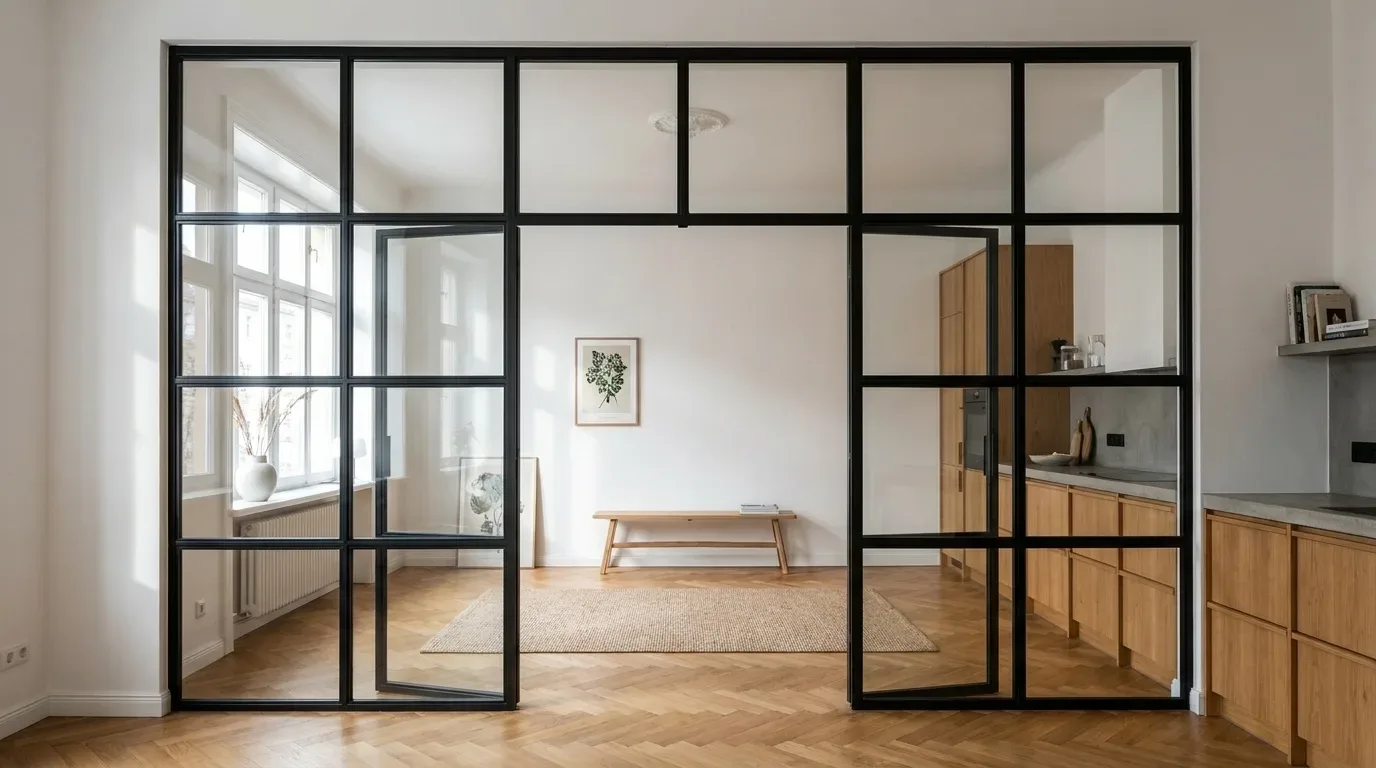
- Custom loft door: Room separation with light and visual flow, ideal for open-plan layouts and industrial interiors. Starting prices are shown in the configurator.
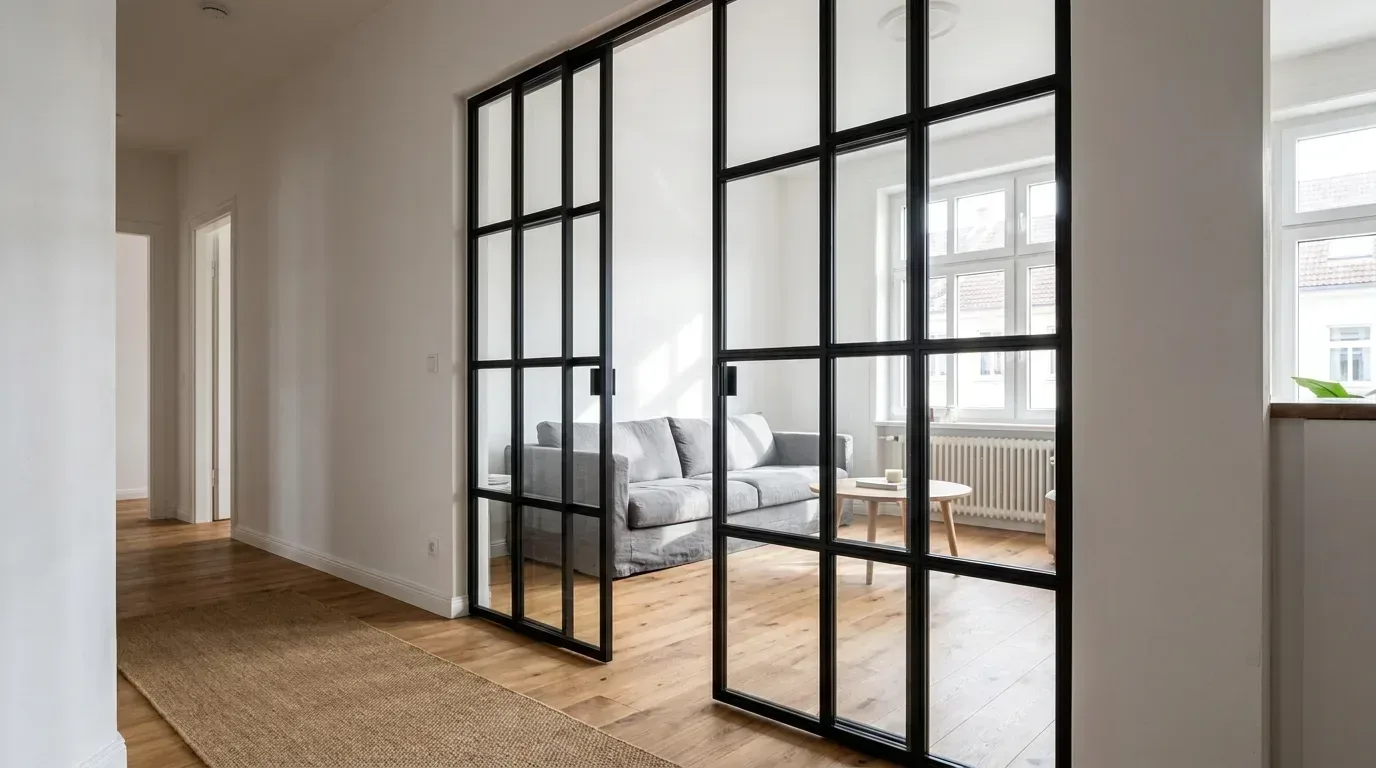
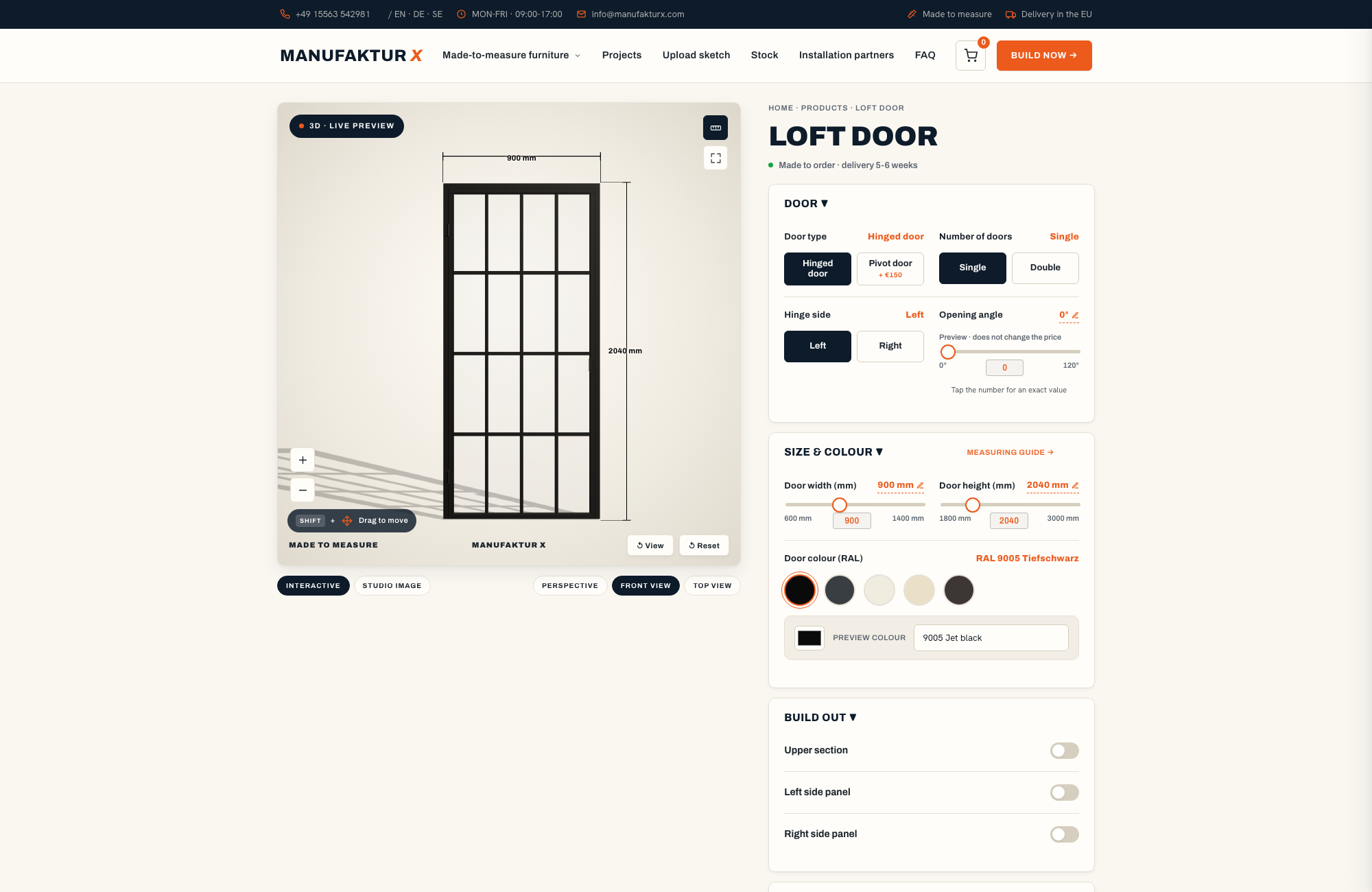
- Custom room divider: Flexible zoning without fixed walls, for living and office spaces with non-standard width requirements. Starting prices are shown in the configurator.
- Custom dining table: Individual lengths and widths for any room size, including the awkward dimensions between standard catalogue formats. Starting prices are shown in the configurator.
- Custom large shelf: Floor-to-ceiling solutions that reach the full height of your room and accommodate alcoves or sloped walls. Starting prices are shown in the configurator.
- Custom coffee table: Proportionally matched to your sofa and seating arrangement. Starting prices are shown in the configurator.
- Custom bench: Precise fits for hallways, dining areas, or under windows. Starting prices are shown in the configurator.
- Custom pipe shelf: Open shelving with a steel tube frame, for industrial interiors and rooms with exposed services. Starting prices are shown in the configurator.
An overview of all configurable products is available on the Manufaktur X homepage.
Custom Furniture in the Living Room: Dividers, Shelving, and Coffee Tables
The living room is the most common context for custom furniture, and for good reason: open-plan apartments - widespread in new-build developments across Europe - need structure without enclosure.
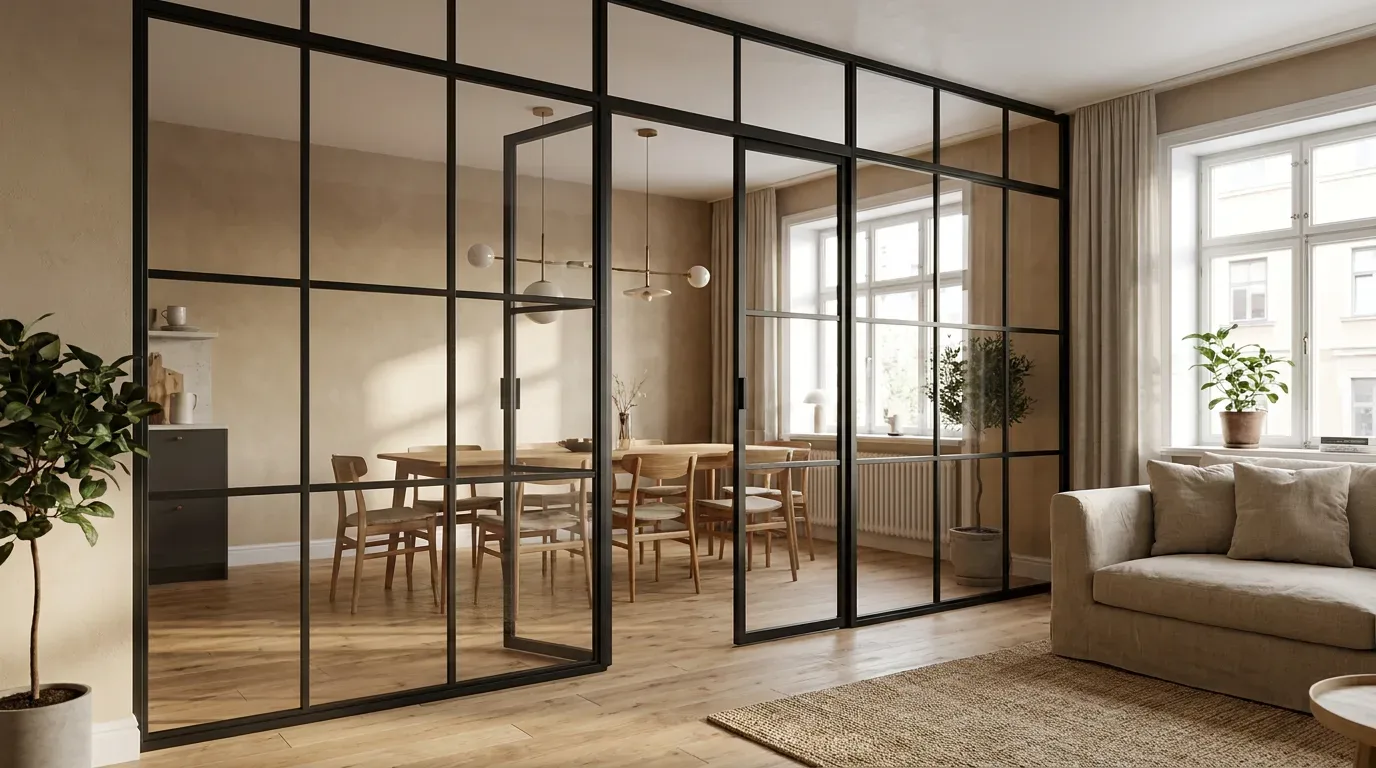
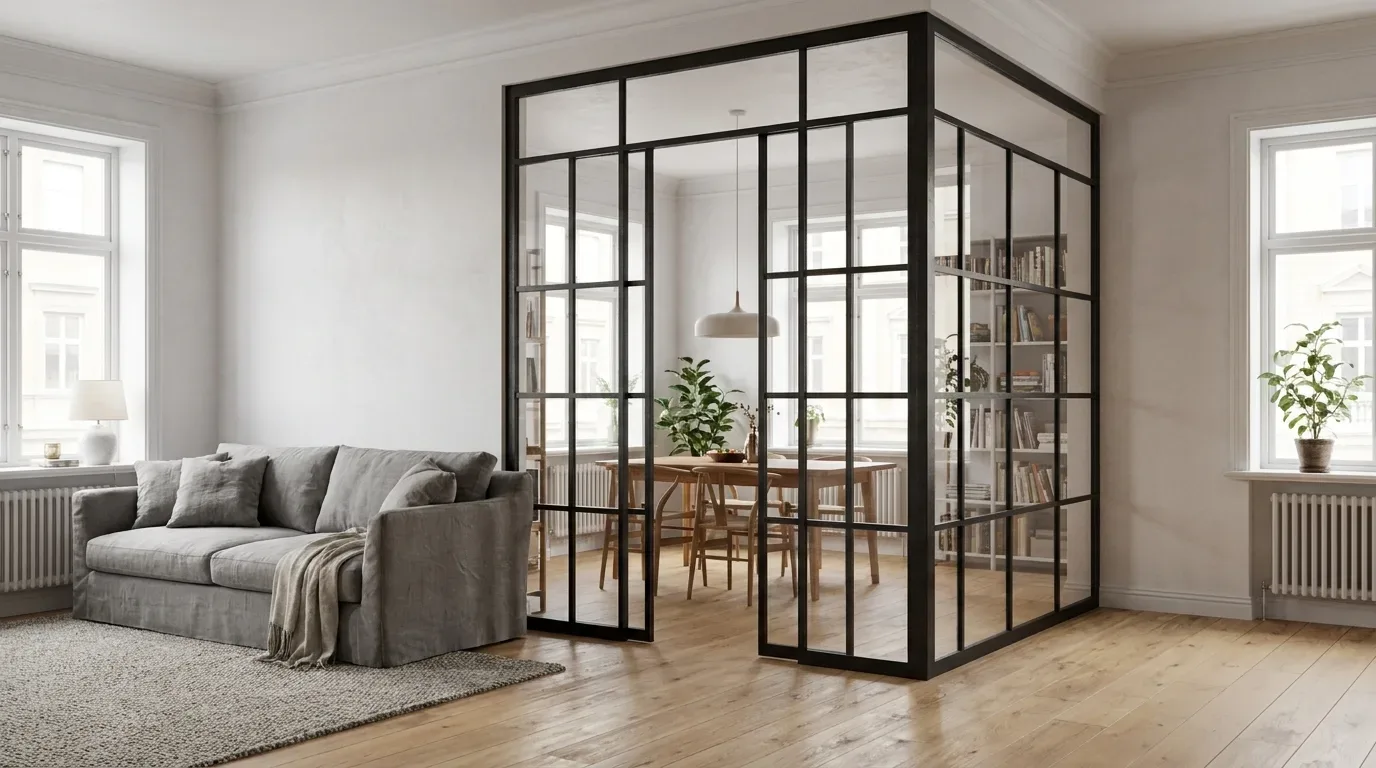
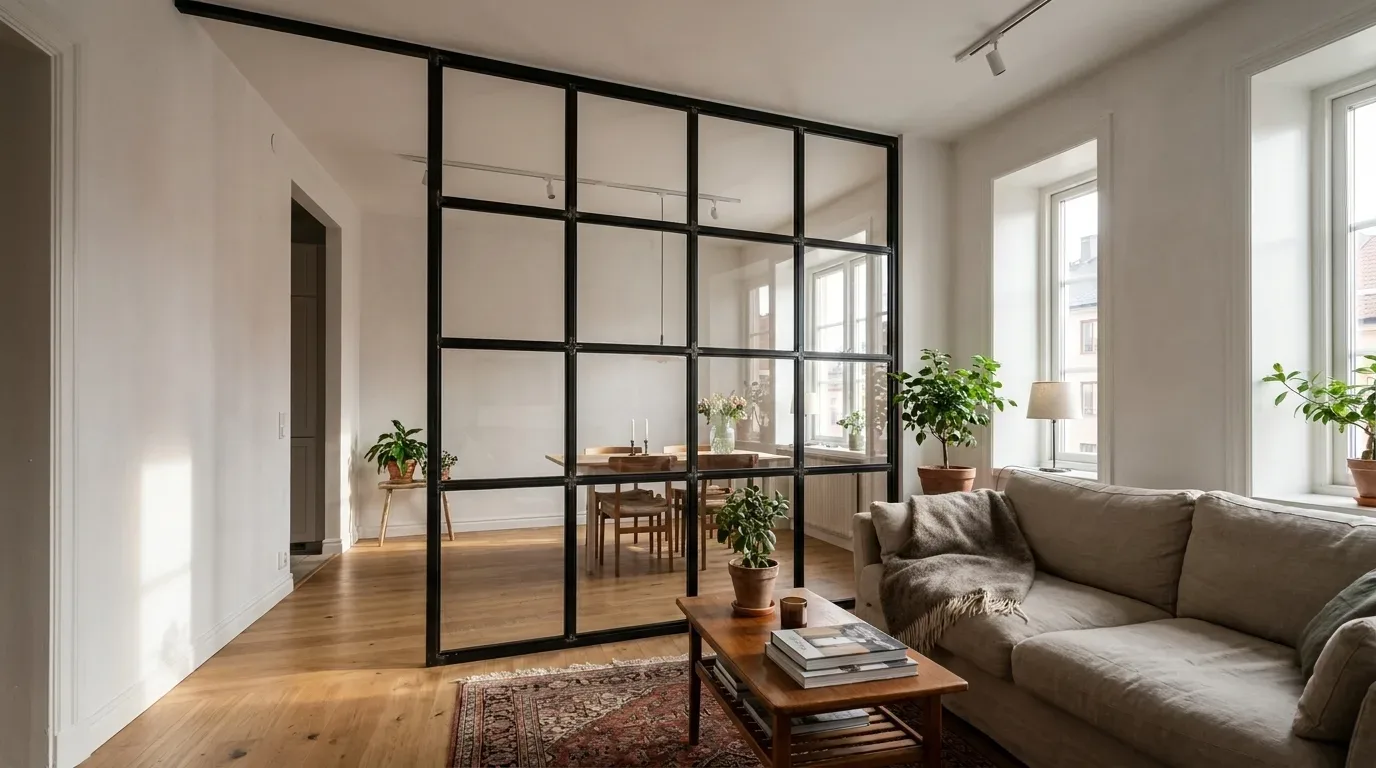
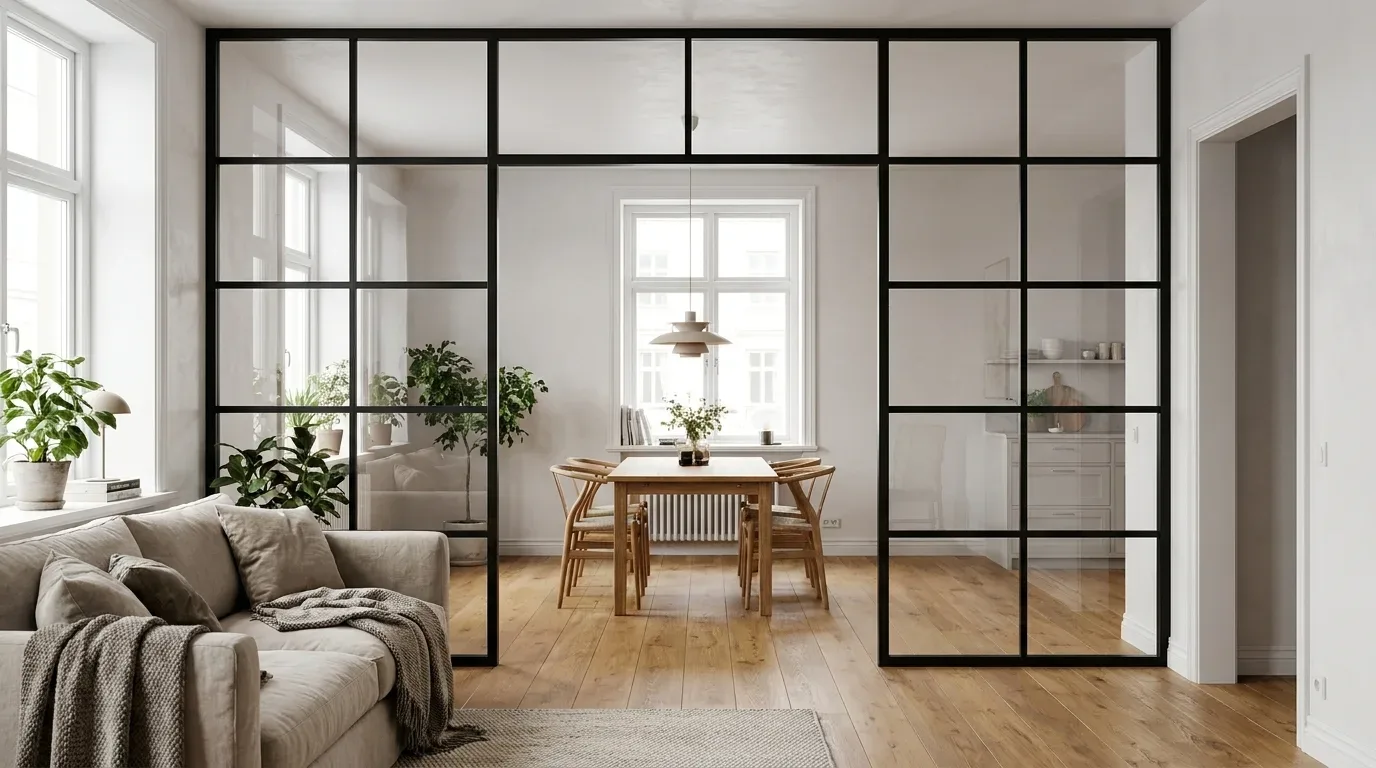
- A room divider in steel and clear or frosted glass divides a living and dining zone without blocking light - the glass type determines how much visual separation you get between the two areas
- A floor-to-ceiling large shelf closes the gap between a standard unit top and the ceiling - particularly relevant in period apartments where ceiling heights of 2.8 m or more are common. Shelf boards in oak or beech carry heavy loads over long spans without bowing
- A custom coffee table fits proportionally into the seating arrangement - ash for bright, airy rooms; oak for darker or high-contrast schemes
Custom Furniture for Home Offices: Specific Considerations
Home offices and professional work environments need furniture that responds to the actual workflow, not just the room dimensions. Custom pieces improve space utilisation and create working conditions shaped around real use.
Typical requirements in a home office or studio setting:
- Full-height storage for files and equipment, making use of every centimetre of ceiling height
- Desks or conference tables sized precisely for the available footprint
- Shelving systems for irregular alcoves or sloped attic walls
- Loft doors as modern partitions that separate without fully closing off a space
Ergonomic reference values for work furniture: work surfaces between 68 and 76 cm in height for correct arm position; leg clearance of at least 60 cm depth; storage within reach without twisting. Modular configurations are particularly future-proof - working spaces evolve with team size, new working patterns, and changing technology.
Steps toward an effective custom office layout:
- Baseline survey: Record room dimensions, light conditions, traffic routes, and existing infrastructure
- Needs analysis: Identify which work zones, storage volumes, and shared areas are required
- Define functional zones: Divide the space into work areas, meeting zones, quiet areas, and circulation routes
- Material selection: Choose wood species and steel colour based on usage intensity and longevity requirements
- Use the configurator: Visualise and refine the result before committing to an order
Pricing and Cost Factors: What Does Custom Furniture Actually Cost?
The cost of a custom piece varies with complexity, material choice, and selected options. The main price drivers are the solid wood species, surface treatment (stain, oil), and the level of fabrication involved. Oak runs approximately 10-15% above ash; beech approximately 5-10% above ash. These differences reflect availability and processing effort - not a quality ranking. Larger dimensions, additional glass panels, or special RAL colours increase the price accordingly.
When budgeting, factor in long-term considerations alongside the purchase price: durability, maintenance effort, and repairability. A solid wood piece that can be sanded and re-oiled after damage does not need to be replaced - that changes the cost calculation significantly over 10 or 20 years.
| Product | Default configuration price | Note |
|---|---|---|
| Loft Door | 1,643 € | Steel and glass, default configuration 900 × 2,040 mm |
| Room Divider | 2,212 € | Steel + laminated glass, custom width |
| Large Shelf | 3,200 € | Solid wood, steel frame, floor-to-ceiling |
| Dining Table | 2,370 € | Solid wood, steel frame |
| Coffee Table | 1,800 € | Solid wood, steel frame |
| Bench | 1,100 € | Solid wood, steel frame |
| TV Stand | 1,540 € | Solid wood, steel frame |
| Bedside Table | 995 € | Solid wood, steel frame |
| Hallway Wardrobe | 1,870 € | Solid wood, steel frame |
| Display Cabinet | 2,945 € | Solid wood, steel frame |
| Pipe Shelf | 1,065 € | Modular pipe shelf |
| Desk | 1,815 € | Solid wood, steel frame |
| Chest of Drawers | 5,040 € | Solid wood, steel frame |
The Manufaktur X configurator calculates the transparent fixed price instantly with every change you make. The price shown is the order price - no subsequent cost increases. Delivery costs and lead times are shown clearly in the cart.
Common Mistakes When Planning Custom Furniture - and How to Avoid Them
Mistake 1: Using Architectural Plans Instead of On-Site Measurements
Architectural drawings record the design intent, not the actual built condition. In period buildings, these two can differ by 2-5 cm. A piece ordered to plan dimensions and then produced to those figures may not fit after delivery, and cannot be adjusted afterwards. Measure on-site, at a minimum of three points per dimension, and use the smallest reading as your input value.
Mistake 2: Forgetting Skirting Boards, Radiators, and Power Sockets
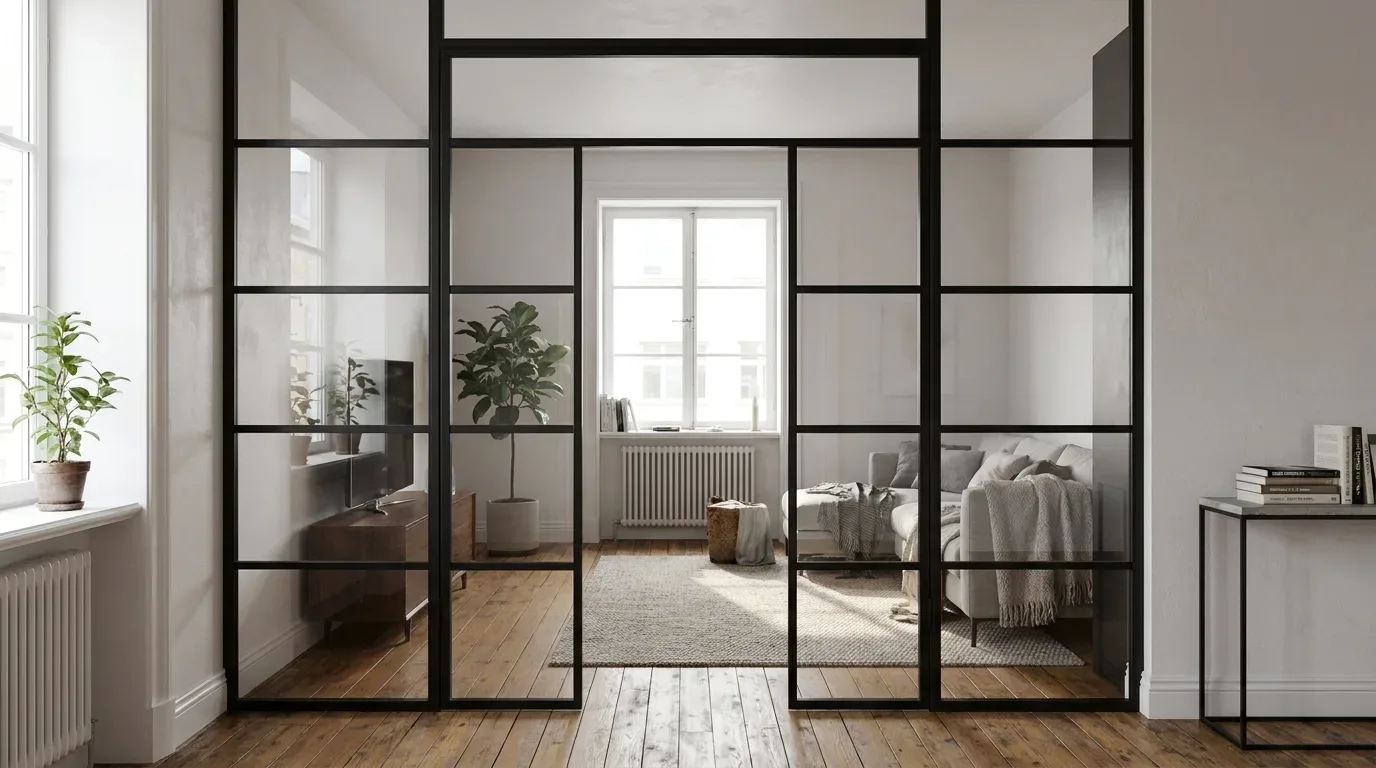
A skirting board of 12 mm height prevents a floor-to-ceiling shelf from sitting flush against the wall. A radiator beneath the planned shelf position limits the usable depth. A socket behind a planned piece of furniture becomes inaccessible after installation. Documenting these details before ordering costs nothing; discovering them after delivery costs a great deal.
Mistake 3: Choosing a Wood Species on Appearance Alone
Ash reads as lighter and more open than oak in product images - for a dining table in daily use, it is nevertheless less suitable. Base your wood species choice on actual usage requirements: Brinell hardness and repairability are measurable criteria. Changing the species after production is not possible.
Mistake 4: Selecting a RAL Colour Only From the Screen
Request a physical colour sample before ordering and assess it under the real lighting of the intended room. Matt finishes are more susceptible to the difference between screen and reality than gloss surfaces. RAL 7016 (anthracite grey) can appear almost black on a monitor - in an actual room it reads as clearly grey.
Mistake 5: Omitting the Installation Clearance for Loft Doors
Subtract approximately 5 mm per side (left, right, and top) from your smallest measured dimension before entering it as your door size. A door produced exactly to the raw opening cannot be installed. This error cannot be corrected after delivery.
Mistake 6: Not Checking Door Swing Radii
A dining table that is technically correct in the configurator can be functionally wrong in the actual room if a nearby door swings into the planned furniture area. Check which doors swing into the space and how much clearance they require before finalising your dimensions.
Caring for Custom Furniture Made from Solid Wood and Steel
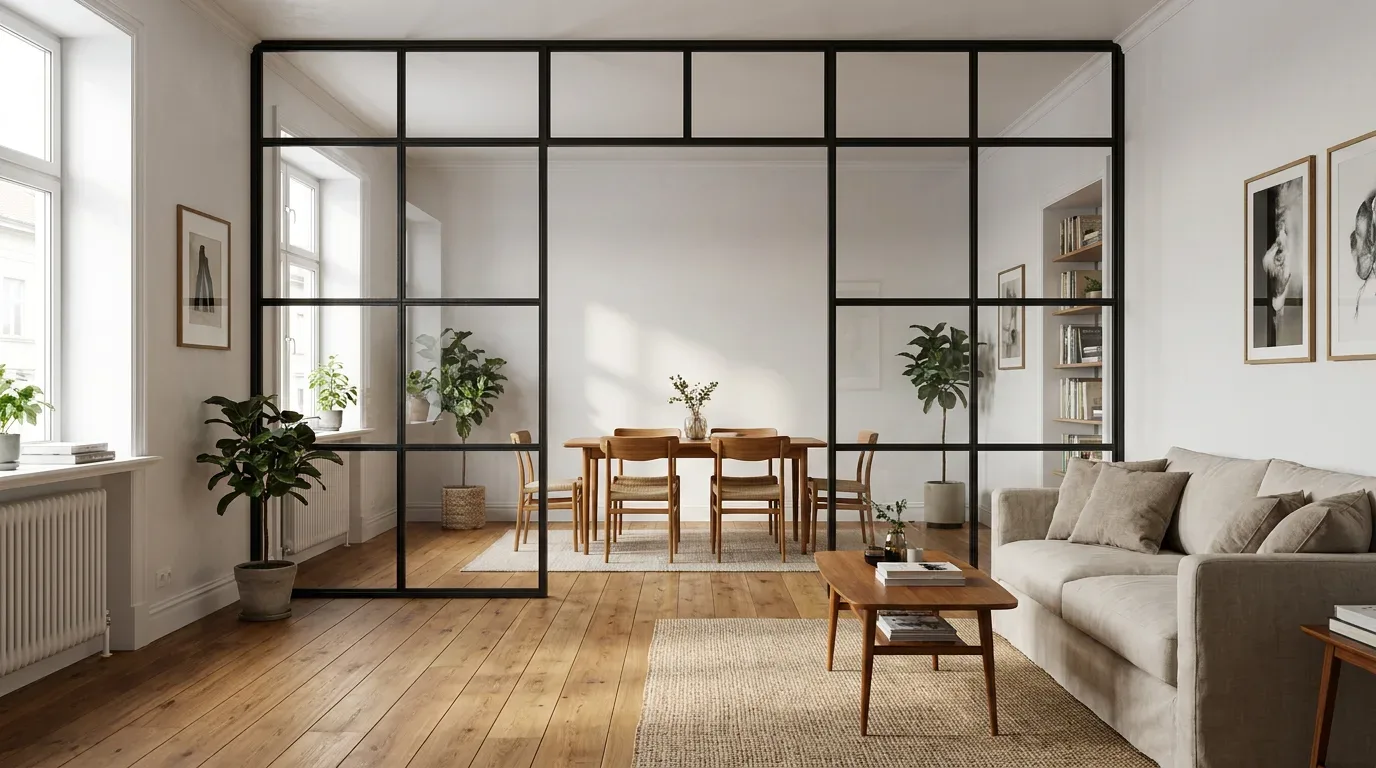
With the right care, custom pieces in solid wood and powder-coated steel remain fully functional for decades. Each material has its own requirements:
- Solid wood (oiled): Re-oil or wax every 12-18 months. Wipe surfaces with a slightly damp cloth and avoid aggressive cleaning agents. Scratches can be sanded out and re-oiled without rebuilding the entire surface.
- Steel (powder-coated): Dust with a dry cloth. More significant damage to the coating can be repaired by re-coating.
- Glass (loft doors and room dividers): Clean with standard glass cleaner.
- General: Avoid prolonged direct sunlight to prevent fading and material stress.
Configure Your Custom Furniture Now
With the interactive Manufaktur X configurator, you design your piece in precise detail and see the transparent fixed price - along with all delivery information - before you place your order. All products are manufactured in the EU. EU-wide delivery is standard. If your space is unusual, upload a sketch and request an individual quote - Manufaktur X will assess the feasibility and come back to you with a concrete proposal. A full overview of all configurable products is available on the Manufaktur X homepage.
Frequently Asked Questions About Planning Custom Furniture
Can I order custom furniture online without consulting a specialist first?
Yes. The Manufaktur X configurator is built so that you can enter all relevant parameters yourself - dimensions, wood species, stain tone, RAL steel colour - and see the transparent fixed price in real time. No on-site consultation is required. If your space goes beyond the standard configurator options, you can upload a sketch and request an individual quote instead.
What should I do if my walls are not at right angles?
Non-right-angle walls are the norm rather than the exception in period buildings across Europe. In this case, use the measurement at the narrowest point and allow for a gap adjustment at the wider side. For shelves, a small gap to the wall is usually acceptable visually. For loft doors, the installation clearance is structurally built in and compensates for minor wall irregularities. If the deviation exceeds approximately 15 mm, upload a sketch via the Manufaktur X website - feasibility will be assessed individually.
How quickly will I receive an order confirmation after placing my order?
Order confirmation is sent by email immediately after checkout. The production period begins once payment is received. All products are produced and delivered within 5-6 weeks. Changes after production has started are not possible - review all dimensions and configuration details carefully before confirming your order.
Can a delivered custom piece be modified after the fact?
No. Custom furniture is produced exactly to the specifications entered in the configurator. Changes to wood species, stain tone, or dimensions are not possible after production. Solid wood surfaces can be sanded and re-oiled; steel frames can be re-coated - but these are maintenance actions, not structural modifications.
What wall fixings are needed for a floor-to-ceiling shelf?
The Manufaktur X large shelf is designed for wall mounting. The appropriate fixing method depends on your wall material: solid brick, aerated concrete block, and plasterboard each require different anchors and screws. Check your wall material before installation and use suitable fixings. If in doubt, a local installation professional can handle the mounting - the furniture itself is delivered ready to install by Manufaktur X.