Custom Furniture: The Complete Guide - What It Is, What to Look For, and How to Configure Yours
Alexander Stelzner · January 22, 2026 · updated August 16, 2026 · 18 min read · 18
Standard furniture sizes were designed for standard rooms. But a period apartment with 3.2-metre ceilings, an attic conversion with a sloped wall, or an open-plan loft with a 1.38-metre-wide doorway opening plays by different rules entirely. When the room is the constant and the furniture must adapt, custom-made pieces stop being a luxury and start being the only practical answer.
When Off-the-Shelf Stops Working
Across Europe, a significant share of the housing stock predates the era of standardised construction modules. Pre-war apartment buildings, converted industrial spaces, and post-war period flats often feature rooms where no two walls are perfectly parallel, ceiling heights shift between rooms, and alcoves were created by subsequent installations rather than deliberate design. Flat-pack furniture was conceived for new-build homes with predictable geometry - 90-degree corners, level floors, consistent ceiling heights.
In older or converted buildings, these assumptions fail consistently. A shelf that is 3 cm too tall for the knee-height zone under a sloped ceiling cannot simply be trimmed. A door panel sized for a standard 1-metre opening leaves a 1.38-metre structural gap unfilled. This is not an aesthetic problem; it is a functional one. Custom furniture is the direct response.
The renovation trend confirms the direction: across the EU, permits for residential conversion and renovation work have been rising steadily, while new-build activity has slowed. More people are investing in the spaces they already live in - which means more rooms with non-standard dimensions that need furniture built to match.
„Maßgefertigte Einbauten sind kein Luxus, sondern in vielen Altbauten die einzig funktionale Lösung. Standardmaße wurden für Neubauten mit rechten Winkeln entwickelt - nicht für gewachsene Gebäudestrukturen."
Bauwelt, Ausgabe 12/2022
Many brands describe their products as "customisable" - but this usually means choosing from a predefined size grid with increments of 10 or 20 cm. A shelf at 2,370 mm wide is simply not available if the grid stops at 2,200 mm. Genuine custom production, as Manufaktur X practises it, means width, depth, and height are matched to the millimetre to your actual space. You enter your exact desired dimensions directly into the configurator - not the construction opening measurement, not an approximation.
The real difference is not just size. Handcrafted furniture adapts to the architecture of your room rather than the constraints of a production catalogue. A shelf closes flush with the wall surface. A dining table is built to the height that works with your specific chairs. A bench or coffee table is not pulled from a warehouse; it is made for a particular floor plan.
You also control every material decision: wood species, stain colour, surface finish, steel colour, handle style. Solid wood, powder-coated steel, and safety glass are not marketing claims - they are the reason these pieces last 20 years rather than 8. To put this in perspective: IKEA offers well-designed, affordable furniture that suits many situations. But even their largest product ranges top out at fixed dimensions and standardised materials. When your room falls outside those parameters, the comparison becomes straightforward.
Criterion
Standard retail furniture
Custom-made furniture
Fit
Limited - frequent compromises required
Exact fit to your room and needs
Design freedom
Restricted to manufacturer's options
Every detail chosen by you
Material quality
Mixed wood composites, often particleboard
Solid wood, steel, safety glass
Lifespan
Typically 5-10 years
20 years or more
Long-term value
Low - difficult to repair or restore
High - restorable and refinishable
Room geometry
Designed for standard, square rooms
Handles slopes, alcoves, any geometry
The Manufaktur X Product Range: Steel, Glass, and Solid Wood
Manufaktur X produces custom furniture in steel, glass, and solid wood - with different material combinations depending on the product. Two clear product groups exist:
Steel and glass products (glass as a structural and visual element):
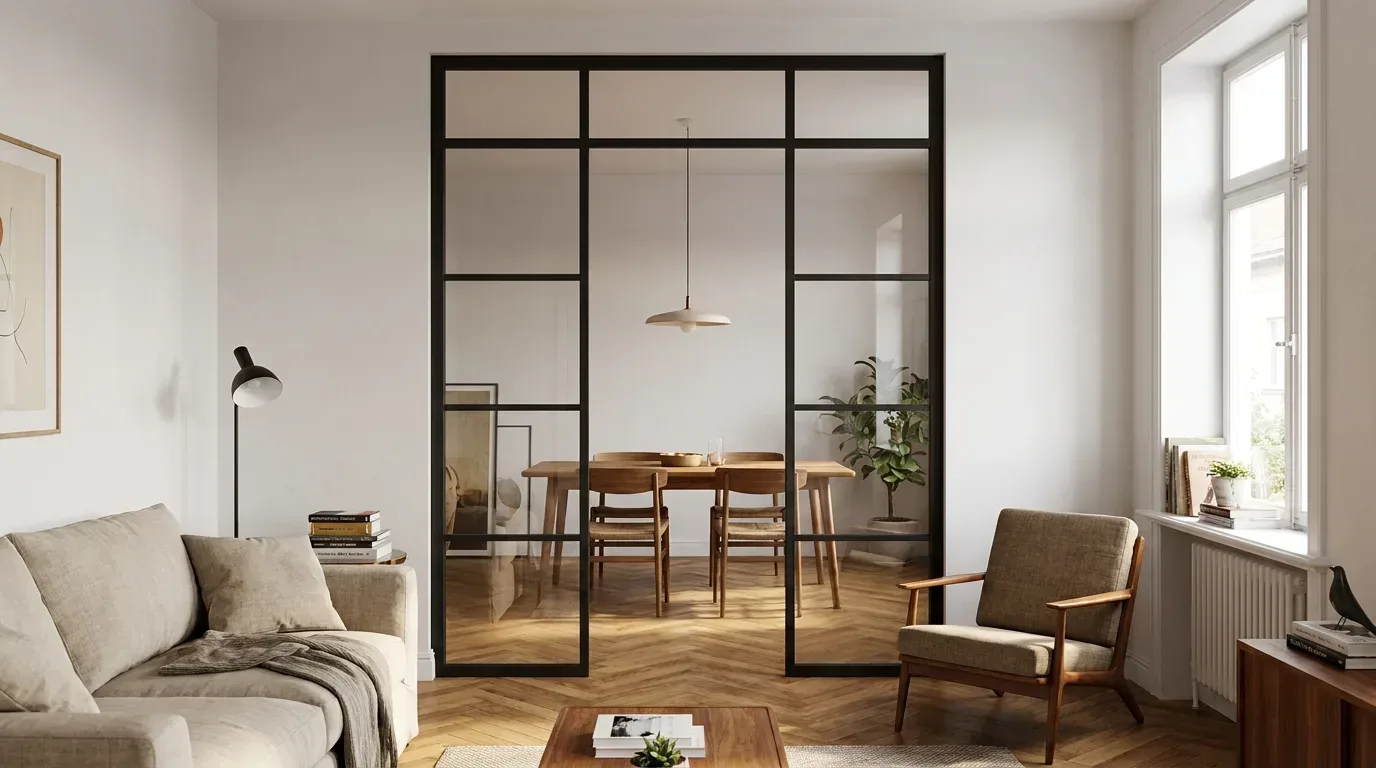
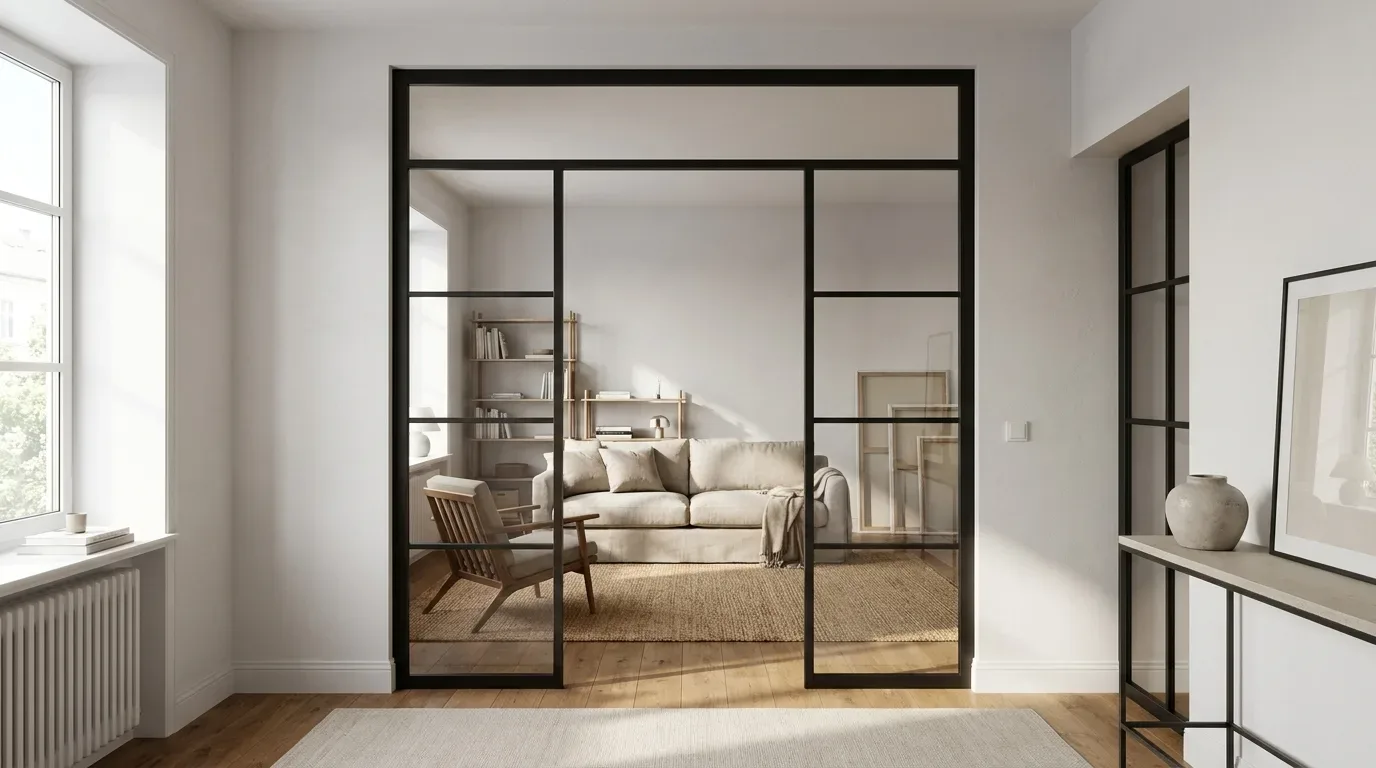
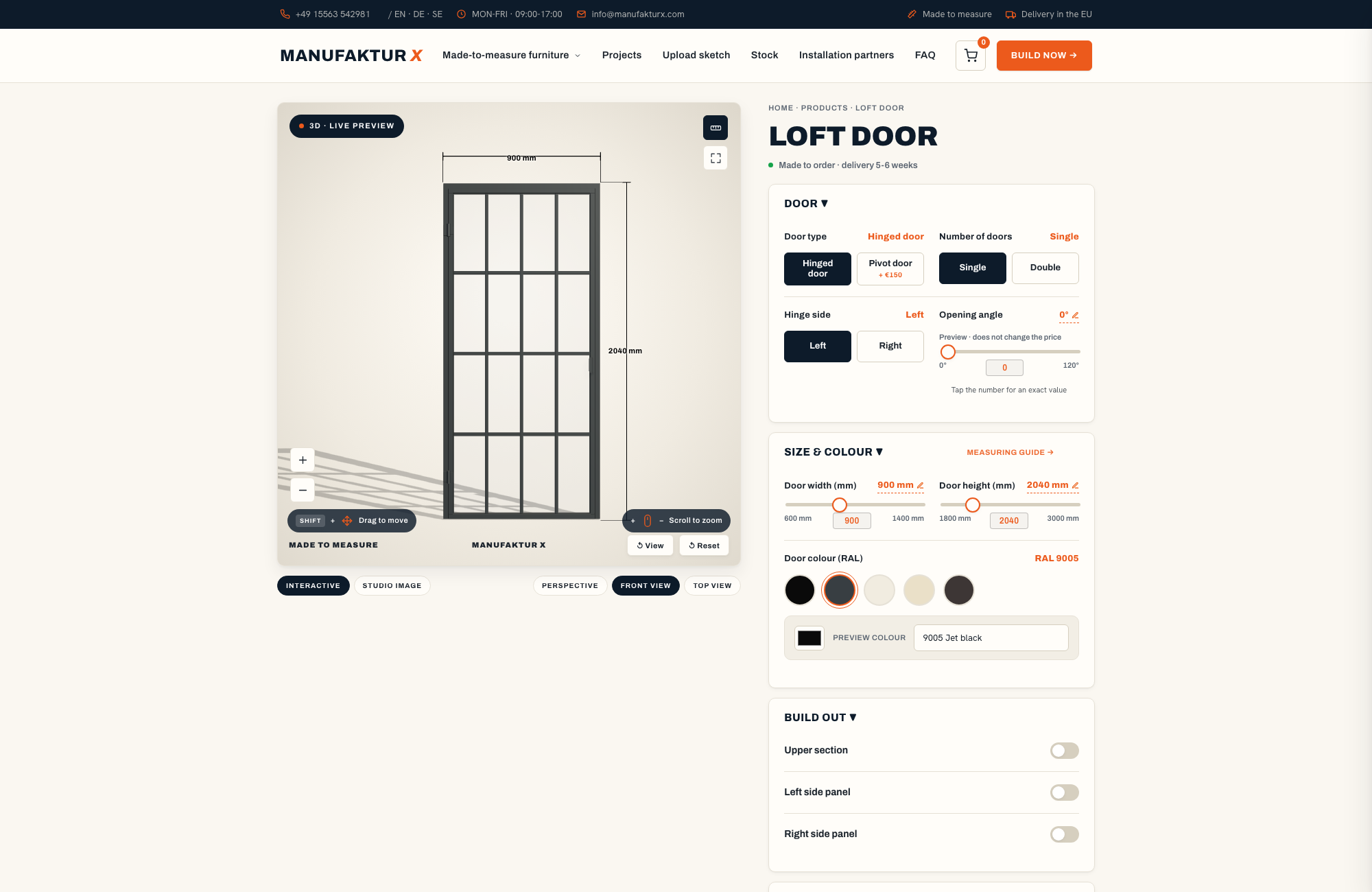
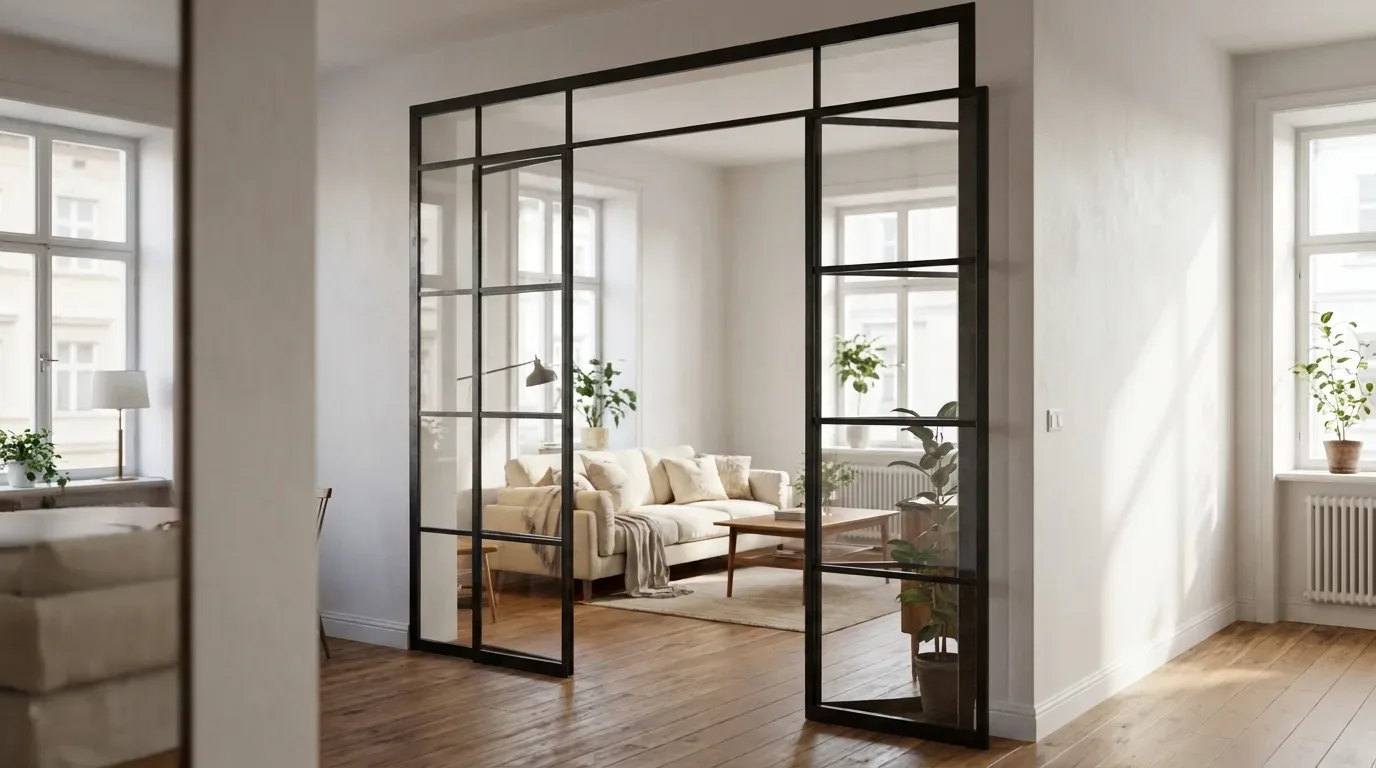
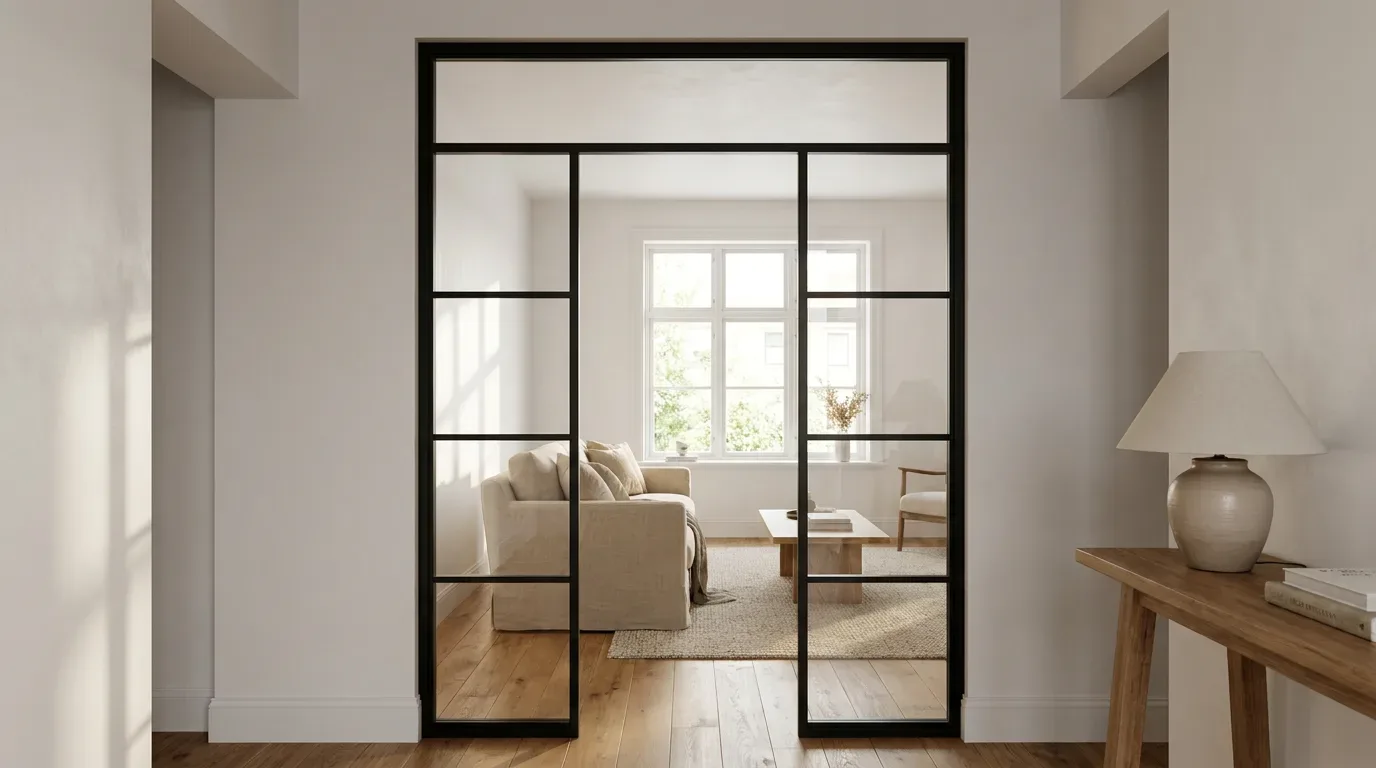
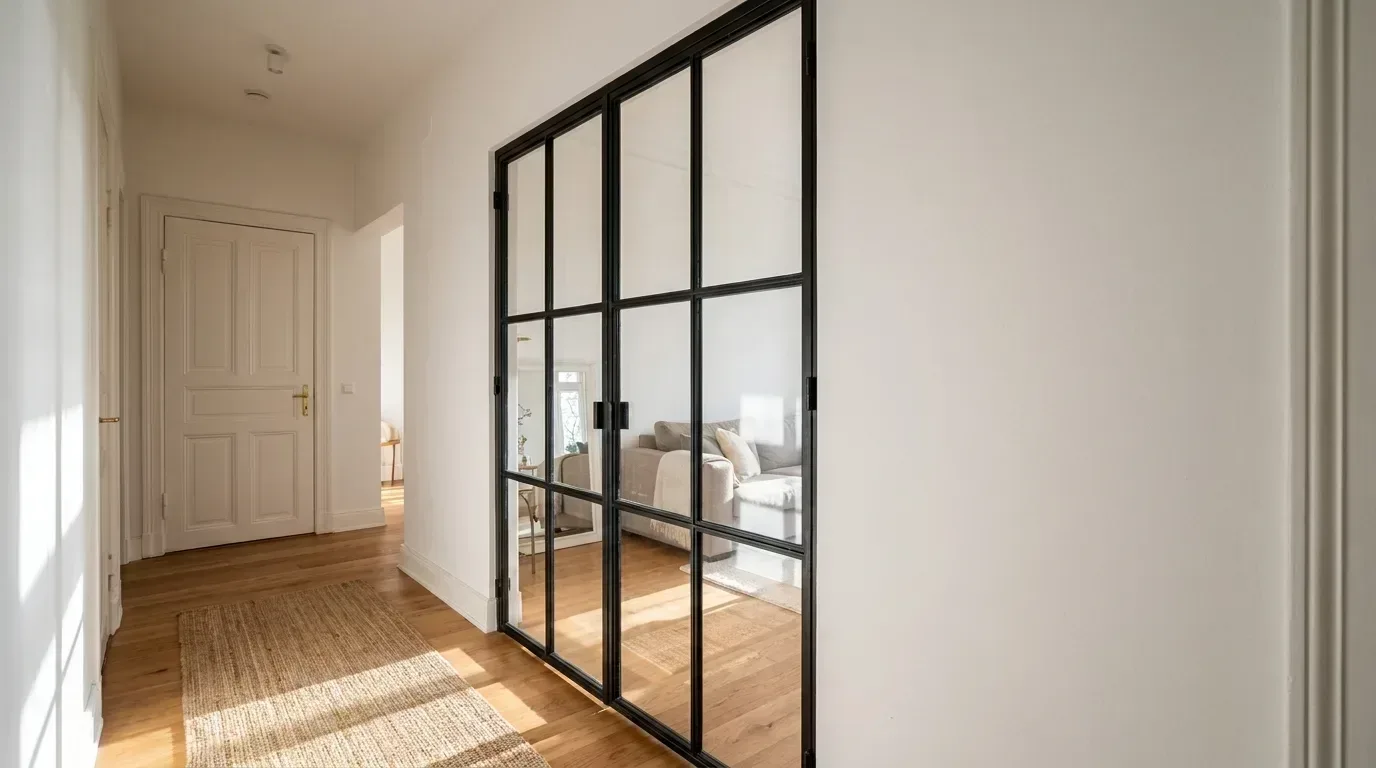
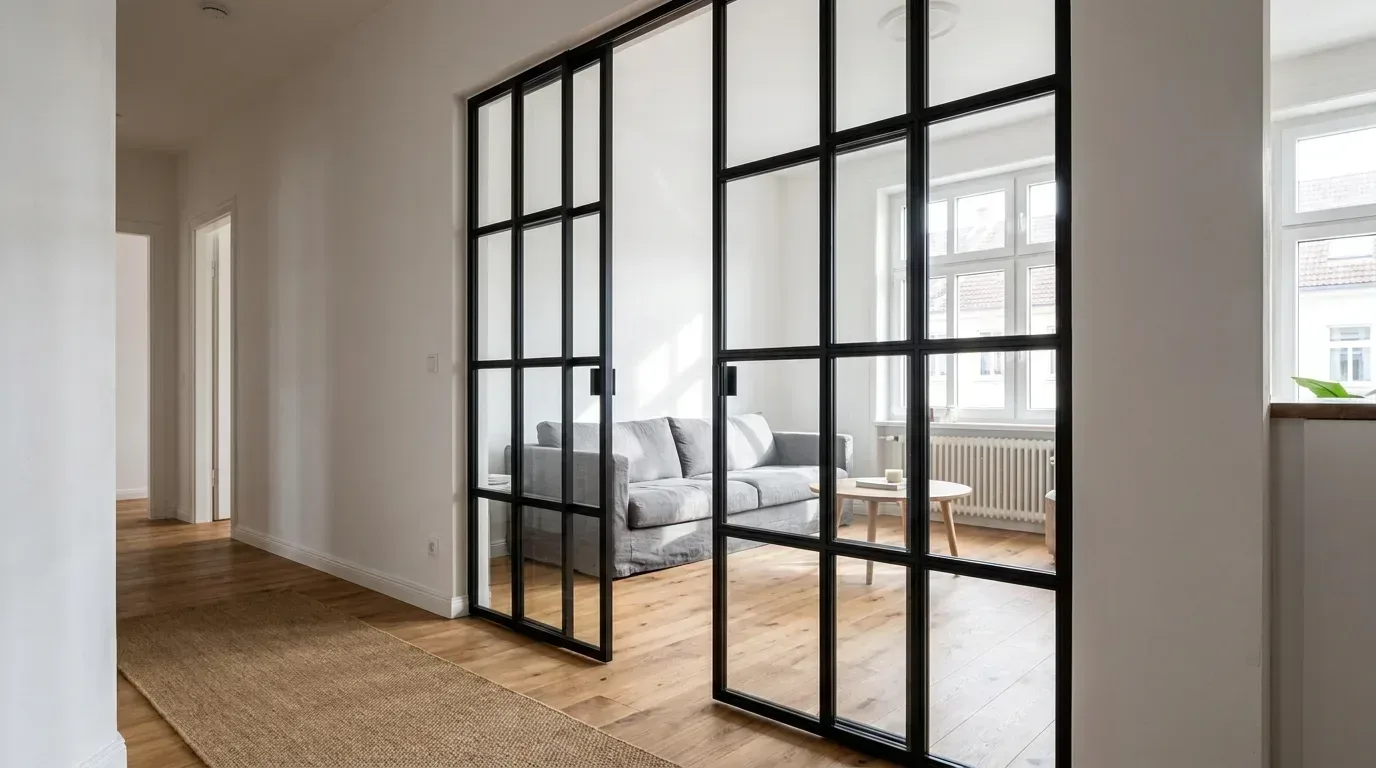
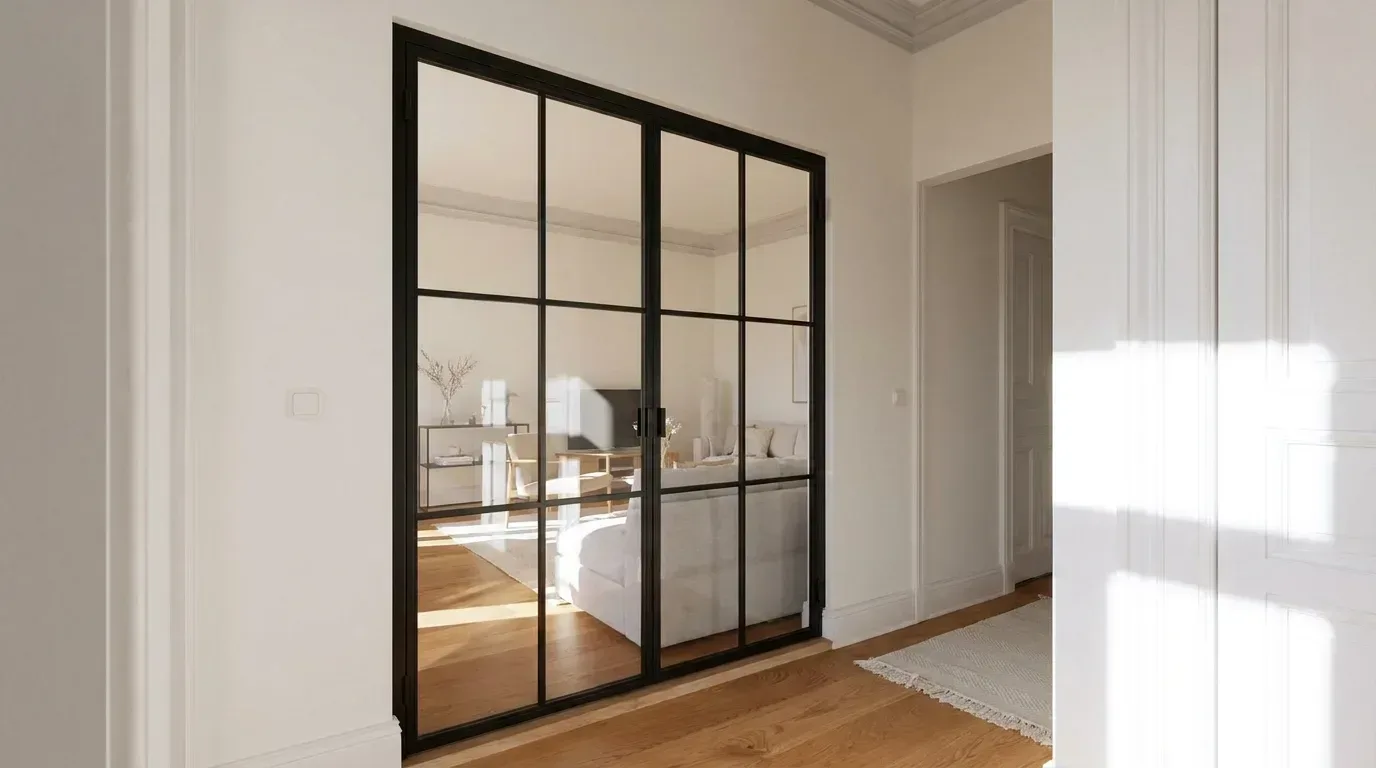
Loft door: A functioning door with a door stop (left or right opening), chosen swing direction, opening angle, handle, and hinges. It connects spaces without completely sealing them off. Light passes through; the atmosphere of each room remains distinct.
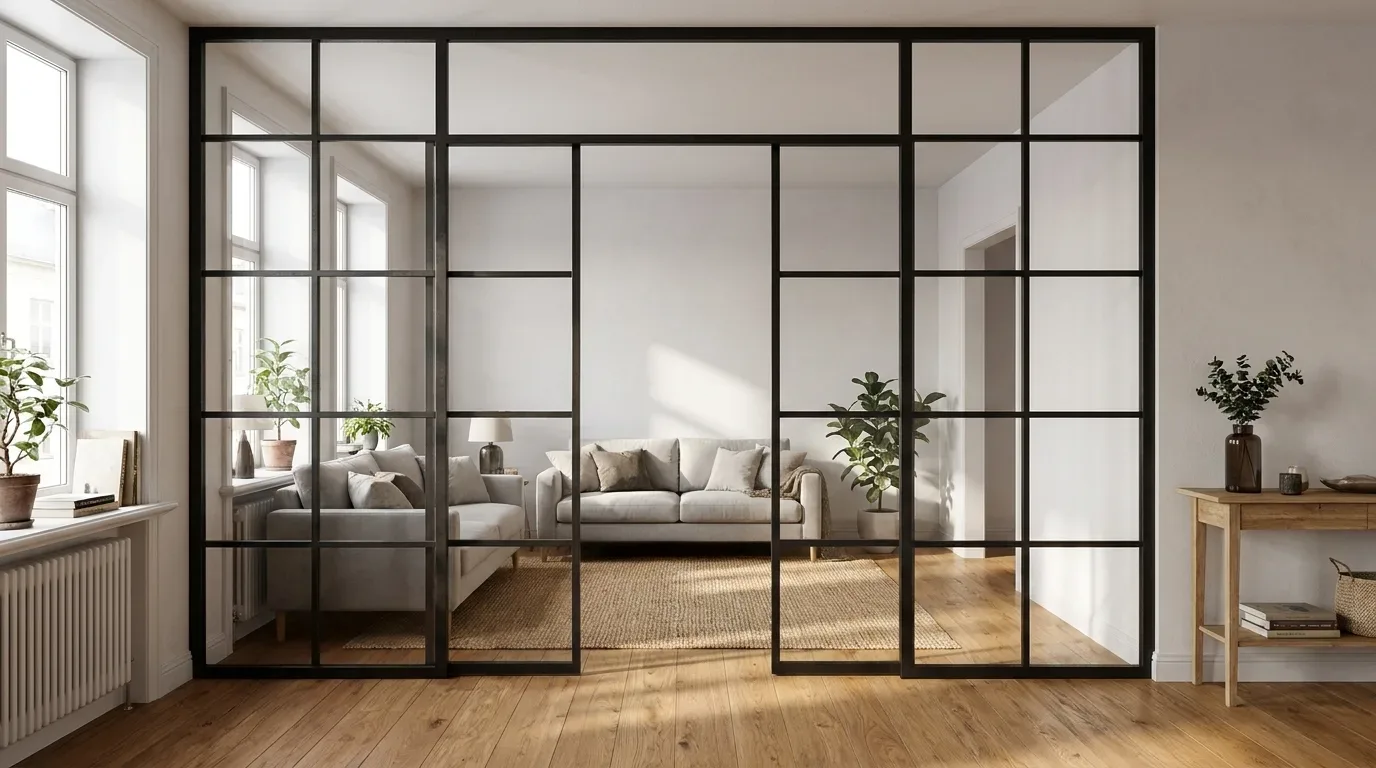
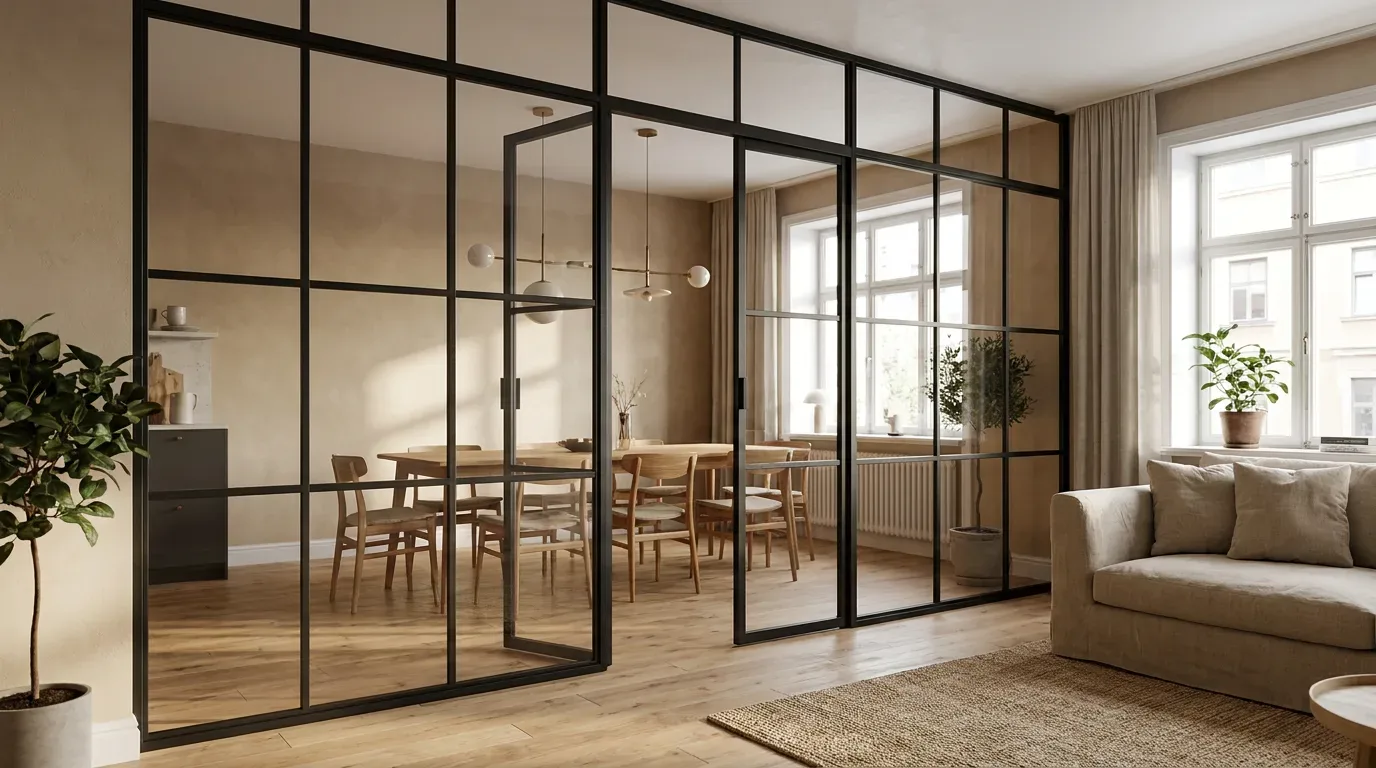
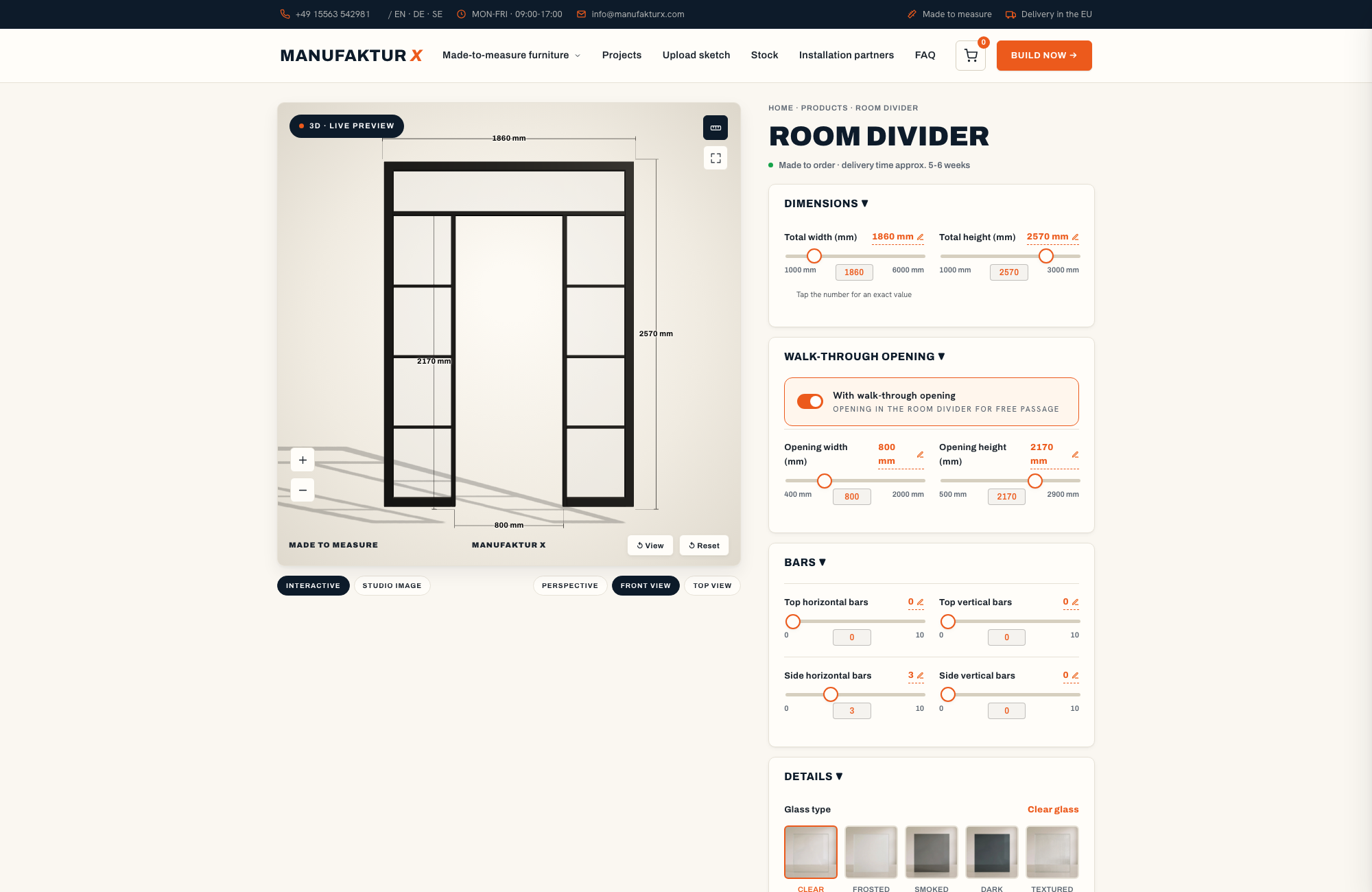
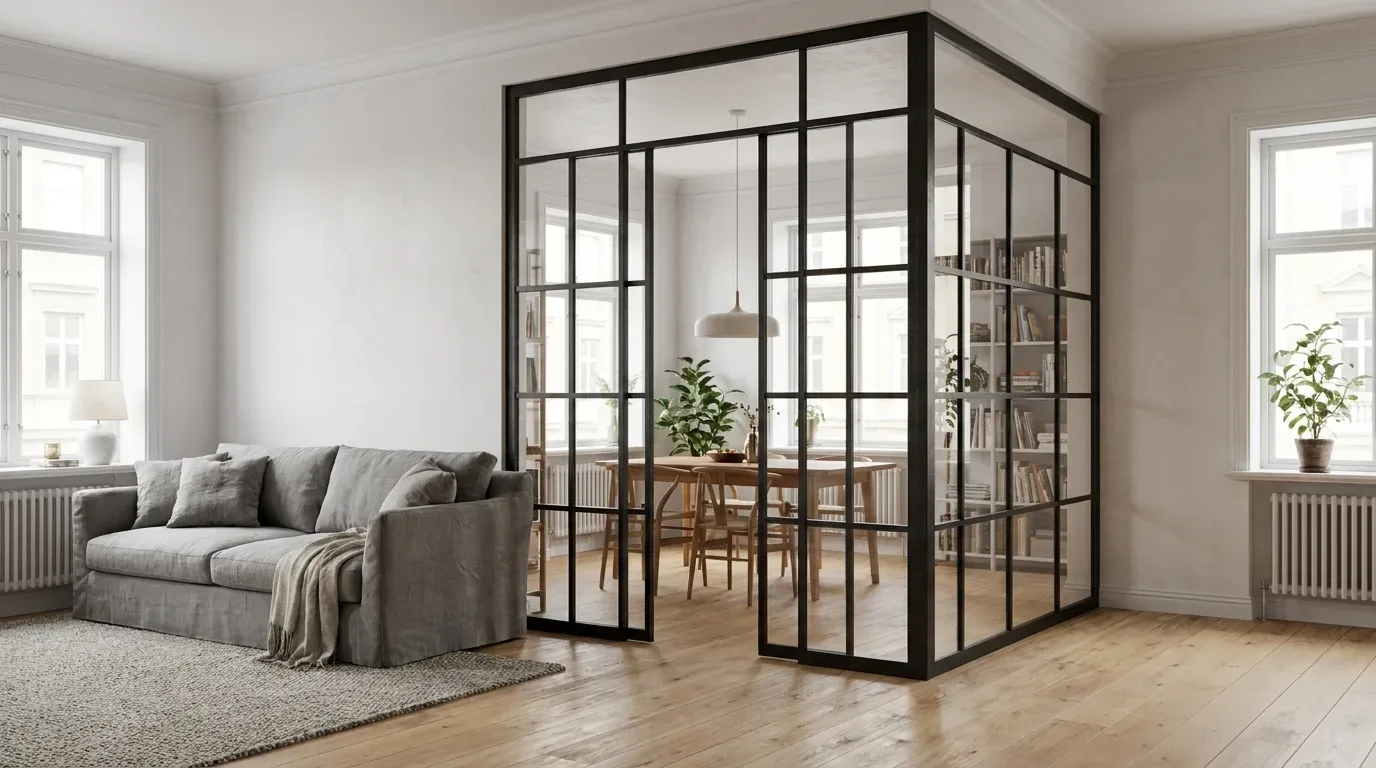
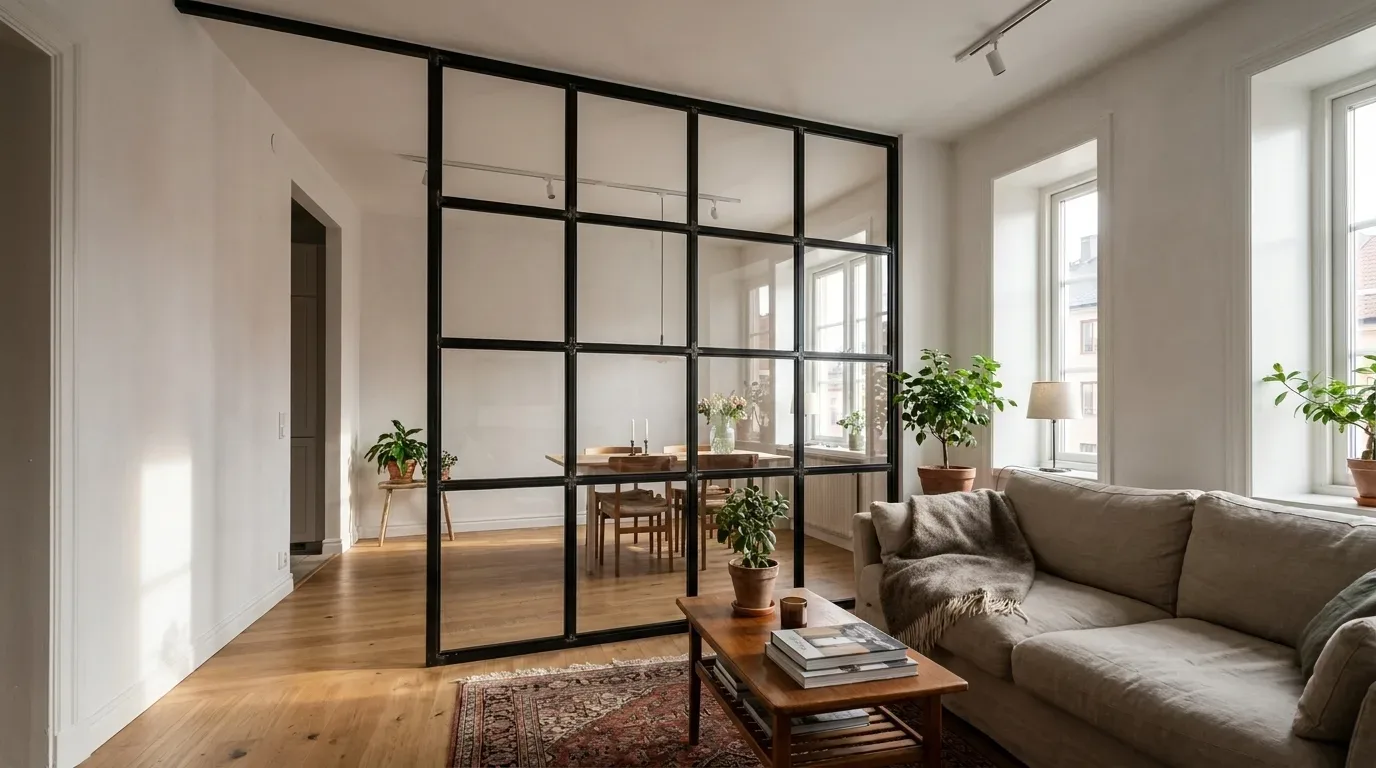
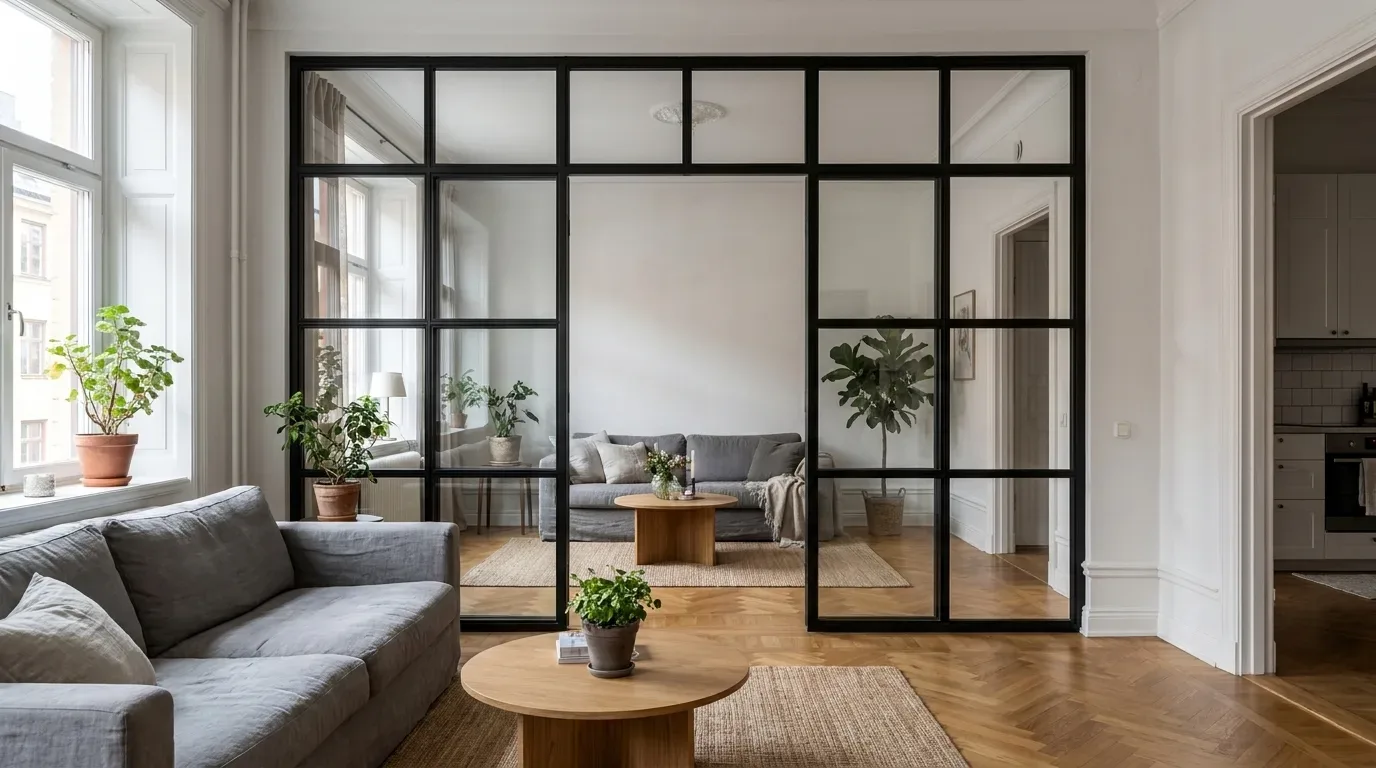
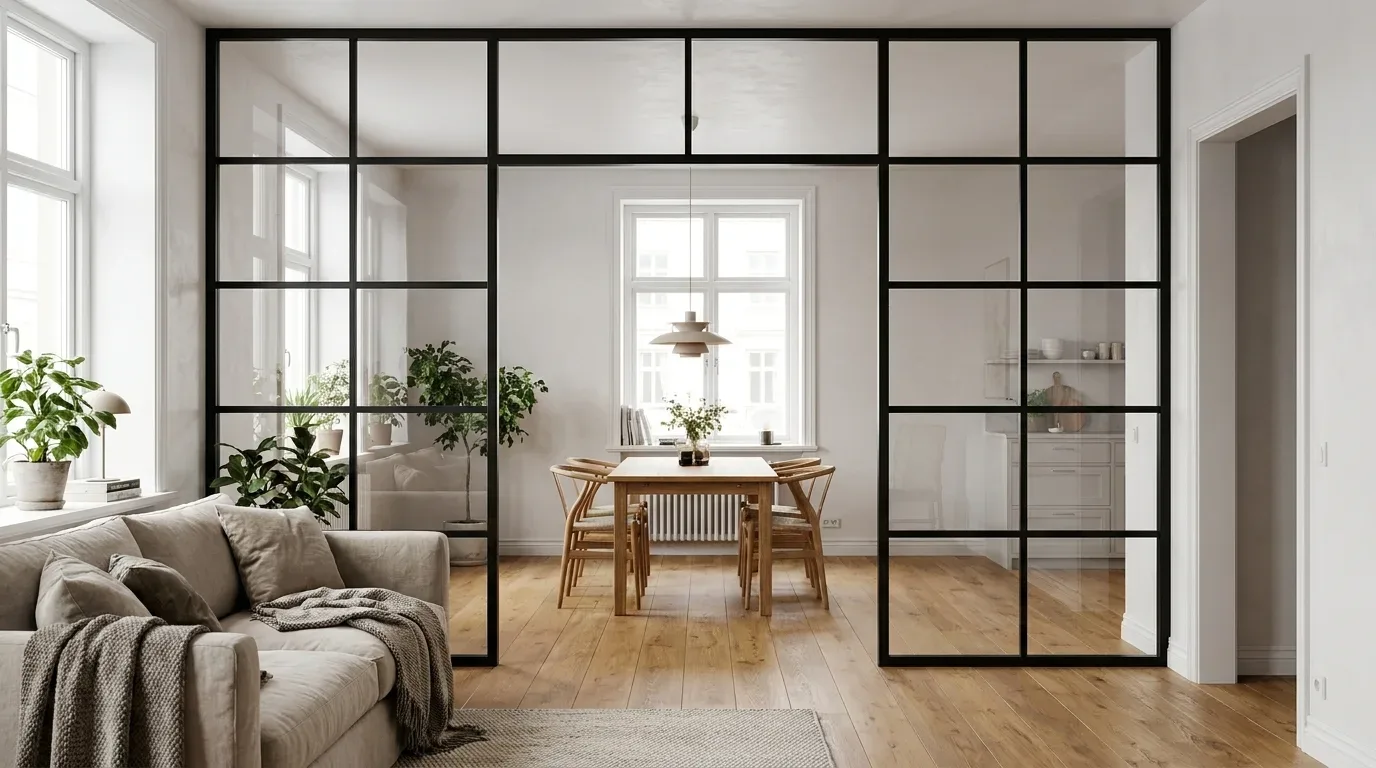
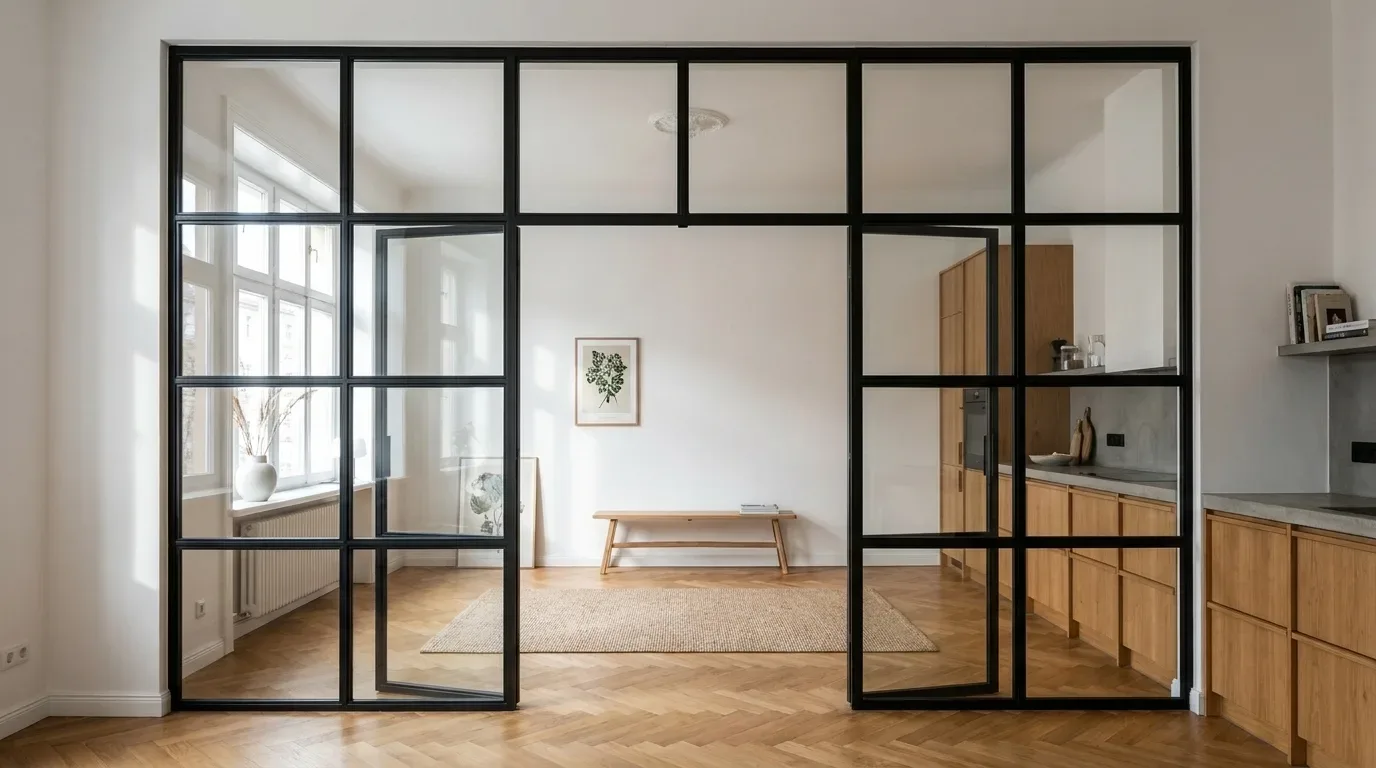
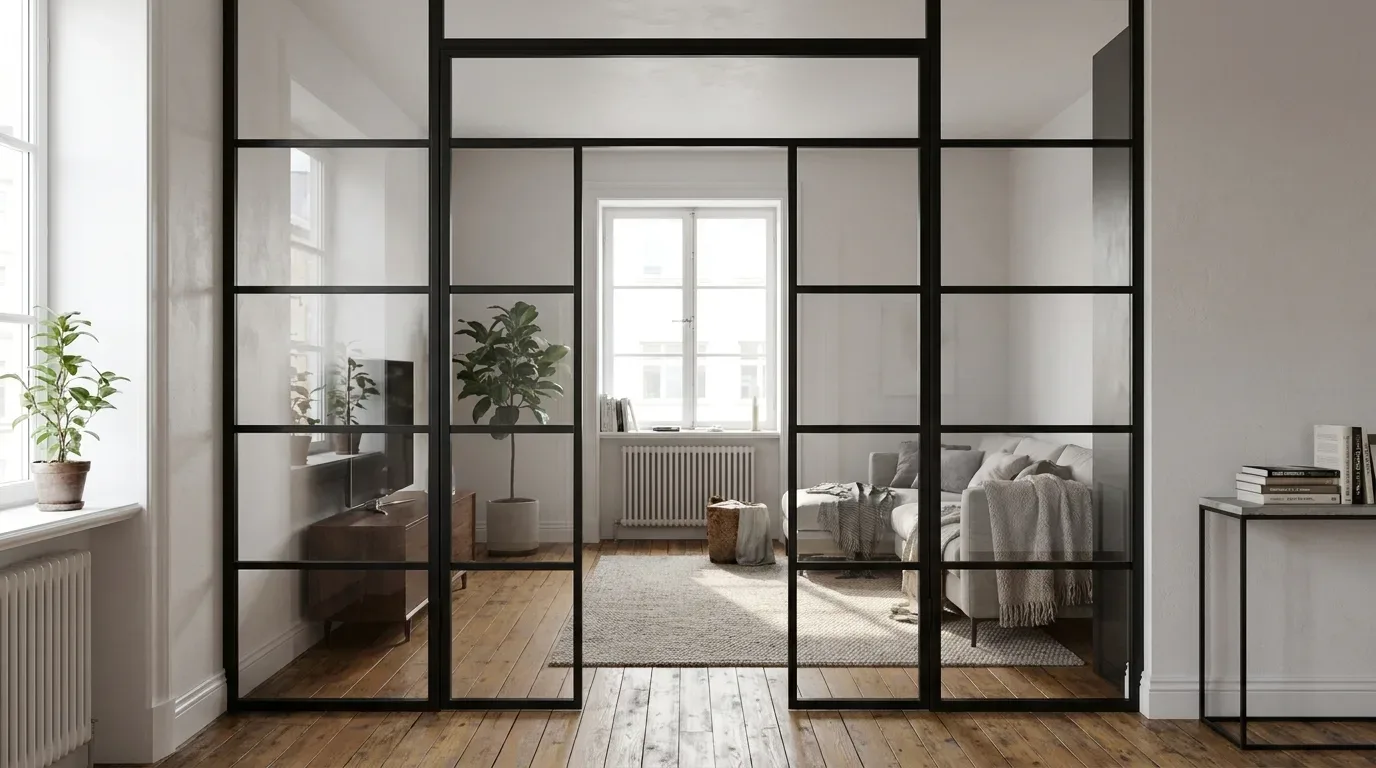
Room divider: A fixed steel and glass partition wall with no door. No door stop, no swing direction, no handle, no hinges. Optionally includes a walkthrough opening - an unframed gap without a door. Suited to open-plan spaces that need structure without full separation.
Solid wood and steel products (no glass):
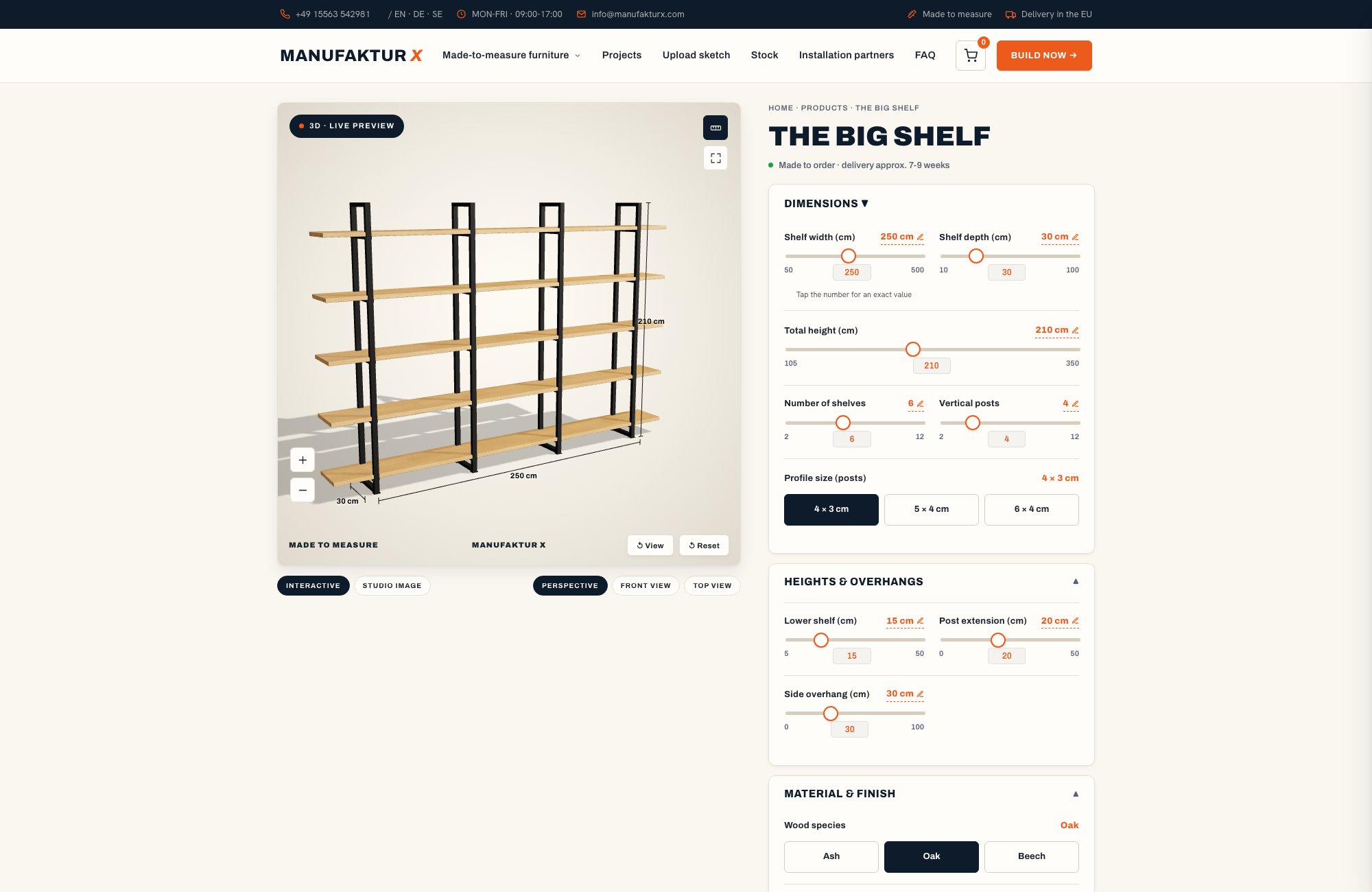
Large shelf: Steel frame with solid wood compartments, custom-fitted to any wall recess. Optionally includes integrated wooden cabinets in the lower section.
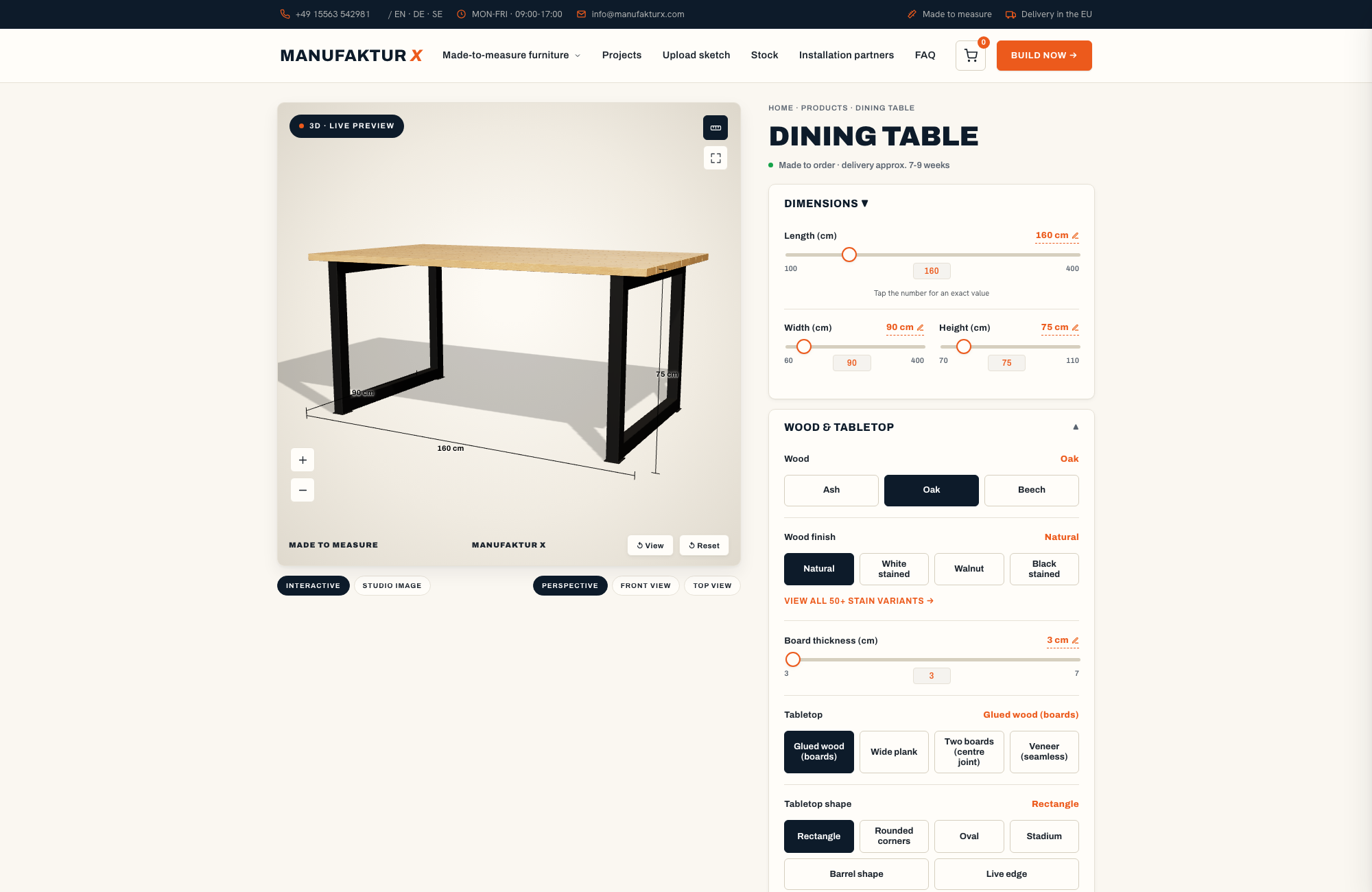
Dining table: Wood top on a steel frame, sized precisely to your seating arrangement.
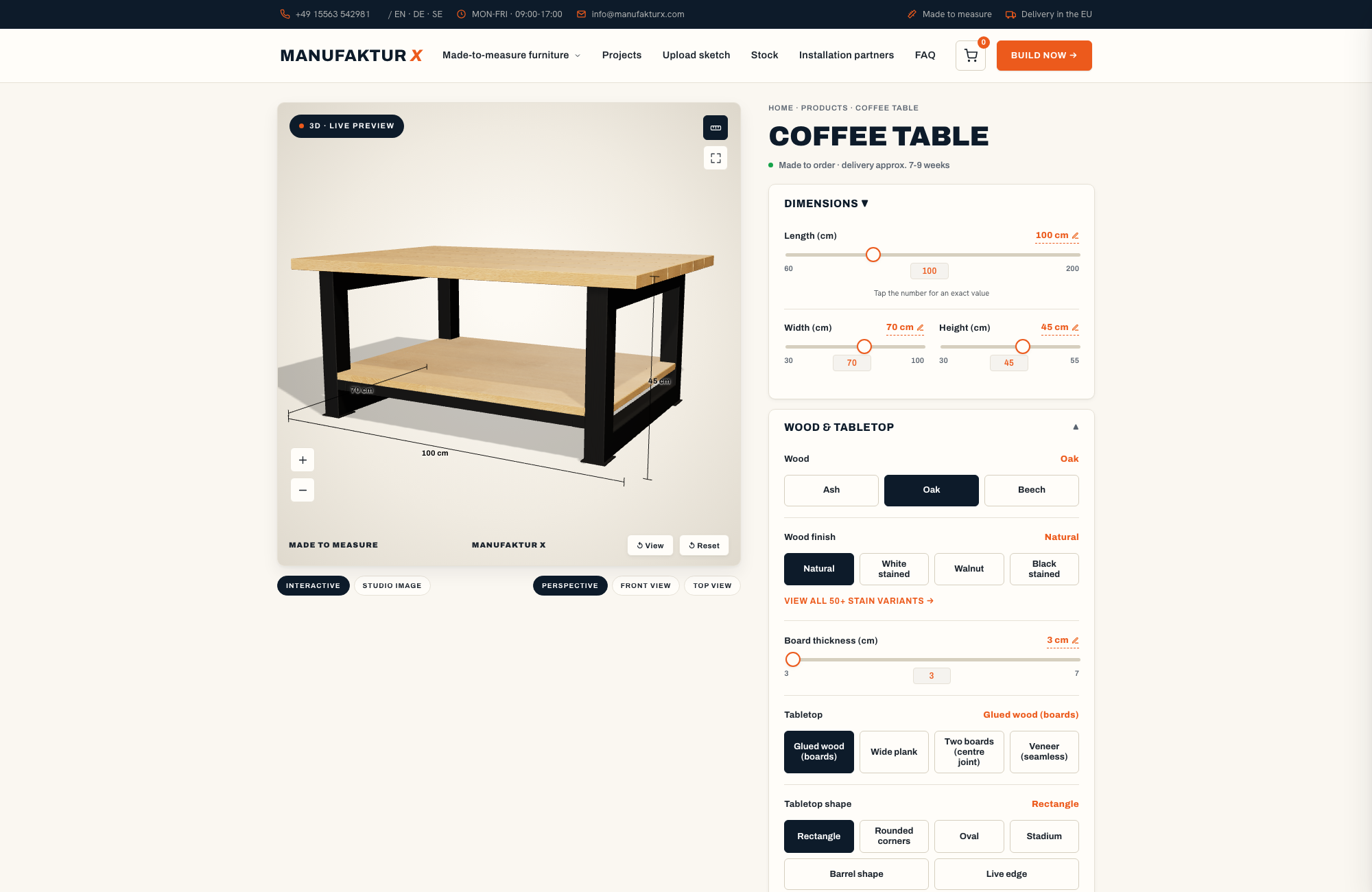
Coffee table: Built to the exact height of your sofa or seating.
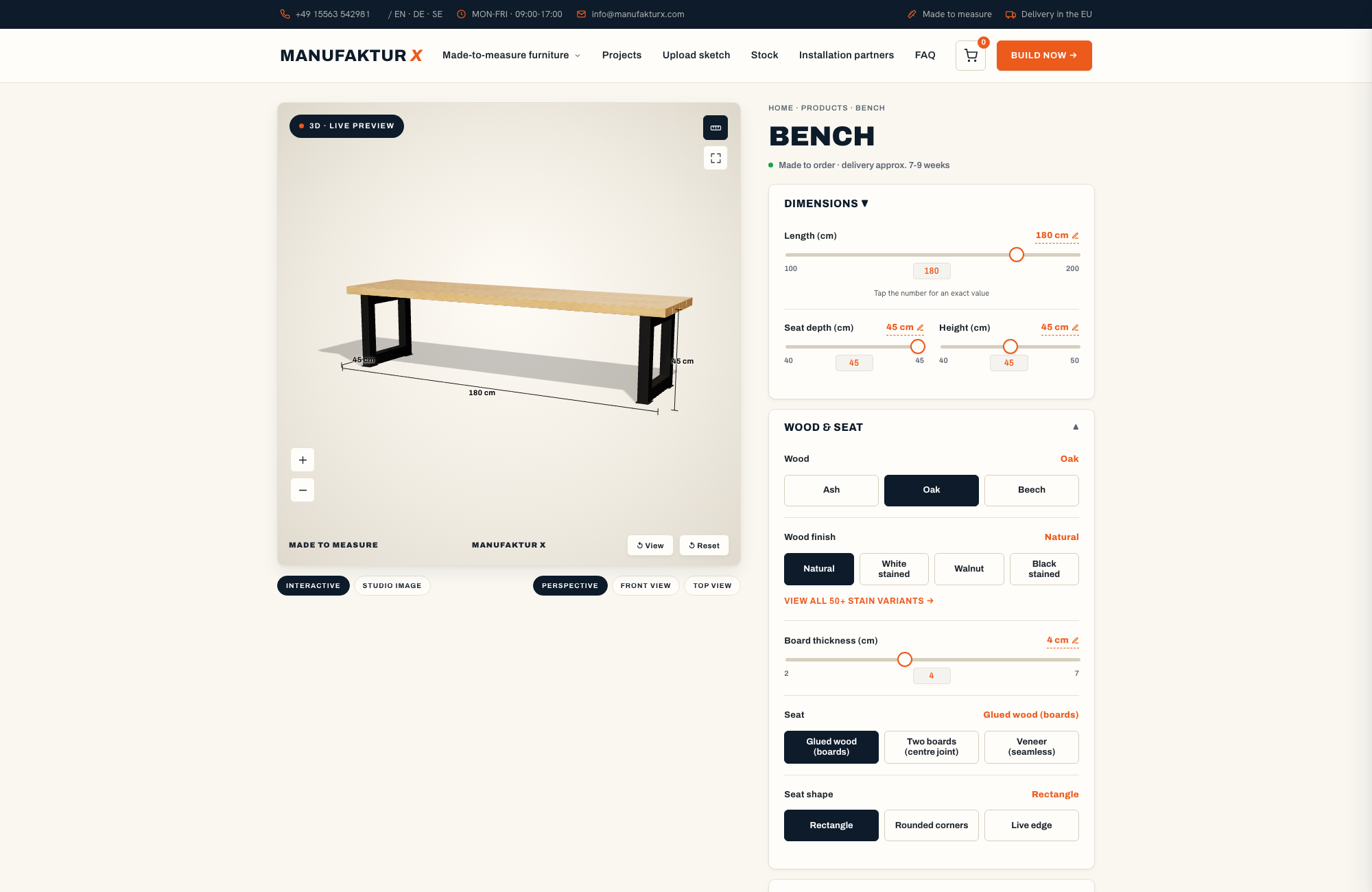
Bench: Wood top with a steel frame - space-efficient and built to last.
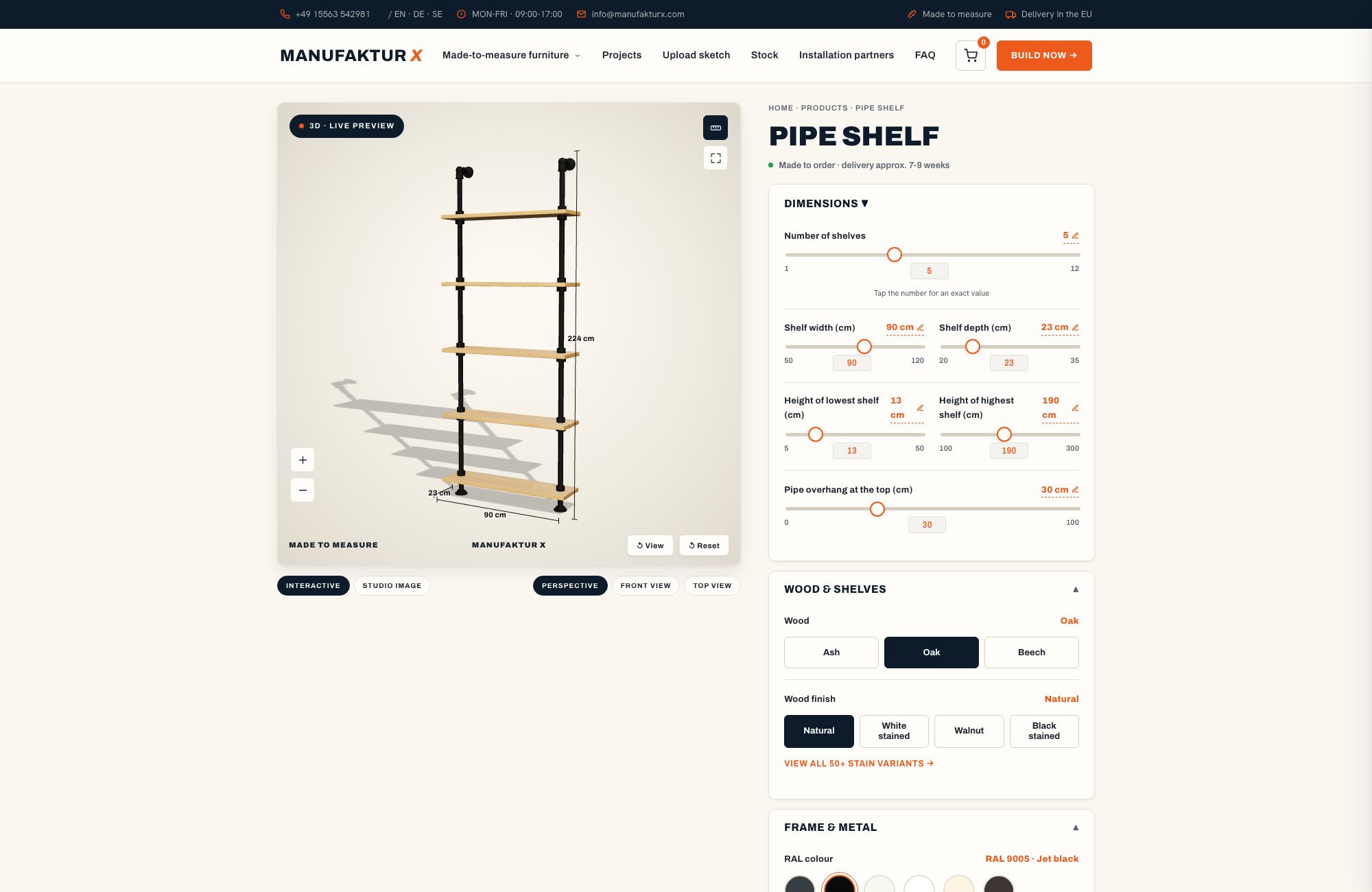
Pipe shelf: Steel tube construction with solid wood shelves - industrial character, solid build.
The loft door starts at the entry price shown in the price table - that is the price for the most compact configuration. For a current overview of pricing across all products:
Oak, Beech, and Ash - How the Three Wood Species Compare
Manufaktur X works exclusively with three hardwood species: oak, beech, and ash. This is a deliberate limitation - all three rank among the hardest and most durable timbers available for furniture production. Softer or more exotic species were considered and set aside because they require compromises on load-bearing capacity or long-term durability that custom furniture should not make.
In our production, hardness is the most measurable and relevant parameter for furniture surfaces under daily use:
Oak: Janka hardness approx. 5.9 kN, Brinell hardness 3.8. Open-grained, visually warm, and familiar across European interiors in every era from mid-century to contemporary. Well suited to dining tables, benches, and coffee tables with daily intensive use. Surface scratches can be treated by re-oiling without professional intervention.
Ash: Janka hardness approx. 6.1 kN, Brinell hardness approx. 4.0. Slightly harder than oak with a lighter visual weight and a more uniform grain. Practical choice for large shelves and applications where load-bearing matters but visual heaviness would work against the space.
Beech: Janka hardness approx. 6.3 kN, Brinell hardness 3.2. Pale and even-grained - clean and contemporary in appearance. Under heavy abrasion from daily use it shows wear sooner than oak, so it is less suited to work surfaces with constant contact but works well in other applications.
All three species are compared side by side in the 3D configurator, and the price updates in real time with every switch. More than 50 stain options are available to adjust the final appearance further.
A note on how solid wood behaves: Wood responds to changes in humidity - it contracts slightly in dry winter heating conditions and expands modestly in the more humid summer months. Across the grain on table tops wider than 1,000 mm, allow for a dimensional tolerance of approximately plus or minus 3 mm. This is not a production fault - it is the nature of the material. A solid wood table with proper construction develops character over years in a way that particleboard products simply cannot, because the particleboard fails structurally long before it has the chance.
Steel Frames: Powder Coating Across the Full RAL Spectrum
All steel frames and structural elements at Manufaktur X receive a RAL powder coating applied at a layer thickness of 60-80 micrometres. Powder coating outperforms wet paint in both scratch resistance and chemical resistance - qualities that matter on surfaces in daily contact. In our production process, the electrostatic application ensures even coverage including on edges and joints where wet paint tends to thin. After 15-20 years, frames can be recoated rather than replaced - an important difference from painted or laminated alternatives.
Glass Options for Loft Doors and Room Dividers
Glass appears exclusively in loft doors and room dividers. There are exactly five glass appearance options and two safety glass types - and it is worth understanding the difference between them.
The five appearance options:
Clear glass
Frosted glass
Smoked glass
Dark smoked glass
Textured glass
The two safety glass types:
ESG (toughened safety glass): When broken, it disintegrates into small, blunt fragments without sharp edges.
VSG (laminated safety glass): Two glass layers bonded by a polymer film. When broken, the film holds the fragments in place. For fixed room dividers without elevated safety requirements, ESG is a sound choice. For loft doors in households with children, or in larger formats, VSG is the technically justified option.
The bar pattern or glazing bar layout within the frame is a design element separate from the glass type - you configure both independently in the configurator.
Five Steps to Planning Custom Furniture That Actually Fits
The most common reason custom furniture does not fit is a measurement error, not a production fault. Pieces are manufactured to within 1 mm of the dimensions you enter. What follows is a practical planning sequence developed from experience with hundreds of installations across different building types.
Step 1 - Understand the Room and Define the Need
Start with a full account of the space: not just the floor area, but ceiling height, any slope or recess, the position of sockets, radiators, and windows relative to where the furniture will sit. Then clarify the functional requirement. Is this about storage, room division, a dining surface at a specific height, or a combination?
Note down:
Exact room dimensions - for loft doors, the precise opening width and height
The functions you need the furniture to serve
Material preferences and colour palette
Budget range
A simple mood board - photographs, fabric samples, paint swatches - makes the later configuration session significantly faster and more decisive.
Wood brings warmth. Steel introduces a more precise, industrial quality. Glass adds lightness and allows light to move through a space. At each material decision, ask:
Does this sit comfortably with the other elements already in the room?
Does the surface treatment match the level of use this piece will see?
Does the overall style suit the architecture - period detail, minimalist new-build, converted industrial space?
For loft doors, three handle styles are available: Elongated, Discreet, and Half-Moon. Bar patterns and surface finishes are configured individually within the tool.
Step 3 - Measure with Precision
Custom furniture is produced to plus or minus 1 mm. Measure width, height, and depth at a minimum of three points each - top, middle, and bottom for vertical measurements; left, centre, and right for horizontal ones. In period buildings, these readings regularly differ by 10-25 mm between measurement points. Always enter the smallest recorded measurement into the configurator.
For loft doors specifically: subtract the installation clearance from the smallest measurement. Allow approximately 5 mm of clearance per side - left, right, and top. Electrical fittings, radiators, and window reveals all need to be factored into the available space.
Practical tip: measure at least twice, use a stable tape measure or a laser distance meter, and photograph the opening as it currently stands. The photograph is useful later for confirming that the chosen colour and finish will work with the surrounding surfaces.
Step 4 - Configure Online or Upload a Sketch
Two routes are available after the preparation stage:
Option A - 3D configurator: The Manufaktur X configurator walks you through every decision in sequence - furniture type, dimensions, wood species, stain, steel colour, glass type, handle style. Every change updates the 3D preview and the price simultaneously. Delivery costs and lead times are shown transparently in the cart before any commitment.
Option B - Sketch upload: If your project has requirements that fall outside the configurator's parameters, upload a sketch or technical drawing for review. Manufaktur X assesses feasibility and returns a custom quote. The upload service is available at manufakturx.com.
If you need support with installation, Manufaktur X can refer professional fitters in a number of regions. Contact the customer service team for details.
Step 5 - Installation and Final Check
Begin with a full inventory of all delivered components before starting. Typical tools needed: a cordless drill, a spirit level, a tape measure, a hammer, and a screwdriver set. After fitting, test every function - drawers should run smoothly, doors should close flush, shelves should carry their intended load without flex.
The configurator replaces the need for an in-person consultation for most projects. The sequence runs as follows:
Select the furniture type: loft door, room divider, dining table, coffee table, bench, large shelf, or pipe shelf
Set your dimensions: enter width, depth, and height based on your measurements - always the smallest recorded figure
Choose the wood species: oak, beech, or ash
Select a stain: more than 50 options available
Choose the steel colour: the full RAL range, powder-coated
Configure the glass (loft doors and room dividers only): appearance type and safety glass type independently
Choose a handle (loft doors only): Elongated, Discreet, or Half-Moon
Review the 3D preview: adjust any element and see the result immediately
Review pricing and lead time: shown in real time, fully transparent in the cart
No hidden costs. No price surprises at checkout. The figure shown during configuration is the figure you pay.
Custom Furniture in Practice: What Each Product Solves
Loft Doors: Separation Without Visual Closure
A custom-made loft door divides two areas without blocking natural light or creating the effect of a solid wall. In an open-plan apartment where the kitchen and living area share space, or where a home office needs acoustic and visual separation from a bedroom, a loft door handles the transition without darkening either side. Because it is made to your exact opening dimensions, it works whether the gap is 900 mm or 1,400 mm wide.
Loft doors are particularly well suited to:
Separating kitchen and living areas in open-plan layouts
Creating a defined home office zone within a bedroom or living room
Non-standard openings that no catalogue door fits
Spaces where maintaining a visual and light connection matters
Room Dividers: Structure Without Construction Work
In converted lofts, large period apartments, or open-plan new-builds, the desire for a degree of separation is common - but committing to a plasterboard partition wall is a major intervention. A steel and glass room divider creates that structure without touching the building fabric and without any drying or curing time. It can be removed if you move out.
Steel and glass partitions do not read as neutral background elements. They function as visible structural features in the same way that exposed concrete ceilings or original brick walls do - they become part of the interior language. The room divider is a fixed wall; if you want a passage through it, an unframed walkthrough opening is planned in from the start.
Shelves, Tables, and Benches: Solid Wood Meets Steel
The solid wood and steel products from Manufaktur X contain no glass:
Large shelf: Steel frame with solid wood compartments, built to fill a wall recess exactly. Optional integrated wooden cabinets in the lower section. Shelves are always solid wood - no veneer.
Dining table: Wood top on a steel frame, length, width, and height matched precisely to your chairs and dining area. Table tops are available in solid glued board (the default) or veneer.
Coffee table: Built to the exact height of your sofa. Top available in solid glued board or veneer.
Bench: Wood top with steel frame - compact, durable, adaptable. Top available in solid glued board or veneer.
Pipe shelf: Steel tube frame with solid wood shelves - an industrial aesthetic with structural substance. Always solid wood, no veneer.
Costs and Lead Times: What to Plan For
How to Think About Price
Custom furniture costs more to buy than mass-produced furniture. But the purchase price alone says little: what also matters is how long a piece stays in use and whether it can be refinished instead of replaced.
Solid wood and powder-coated steel can be sanded, re-oiled, or recoated after 15-20 years. Veneered particleboard cannot. The loft door entry price at Manufaktur X is shown in the configurator. Current prices for all products are shown in real time within the respective configurator.
Production Lead Times
Production begins from the order confirmation date, not from an initial enquiry. All products at Manufaktur X are produced in 5 to 6 weeks. Plan this into any renovation or fitting schedule accordingly. The exact lead time for your configuration is displayed transparently in the cart before you confirm.
Solid wood changes with the seasons - it breathes with humidity shifts across the year. In production, this is not worked against; it is worked with through appropriate joint construction, wood selection, and surface treatment. Each piece of timber is individually assessed for grain direction before cutting. Surface finishes are applied in multiple passes. Drawer runners are adjusted to run without resistance.
All Manufaktur X products are manufactured in the EU and pass quality checks before dispatch. A solid wood shelf re-oiled after 20 years looks close to its original condition. That is not only an ecological argument - it is an economic one. The CO2 case for custom furniture over its lifespan is straightforward:
Longer lifespan means fewer replacement purchases
Higher repairability means less disposal
EU production means shorter transport distances
Emotional investment in a piece you chose in detail means fewer impulse replacements
Caring for Custom Furniture Over Time
Solid wood furniture is durable, not maintenance-free. With the right care it remains in excellent condition across decades:
Oiled surfaces: Re-oil once or twice a year to keep the wood fibres supple and protected against moisture. Minor surface scratches respond well to a simple re-oiling - no professional help needed.
Waxed surfaces: Similar care to oiled surfaces, with slightly better water resistance. Re-wax when the surface begins to look dull.
Powder-coated steel: Wipe down with a damp cloth. Avoid abrasive cleaning products.
Glass: Standard glass cleaner or a damp cloth is sufficient.
Restoration after years of use: Solid wood can be sanded back and refinished. This is not possible with any particleboard or MDF product.
Where the choice exists between an oiled or waxed finish and a lacquered one, oiled and waxed surfaces are the better long-term investment. They age into character rather than peeling or chipping.
Configure Your Custom Furniture at Manufaktur X
With the Manufaktur X interactive 3D configurator, you design your loft door, room divider, shelf, dining table, coffee table, or bench to your exact dimensions, material preferences, and colour choices - and see the result, along with the precise price, update in real time as you work through each decision.
Browse all products at manufakturx.com. If your project has requirements that go beyond the configurator's parameters, you can upload a sketch or technical drawing for individual assessment and a custom quote. For any questions about delivery to your location or installation support, the customer service team is available directly through the site.
Custom furniture is made to your exact dimensions, functional requirements, and design preferences - rather than selected from a fixed catalogue. It makes the most sense in rooms with non-standard geometry (sloped ceilings, alcoves, unusual proportions), for long-term installations, and when a cohesive interior concept matters. Anyone who values solid wood construction and responsible production is better served by custom pieces than by mass-produced alternatives.
Which wood species does Manufaktur X use?
Manufaktur X works exclusively with three hardwoods: oak, beech, and ash. All three are among the hardest and most durable species suited to furniture production. The selection is deliberately limited to maintain consistent standards for load capacity and longevity. More than 50 stain options are available to customise the final appearance.
What is the difference between a loft door and a room divider?
A loft door is a functioning door with a door stop (left or right opening), swing direction, opening angle, handle, and hinges. A room divider is a fixed steel and glass partition wall with none of these elements - no opening function, no handle, no hinges. A room divider can optionally include an unframed walkthrough opening if passage between spaces is needed without a door.
How do I measure correctly for a loft door or room divider?
Measure width and height at a minimum of three points each. In period buildings, readings at different points in the same opening regularly differ by 10-25 mm. Always enter the smallest recorded measurement into the configurator. For loft doors, subtract the installation clearance from that smallest figure - approximately 5 mm per side (left, right, and top). The piece is manufactured to the dimensions you enter, so accuracy here is the single most important step in the whole process.
What glass options are available?
Five appearance options: clear glass, frosted glass, smoked glass, dark smoked glass, and textured glass. Two safety glass types: ESG (toughened safety glass, which breaks into blunt fragments) and VSG (laminated safety glass, where a bonding film holds fragments in place on breakage). For larger formats or households with children, VSG is the recommended choice.
How long does production take and what does a loft door cost?
All products are produced in 5 to 6 weeks from order confirmation. The entry price for a loft door is shown in the configurator. The exact price for your specific configuration is shown in real time in the configurator, with no hidden costs added at checkout.
Can I submit a custom sketch if the configurator does not cover my project?
Yes. If your requirements go beyond what the configurator handles, you can upload a sketch or technical drawing via the Manufaktur X website. The team reviews feasibility and provides a custom quote.
How do I maintain solid wood furniture over the long term?
Oiled surfaces should be re-oiled once or twice a year. Minor scratches on oiled surfaces can be treated by re-oiling without professional involvement. Waxed surfaces should be refreshed when they start to look dull. After many years of use, solid wood can be sanded back and refinished - an option that particleboard and MDF products simply do not offer.
Founder and Managing Director of Manufaktur X. Specializes in made-to-measure furniture and steel-glass elements, and in the 3D-configurator solutions that let customers plan their furniture online in real time. Oversees EU production and craftsmanship. Reviewed by Gustav Vahlström.