White and Beige Loft Doors - RAL Colours and Surface Finishes
Choosing a white loft door involves more than picking a frame colour. Which of the standard white RAL tones actually matches your radiators, window profiles, and wall paint - and what does a matt finish do differently from a gloss finish in daily use? This guide walks through the most relevant white RAL tones, explains the real technical differences between fine-texture matt and high-gloss powder coating, and gives you concrete pricing figures so you can set the right frame colour, glass type, and dimensions confidently in the 3D configurator.
Choosing the Right White: How RAL 9003, 9010, and 9016 Actually Differ
Same Brightness, Different Undertone
The three most requested white tones for loft doors from the RAL Classic range do not differ in brightness - they differ in undertone. RAL 9003 (Signal White) carries a faint blue undertone. Under daylight it reads as crisp and high-contrast, but in north-facing rooms or under cool LED lighting it can feel cold. RAL 9010 (Pure White) is marginally warmer, with a barely perceptible yellow tint. It matches the standard radiator finish under EN 442, which means it is already present in a large number of period European apartments and new-build homes. RAL 9016 (Traffic White) sits between the two - widely considered the most neutral of the three and commonly used for aluminium and PVC window profiles across Europe.
Die seitlichen Spalten dürfen in der Summe nicht mehr als neun Millimeter betragen.
Quelle: DIN 18101 für Türen | Türen-Wiki Wissen
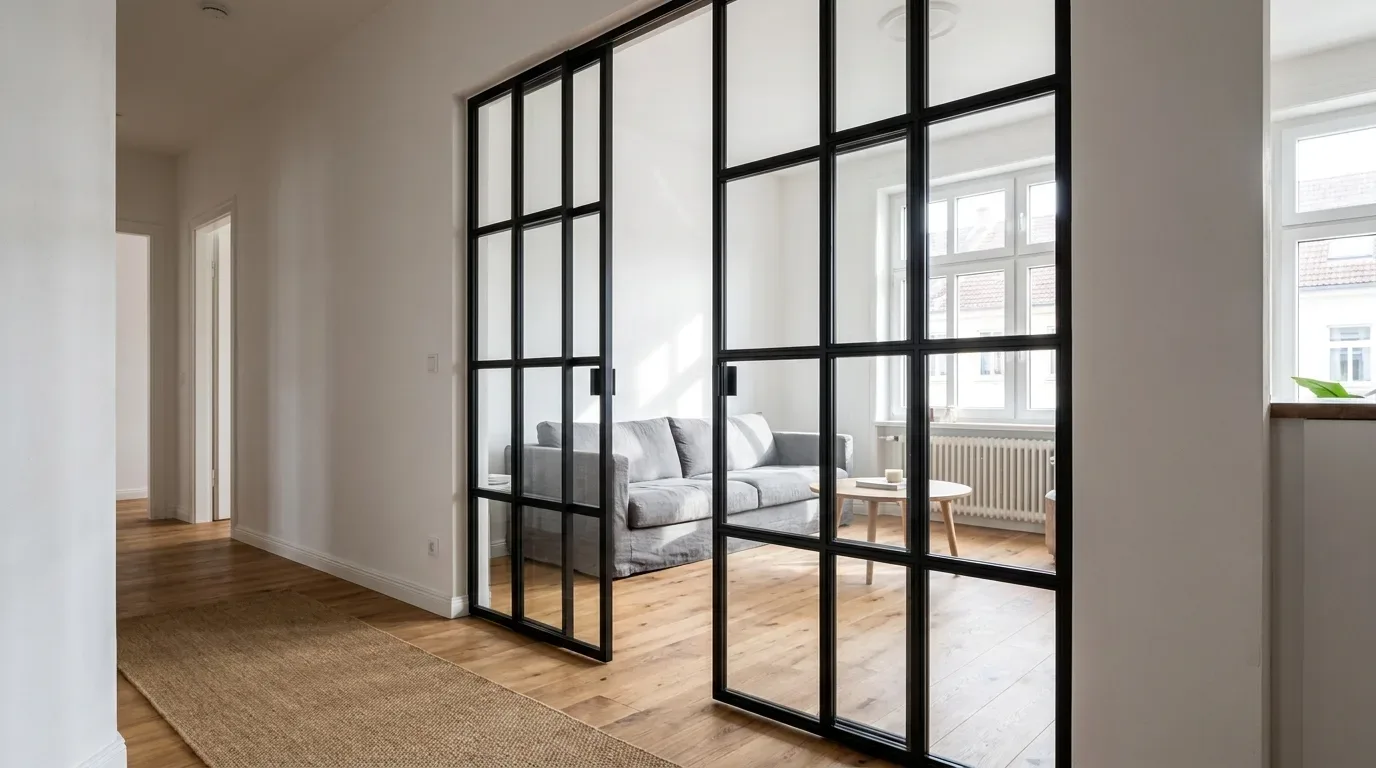
Anyone who holds all three tones side by side under the actual lighting conditions of their installation point will notice measurable differences. Under warm-white LED sources (2,700-3,000 K) - the dominant choice in European living spaces - RAL 9010 reads noticeably yellower than it does under daylight. A printed RAL fan deck will not show this shift. The only reliable check is a physical powder-coated sample held in place under your room's actual light source.
Matching White Elements Already in the Room
A white loft door integrates cleanly only when its RAL number is coordinated with the other white surfaces in the space. Radiators frequently come in RAL 9010 under EN 442. Window profiles in aluminium or PVC are most often delivered in RAL 9016. Skirting boards, built-in cabinetry, and electrical fittings may carry RAL 9010 or RAL 9003. Placing a loft door in RAL 9016 next to radiators in RAL 9010 is not a dramatic clash - but it is visible under direct daylight, and it tends to read as an oversight rather than a design decision.
Request physical powder-coating samples before you confirm your order. A printed colour card and a powder-coated steel surface have fundamentally different light-reflection properties: the same RAL 9010 looks different on paper versus on a fine-texture matt steel frame, particularly under artificial light. This is one of the most consistent pieces of feedback from customers who configure their door and then compare samples in person - the sample step is never wasted time.
Beige as a Considered Alternative
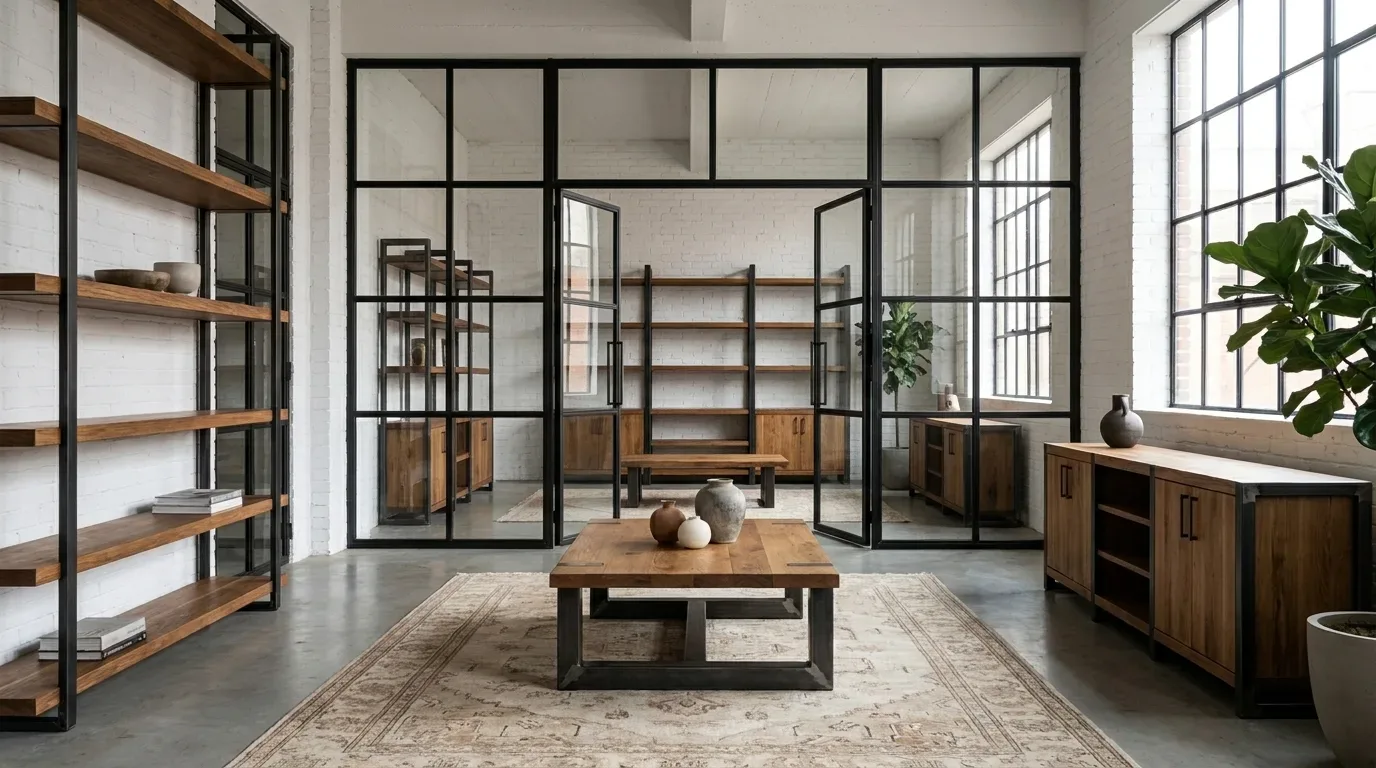
If pure white feels too stark or too high-contrast for your interior, RAL 1013 (Pearl White) and RAL 1015 (Light Ivory) offer a middle ground between white and beige. Both tones work well in south-facing rooms, spaces with warm-white lighting, or interiors with light oak flooring, where a pure reinweiß can read as glaring. These are tones that reward a deliberate design decision: chosen as part of a coherent colour scheme, they bridge warm natural materials and neutral walls beautifully. Chosen without that context, they risk looking like an undecided white. In either case, a fine-texture matt surface finish softens the tone and prevents it from reading as flat or unresolved.
A Practical First Step for Planning
Start by identifying the RAL number of the dominant white element in your room - usually the window profile or the radiator. Order a physical powder-coating sample in that tone and in the two closest neighbouring tones. Hold them together under the lighting conditions of the installation point. Only then set the frame colour in the loft door configurator. This sequence takes a few extra days but eliminates the most common source of colour regret in custom door projects.
Matt or Gloss: What the Surface Finish Actually Delivers
Fine-Texture Matt - Properties and Everyday Performance
Fine-texture matt describes a powder-coated surface with a roughness value of Ra 3-6 µm. This micro-texture scatters incoming light diffusely rather than reflecting it directionally, which means fingerprints, faint scratches, and wipe marks are visually absorbed rather than highlighted. In our production process, fine-texture matt is the surface finish that consistently performs best in high-use residential settings - not because it hides damage, but because its micro-structure prevents everyday marks from becoming visible in the first place.
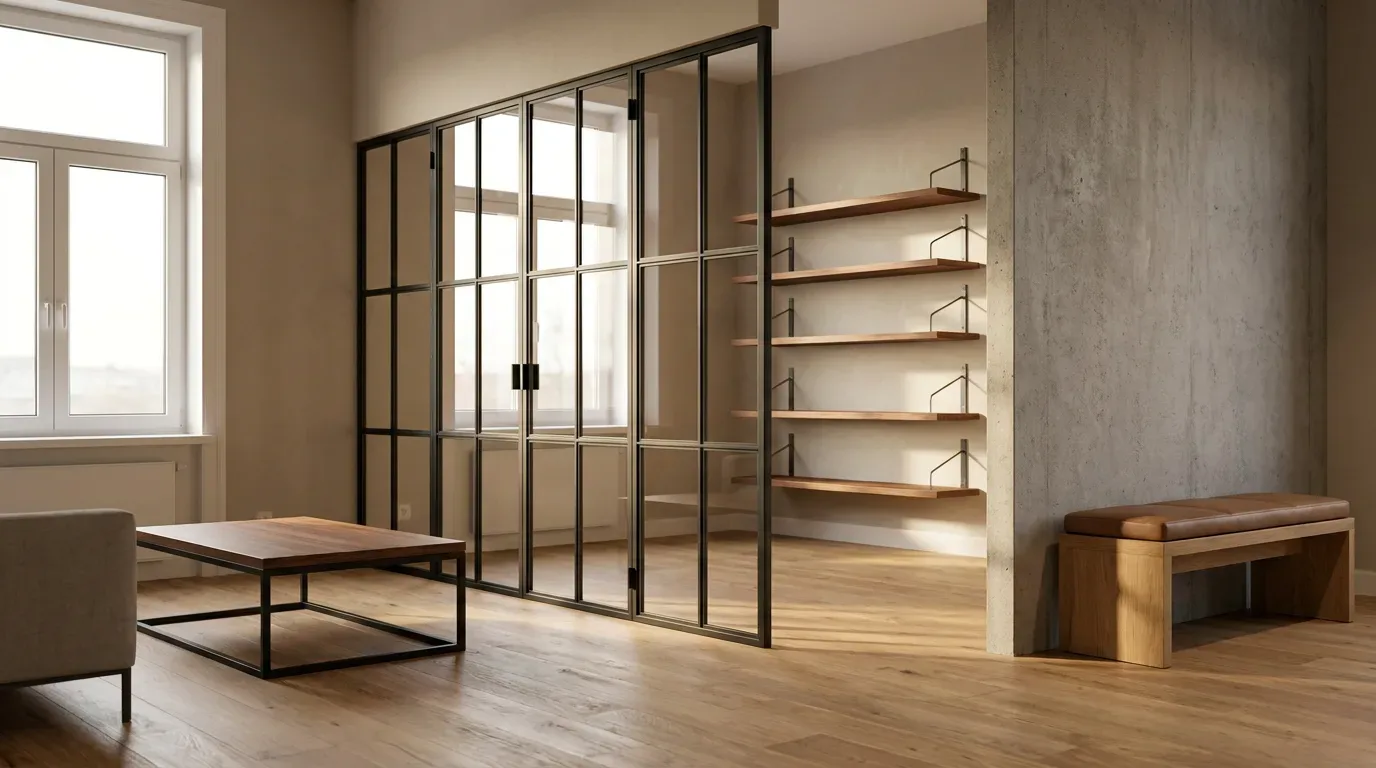
For a white loft door specifically, this matters more than it does for darker RAL tones. White and near-white surfaces reveal wear more readily than RAL 7016 Anthracite Grey or RAL 9005 Jet Black. A fine-texture matt finish in RAL 9010 or RAL 9016 is the most maintenance-friendly combination for a frame that will be touched daily - in a hallway, between a kitchen and living area, or at the entrance to a home office.
High Gloss - Visual Effect and Upkeep
High-gloss powder coating achieves a surface roughness of Ra below 1 µm - roughly one quarter to one sixth of the roughness of fine-texture matt. Light is reflected directionally rather than scattered, which can make a gloss white frame feel larger and more open, particularly when the door is positioned facing a window. The effect is strongest in compact rooms where reflected light adds perceived depth.
The trade-off is visible immediately in daily use. High-gloss white shows every fingerprint, every wipe streak, and fine surface contact marks far more clearly than matt. In actively used areas - a kitchen pass-through, a family hallway, a children's room - this translates to noticeably more frequent cleaning, using only lint-free cloths and mild detergents. The additional grinding and polishing work on the steel frame before the coating is applied is reflected directly in the price: high-gloss powder coating typically costs 8-12% more than fine-texture matt on the frame price. That premium is a production cost, not a design surcharge.
Coating Thickness and What It Means in Practice
Regardless of finish type, powder coating on steel achieves layer thicknesses of 60-80 µm under standard industrial process conditions - more consistent than liquid paint, which typically delivers 40-60 µm with greater variation across the surface. In our production, we verify coating thickness as part of the quality check on every frame before dispatch. At 60 µm and above, the coating reaches corrosion resistance class C3, which is relevant for loft doors positioned adjacent to kitchens or bathrooms where humidity levels fluctuate.
Coordinating Frame Colour and Glass Type
What "Powder-Coated Loft Door with Glass" Actually Means
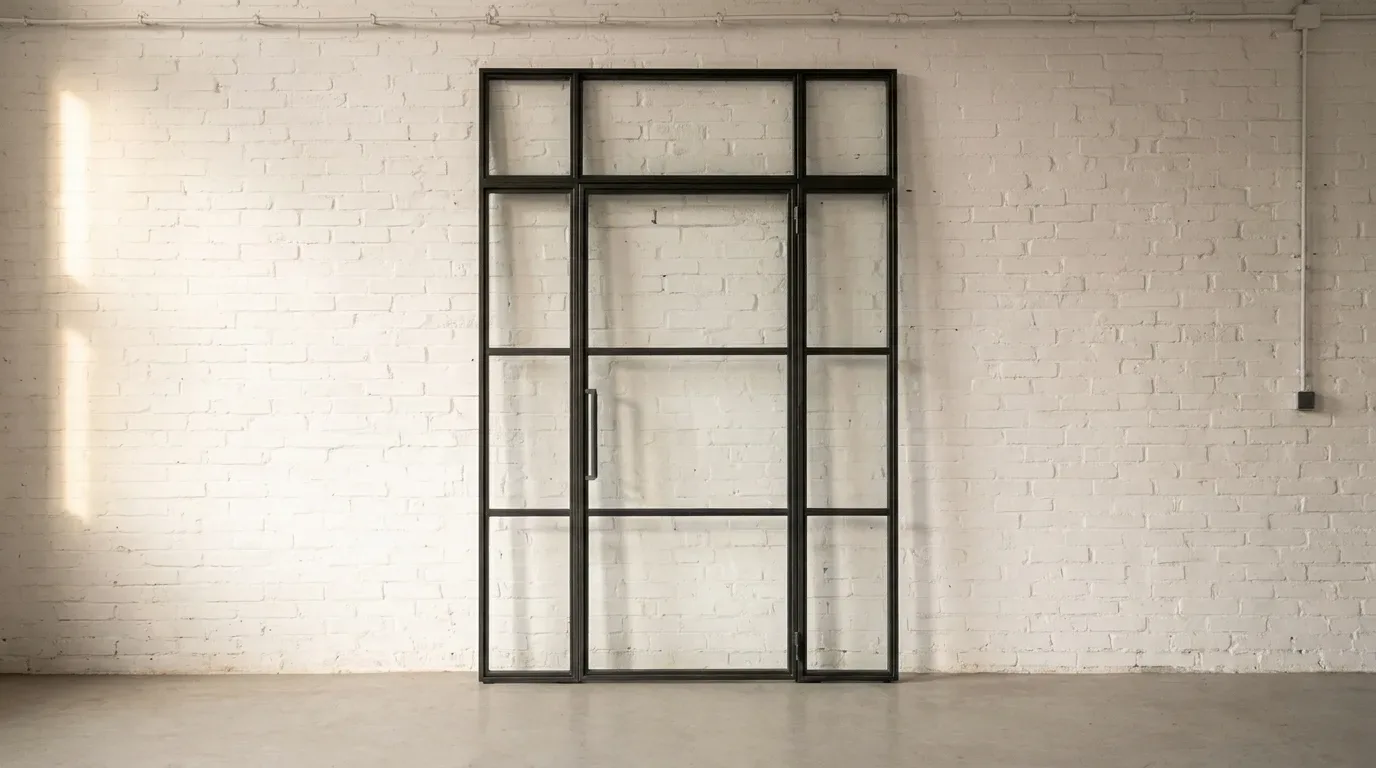
A common misconception worth clearing up: the powder coating on a loft door sits exclusively on the steel frame. The glass itself is not coated or tinted by the powder-coating process. When customers expect the glass to carry the frame colour, the finished product can come as a surprise. In the loft door configurator, frame colour and glass type are two independent variables configured separately - which is exactly how they should be approached in planning.
Glass Types: ESG and VSG
Toughened safety glass (ESG) shatters into blunt granules rather than sharp shards on impact - a standard requirement for door glazing - and maximises light transmission. Laminated safety glass (VSG) holds together as a unit after breakage due to an interlaid PVB film; depending on film thickness, it also offers a moderate increase in acoustic separation of approximately 2-5 dB compared to ESG of equivalent thickness. Satin-finished VSG combines privacy with even light diffusion, making it a logical choice when the loft door opens onto a bedroom or study. VSG increases the glass component of the overall price by 20-40% relative to ESG, depending on film specification and glass thickness.
A useful comparison point for European customers familiar with mass-market furniture: standard IKEA room-dividing products do not offer toughened or laminated safety glass as a genuine structural door option. Custom loft doors with ESG or VSG meet a different performance and safety category entirely.
White Frame and Glass as a Visual Pair
A white frame paired with tinted or bronze-tinted glass loses the sense of lightness that a pale frame naturally creates. The white reads as a bright border around a dark surface, making the construction feel heavier than intended. Clear ESG or satin VSG reinforce the transparency and brightness that a white frame introduces into a space. Frame colour and glass type should be configured together in the loft door product page - not as sequential decisions made on separate visits to the configurator.
White Loft Doors in Period Apartments and New-Builds
Period Apartments: Cornicing, Parquet, Industrial Steel
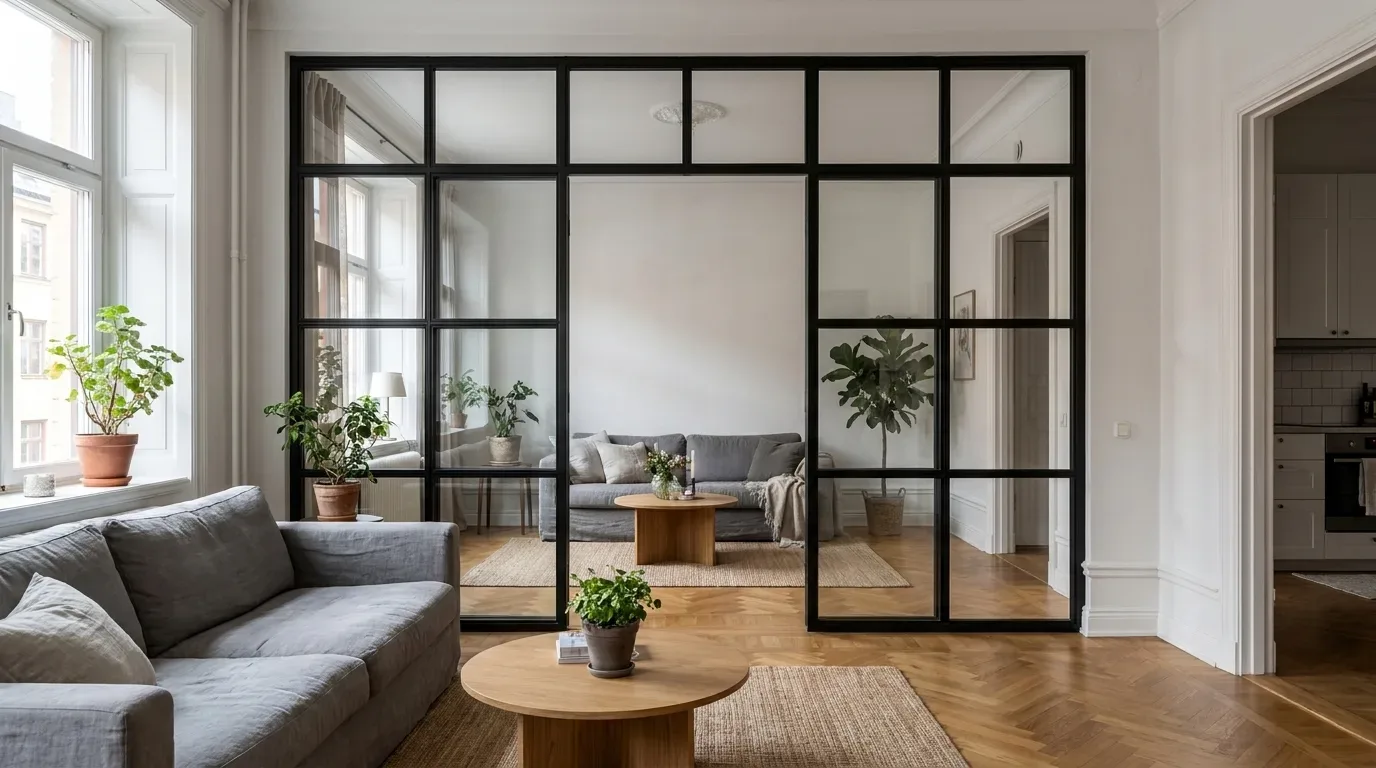
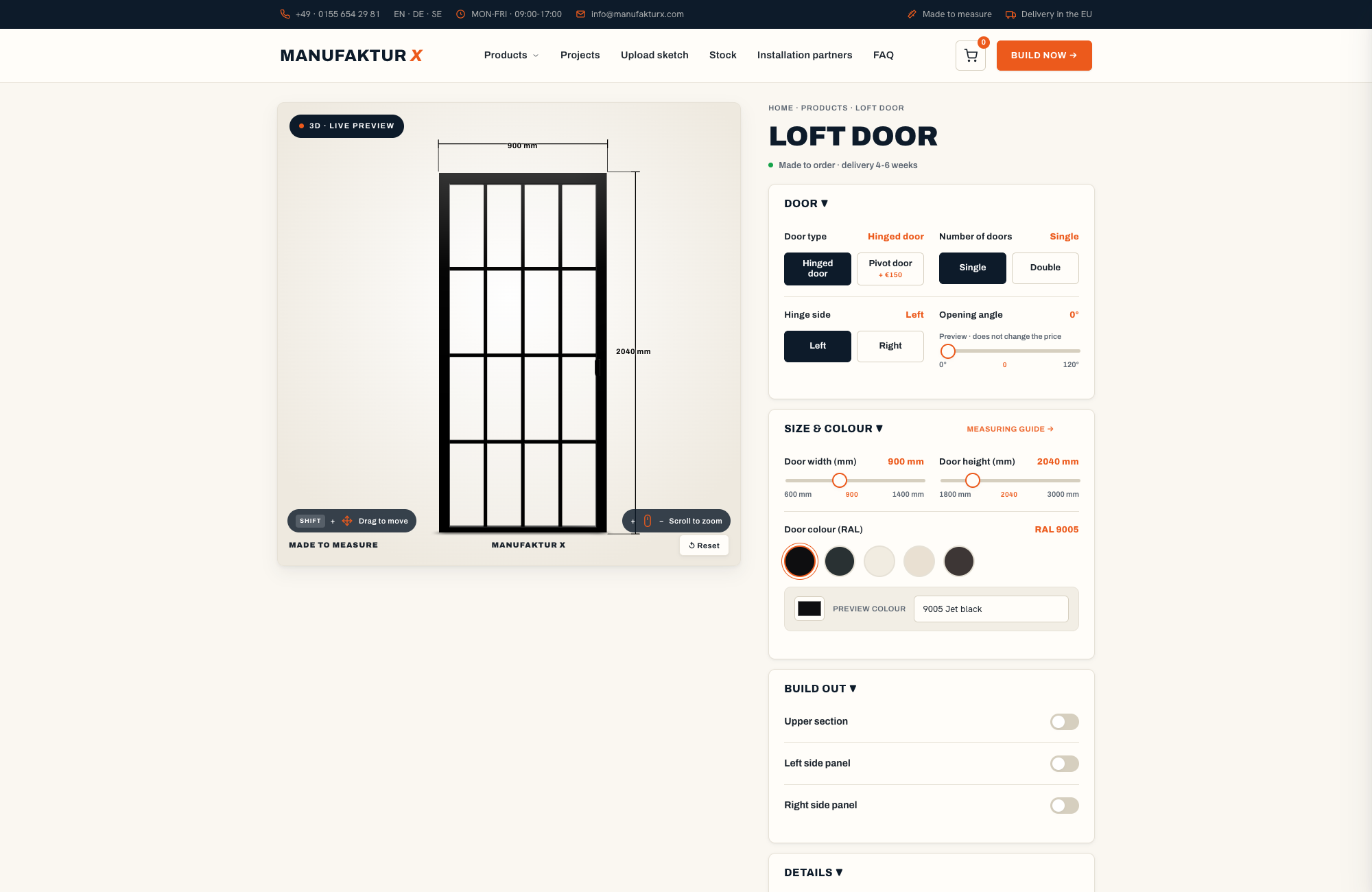
In a late nineteenth or early twentieth century apartment - the type found across central European cities with original plaster cornicing, herringbone parquet, and high ceilings of 2.8 metres or above - a black steel frame risks reading as too heavy against light-coloured walls. A white frame in RAL 9010 or RAL 9016 bridges the traditional decorative language of the apartment with the industrial character of a steel-and-glass door construction. RAL 9010 tends to work particularly well in older plasterwork settings: its faintly warm undertone harmonises with the slight yellowing of aged stucco that becomes visible under warm-white LED, rather than clashing with it.
New-Build Interiors: Exposed Concrete, Smooth Plaster, Colour Consistency
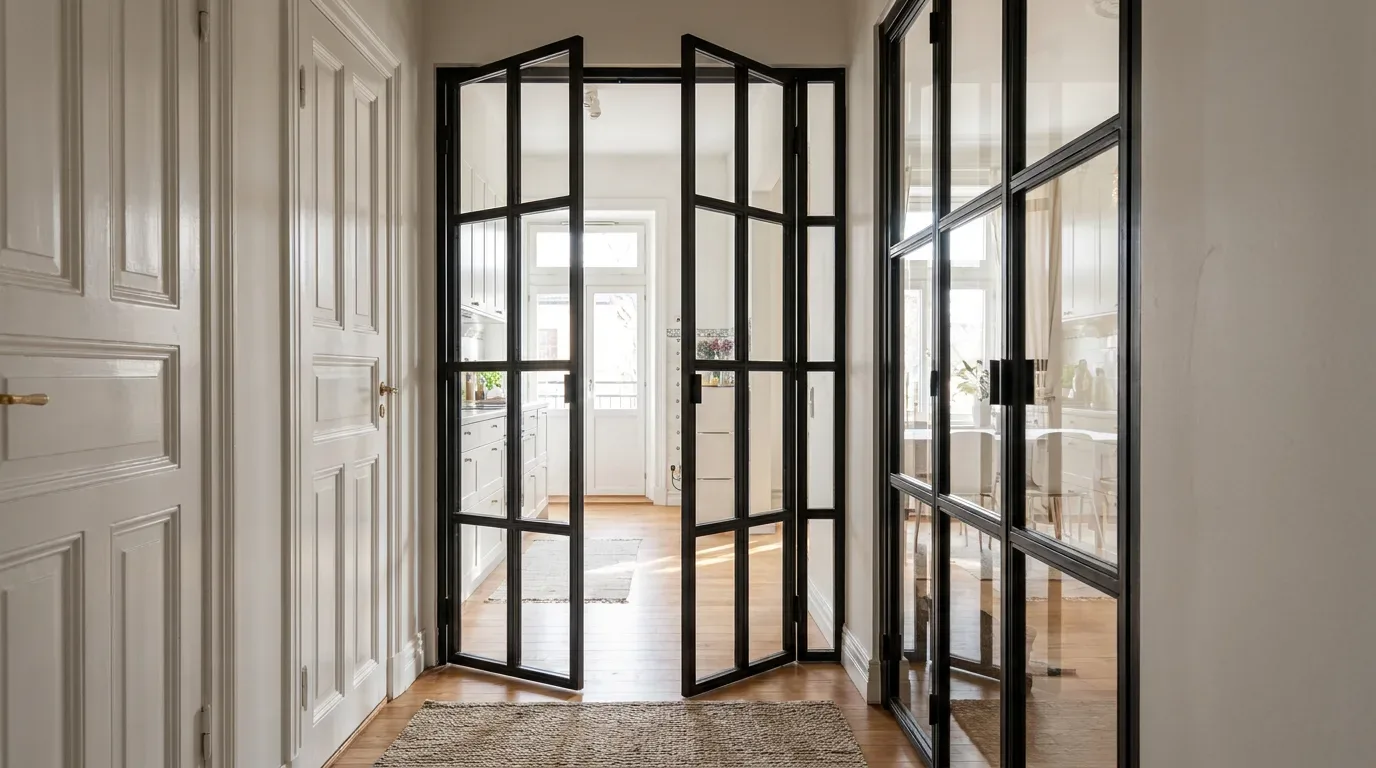
In a contemporary new-build with exposed concrete walls or smooth flush plasterwork, a white loft door in RAL 9016 reads as precise and minimal - especially when the window profiles carry the same RAL number. This is the scenario where RAL coordination across different suppliers and trades pays off most visibly. Specifying the RAL number in the order confirmation and passing it to every relevant contractor - window fabricator, painter, radiator supplier - is the only reliable way to achieve genuine colour consistency across the finished interior.
Converted Commercial and Loft Spaces
In former industrial buildings converted to residential or studio use - brick warehouse conversions, factory-floor apartments - a white steel frame prevents the already-dark brick walls from reading even heavier. Several Manufaktur X customers working on commercial-to-residential conversions have chosen white over black for exactly this reason: the white frame reflects ambient light rather than absorbing it, preserving the sense of openness that high ceilings and large window openings create. A room divider in RAL 9010 with clear ESG in this context functions as a spatial boundary without becoming a visual obstacle.
RAL Numbers as a Communication Tool Across Trades
Anyone coordinating a loft door with window fabricators, painters, and radiator suppliers needs a shared colour reference that works across all parties. RAL Classic comprises 215 standardised tones. In practice, around 20-30 tones account for the large majority of loft door orders. Because RAL numbers are manufacturer-independent and standardised, they are the only reliable tool for ensuring colour consistency when multiple contractors are involved in a single project.
Document the ordered RAL number in the written order confirmation and in any works specification passed to other trades. Powder-coating batches can show minimal colour variation even within the same RAL designation. If you are ordering multiple loft doors or a loft door alongside a room divider, place everything in a single order so all frames come from the same production batch - this eliminates any risk of colour variation between pieces.
Pricing: What Drives the Cost of a White Loft Door
Starting Prices and Standard Colours
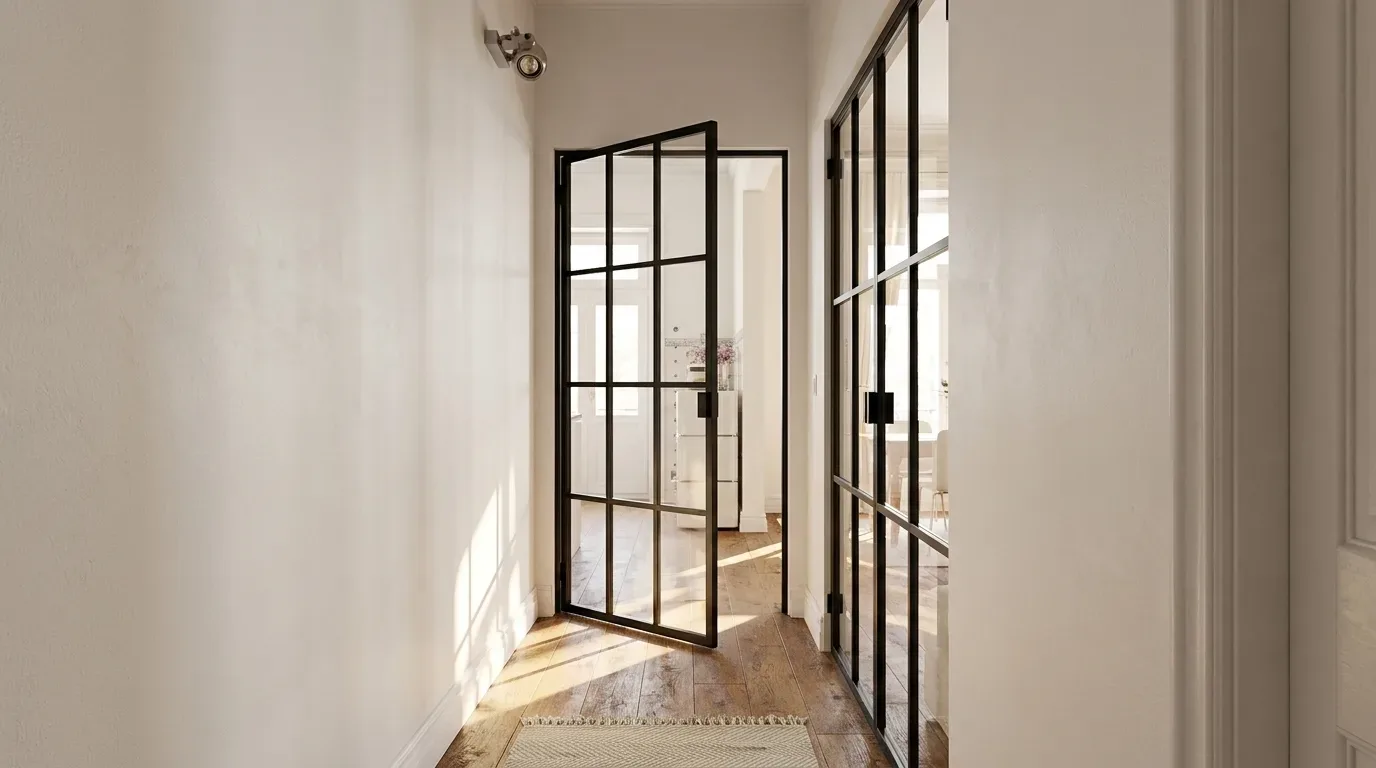
Loft doors with a powder-coated steel frame and ESG glazing start at €945 at Manufaktur X. Standard colours - including RAL 9005 Jet Black, RAL 9010 Pure White, and RAL 7016 Anthracite Grey - are available without surcharge. A white loft door in one of these standard tones costs the same as the equivalent black version. Custom RAL tones beyond the standard palette, combined with specific glass types and hardware choices, typically move the total into the €1,400-2,200 range depending on dimensions and specification. Custom colours generally carry a 5-15% surcharge on the frame price.
Surface Finish and Glass Type as Price Variables
Two configuration choices drive the most significant price differences above the base:
- Surface finish: High-gloss powder coating costs approximately 8-12% more than fine-texture matt on the frame price, reflecting the additional grinding and preparation work on the steel before coating.
- Glass type: VSG increases the glass component by 20-40% relative to ESG, depending on film thickness and glass specification. For a loft door where glass covers 60% or more of the surface area, this represents a noticeable addition to the total.
Both price variables are visible in real time in the configurator - the displayed price updates immediately as you select surface finish and glass type, before any order is placed.
Direct Manufacturer vs. Retailer Pricing
With third-party retailers and intermediaries, custom dimensions typically attract surcharges of 15-30% above the standard-size list price. Manufaktur X manufactures every piece to the dimensions you enter - custom sizing is part of the configurator price, not a separate line item. As a direct EU manufacturer with no distribution intermediary, the price shown in the configurator is the full price. A meaningful price comparison between suppliers must always include the custom-dimension cost. A lower headline price from a retailer that adds a made-to-measure surcharge is not a comparable figure.
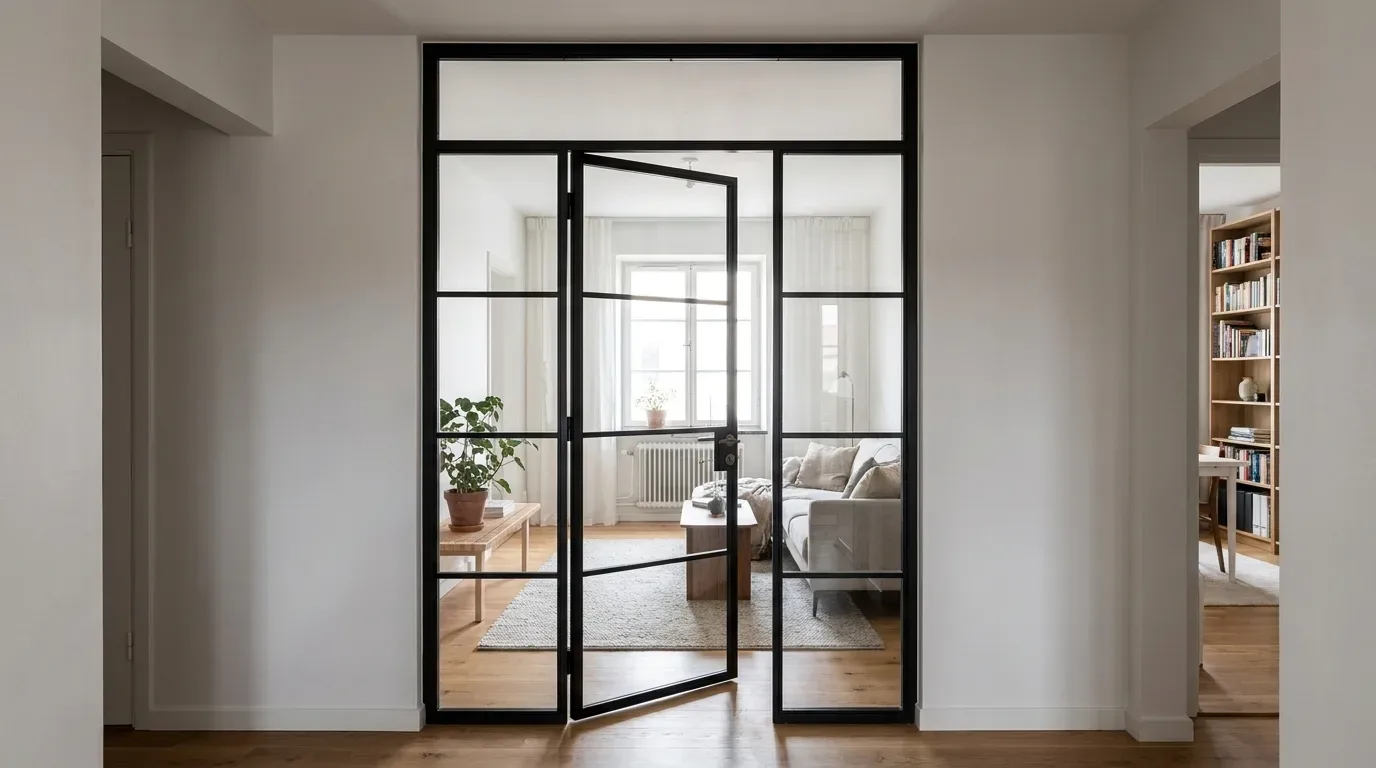
When you measure for your loft door, measure the clear opening width and height at a minimum of three points - top, middle, and bottom of the opening. Period apartment wall openings frequently vary by 10-20 mm between measurement points. Enter the exact dimensions you want the door to be, not the raw opening measurement - the configurator works from your finished target dimensions.
Production Time and Delivery
Production time for a custom loft door is 5-6 weeks from order confirmation, regardless of whether a standard colour or a custom RAL tone is chosen. Installation costs are not included in the product price; professional installation of a loft door including frame fitting and glazing typically runs €300-600 depending on complexity and location.
For renovation projects involving multiple trades, the loft door is often a critical path item: it needs to be installed before final plastering and painting at the frame perimeter can be completed. For projects involving more than one loft door, placing a single combined order ensures all frames are produced in the same batch - consistent colour, consistent finish, delivered together.
Common Planning Mistakes with White Loft Doors
Using a Printed Colour Card as a Final Reference
Printed RAL fan decks are not a reliable reference for powder-coated steel surfaces. Printing ink on paper absorbs light; a powder-coated steel surface reflects it - directionally under gloss, diffusely under matt. The same RAL 9010 looks different on a printed card than on a coated steel frame, particularly under artificial lighting. Always request a physical powder-coating sample and evaluate it in the room where the door will be installed, under the lighting conditions that will actually be present.
Treating All White Tones as Interchangeable
RAL 9003, 9010, and 9016 are measurably different when placed side by side - this is not a theoretical distinction. Under warm-white LED, which dominates European residential interiors, the differences are clearly visible. Radiators, window profiles, skirting boards, and built-in units can each carry a slightly different white. A loft door ordered without cross-checking against these existing elements will often create a colour mismatch that is only apparent once the door is installed. The solution is straightforward: identify the dominant white in the space, request samples, compare physically.
Configuring Glass Independently of the Frame Colour
Frame colour and glass type are configured as separate choices - but they should be evaluated as a visual unit. A white frame with tinted or dark glass loses its characteristic lightness and reads as a heavy border around a dark panel. Clear ESG or satin VSG are the combinations that reinforce what a white frame does well. Configure both in the same session in the loft door configurator, not as two separate decisions at different points in the planning process.
Not Building Production Time into the Project Schedule
A 5-6 week production window is standard for any made-to-measure loft door. In a renovation with multiple contractors, this lead time needs to be entered into the project schedule from the moment the order is placed. Painting around the frame perimeter and floor finishing adjacent to the door threshold both depend on the frame being installed first. Projects that treat the loft door as a last-minute item consistently cause delays to the trades that follow. If multiple loft doors or a loft door and a room divider are part of the same project, order them together so production runs in parallel rather than sequentially.
Cleaning and Long-Term Care for White Powder-Coated Frames
Everyday Cleaning
Two rules cover the routine care of a white powder-coated steel frame: use pH-neutral cleaning products and soft microfibre cloths only. Abrasive cleaners, alkaline household sprays, and solvent-based products damage the powder coating and create matting patches that cannot be reversed - the coating would need to be fully renewed. For fine-texture matt surfaces, regular wiping with a lightly damp microfibre cloth is sufficient. The micro-texture keeps surface contaminants at the top of the coating rather than allowing them to work in. High-gloss surfaces require more frequent attention and exclusively lint-free cloths; any residue left on a gloss white surface will be visible once it dries.
Long-Term Durability
At 60-80 µm coating thickness, a properly applied powder coating on a steel loft door frame will maintain its colour and finish for many years under normal residential use. The most common cause of premature surface deterioration is cleaning with unsuitable products - not mechanical wear from daily use. White and near-white finishes are more susceptible to visible yellowing over time if exposed to direct UV through south-facing glazing; fine-texture matt surfaces age more gracefully in this respect than high-gloss, where UV-related colour shift tends to become more apparent on the gloss surface.
If a frame is scratched down to bare steel - which requires significant impact, not everyday contact - the affected area should be touched up promptly with a matching powder-coat repair product to prevent corrosion at the exposed point. For frames in kitchen-adjacent or bathroom-adjacent positions, the C3 corrosion resistance class achieved at 60 µm coating thickness provides adequate protection under normal humidity conditions.
Frequently Asked Questions About White Loft Doors
Which white RAL tone is most commonly ordered for loft doors?
RAL 9010 (Pure White) and RAL 9016 (Traffic White) are the most frequently chosen white tones. RAL 9010 matches the standard radiator finish under EN 442, making it a natural starting point for spaces where the radiators are already RAL 9010. RAL 9016 is often the better match for aluminium or PVC window profiles. The right choice depends on the dominant white already present in your space - request physical powder-coating samples in both tones before deciding.
Is a matt or gloss finish better for a white loft door?
Fine-texture matt is the more practical choice for most residential settings. It absorbs fingerprints and wipe marks visually rather than highlighting them, and it requires less frequent cleaning than high-gloss. High-gloss delivers a distinctive reflective quality and can add perceived depth in compact rooms, but it demands more attentive upkeep - exclusively lint-free cloths, regular wiping. High-gloss costs approximately 8-12% more on the frame price due to the additional preparation work required before coating.
Can I order a loft door in RAL 1013 Pearl White or RAL 1015 Light Ivory?
Yes. Both tones are available as custom RAL selections. They sit between white and beige and work well in warm-lit interiors or alongside light oak flooring where a pure white would feel too stark. Custom RAL tones outside the standard palette carry a typical surcharge of 5-15% on the frame price. A fine-texture matt surface is recommended for both tones to keep the warm quality of the colour intact.
How long does production take for a white loft door?
Production time is 5-6 weeks from order confirmation, regardless of the chosen RAL colour. Standard colours and custom RAL tones follow the same production schedule. Plan this lead time into your renovation schedule from the point of ordering - the loft door frame needs to be installed before perimeter plastering and floor finishing adjacent to the door threshold can be completed.
What dimensions do I enter in the configurator?
You enter the exact finished dimensions you want the door to be - not the raw construction opening measurement. Measure your wall opening at a minimum of three points (top, middle, bottom) for both width and height. Period apartment openings frequently vary by 10-20 mm across measurement points. Use the smallest measurement as your reference and enter your desired door dimensions accordingly. The configurator calculates pricing from the dimensions you specify.