Compact living is no longer a temporary phase - it is a reality for a growing number of people across Europe. Rising rents in cities from Lisbon to Warsaw mean that many households are making a home in 40, 50, or 60 square metres. The good news is that a well-designed small space can feel far more comfortable than its floor plan suggests. The difference lies almost entirely in the furniture you choose.
This guide covers the practical strategies that genuinely work: from vertical thinking and zone-creating dividers to custom-made pieces that fit your exact space - not the nearest standard size.
Why Standard Furniture Often Fails Small Spaces
Walk into any large furniture chain and you will find sofas sized for suburban living rooms, dining tables built for six, and wardrobes that assume 2.8-metre ceilings. In a period apartment with 2.4-metre ceilings, or a converted attic with a sloped wall eating into every corner, those standard dimensions create friction. You end up trimming your life to fit the furniture, rather than the other way around.
The most reliable fix is to start from a different question: what dimensions does this specific space actually need? Once you know that, furniture selection - and custom ordering - becomes straightforward.
Vertical Space: The Dimension Most People Ignore
Floor area is fixed. Wall height is not fully used. In almost every small room, the vertical dimension between waist height and ceiling is wasted potential.
Floor-to-ceiling shelving is the most direct way to reclaim that space. A solid-oak shelf unit running from floor to ceiling stores far more than two standard bookcases stacked awkwardly - and it reads as a single, intentional piece of furniture rather than improvisation. Because the unit touches the ceiling, the eye is drawn upward and the room feels taller, not more cramped.
The same principle applies to loft beds in studio apartments. Sleeping above a compact desk or reading nook effectively doubles the functional use of that floor area - a concept that works just as well for adults working from home as it does for students.
Multifunctional Pieces: One Item, Several Jobs
In a small home, every piece of furniture has to earn its place. Pieces that serve only one purpose are a luxury that compact living cannot afford. The most useful options include:
- Extendable dining tables: compact for daily use, expanded when guests arrive - far more practical than a large fixed table that dominates the room year-round
- Benches with storage: a seat, a surface, and a hidden compartment in a single footprint
- Coffee tables with lift-top or shelf layers: working surface, display, and storage without occupying extra floor space
- Beds with integrated drawers: the space underneath a bed is often entirely wasted - drawers convert it into meaningful storage
- Ottomans and step stools that double as boxes: they disappear into the room when not in use as seats
The underlying principle: if a piece only does one thing, ask whether a piece that does two things could replace it without looking cluttered.
Zoning Without Walls: How Room Dividers Change Everything
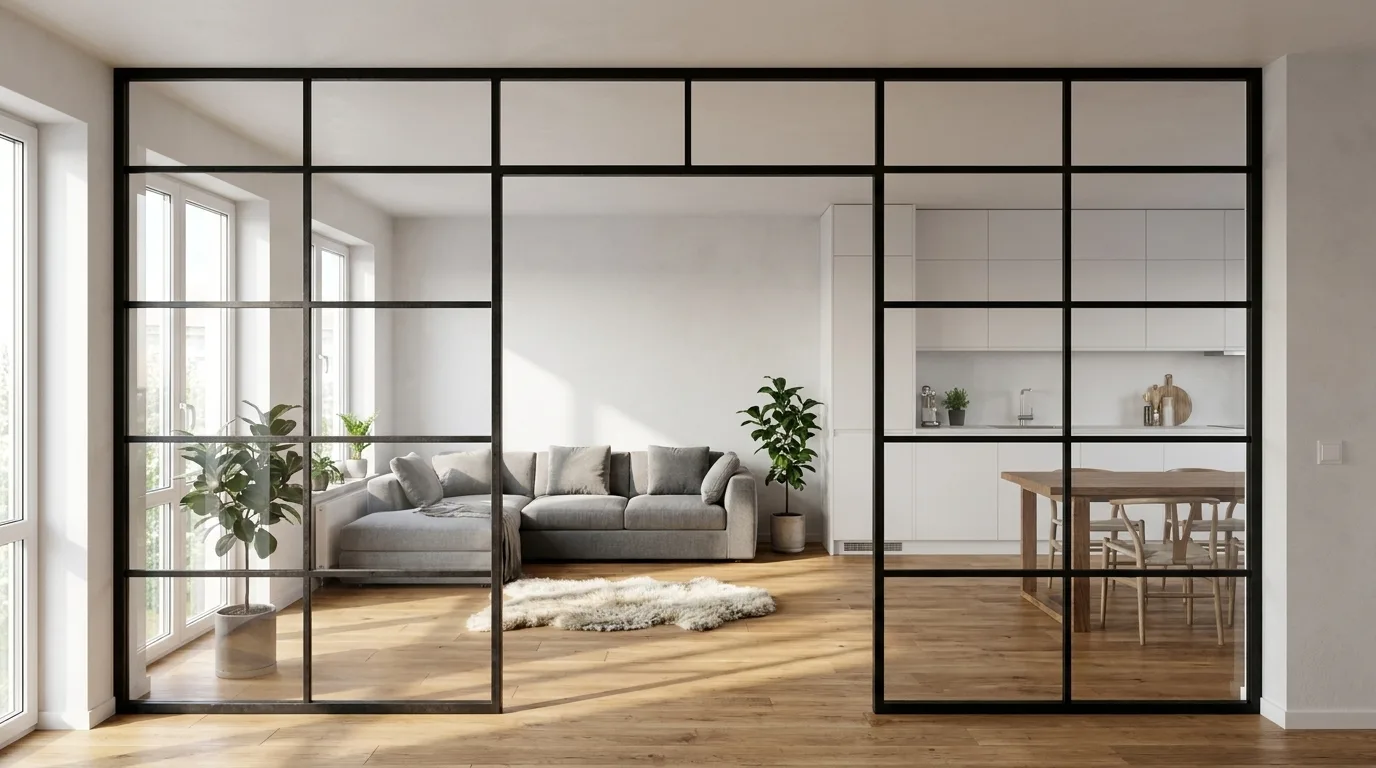
Open-plan layouts are popular for good reason - they feel spacious and bright. But they create a genuine challenge: how do you carve out a quiet corner for work, or a defined sleeping area, without losing that sense of openness?
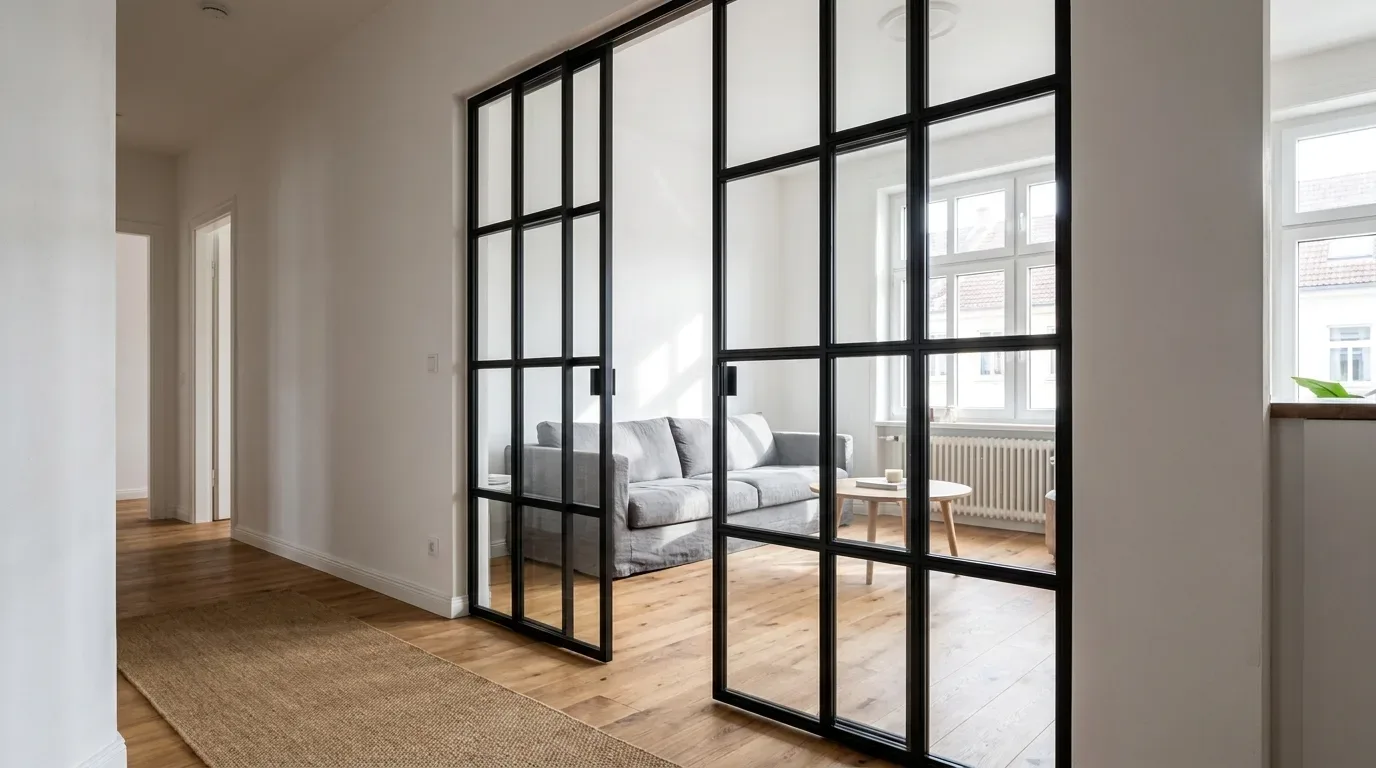
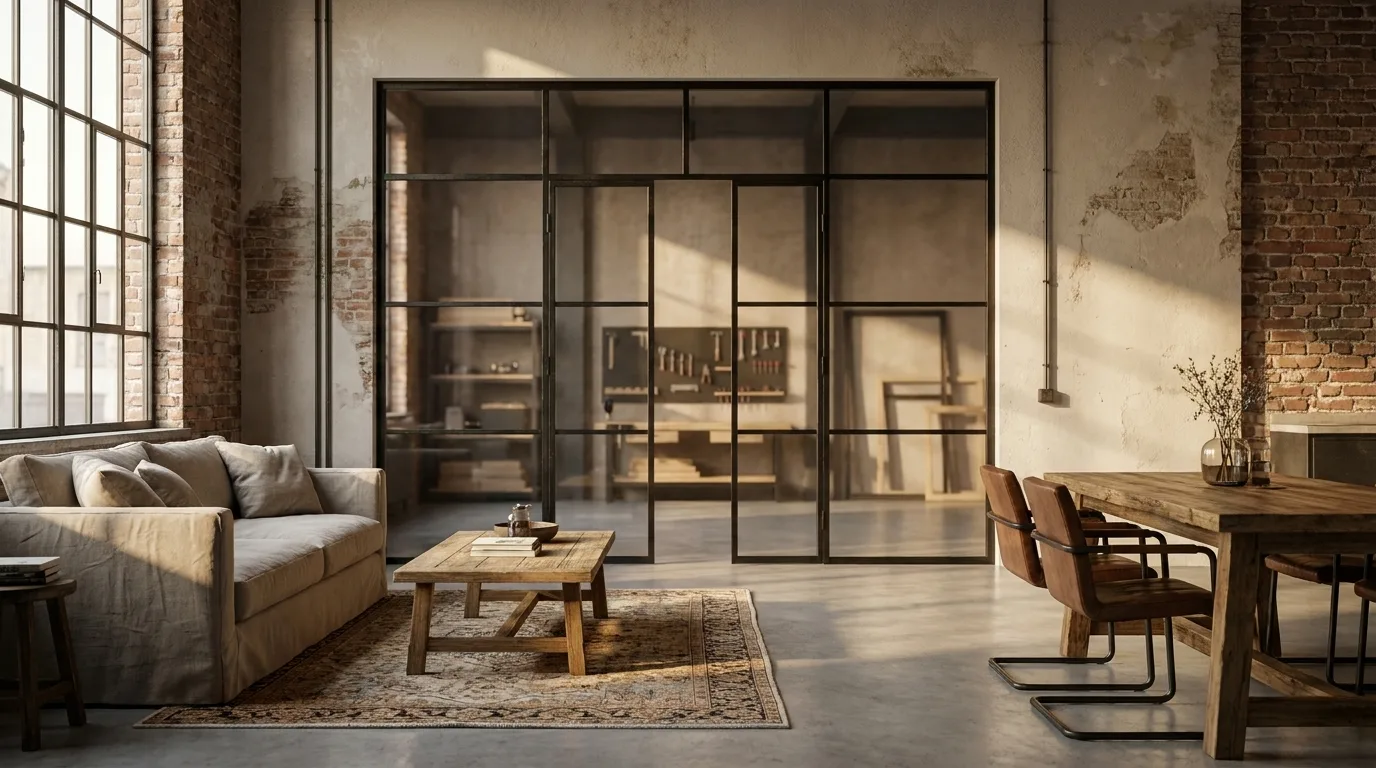
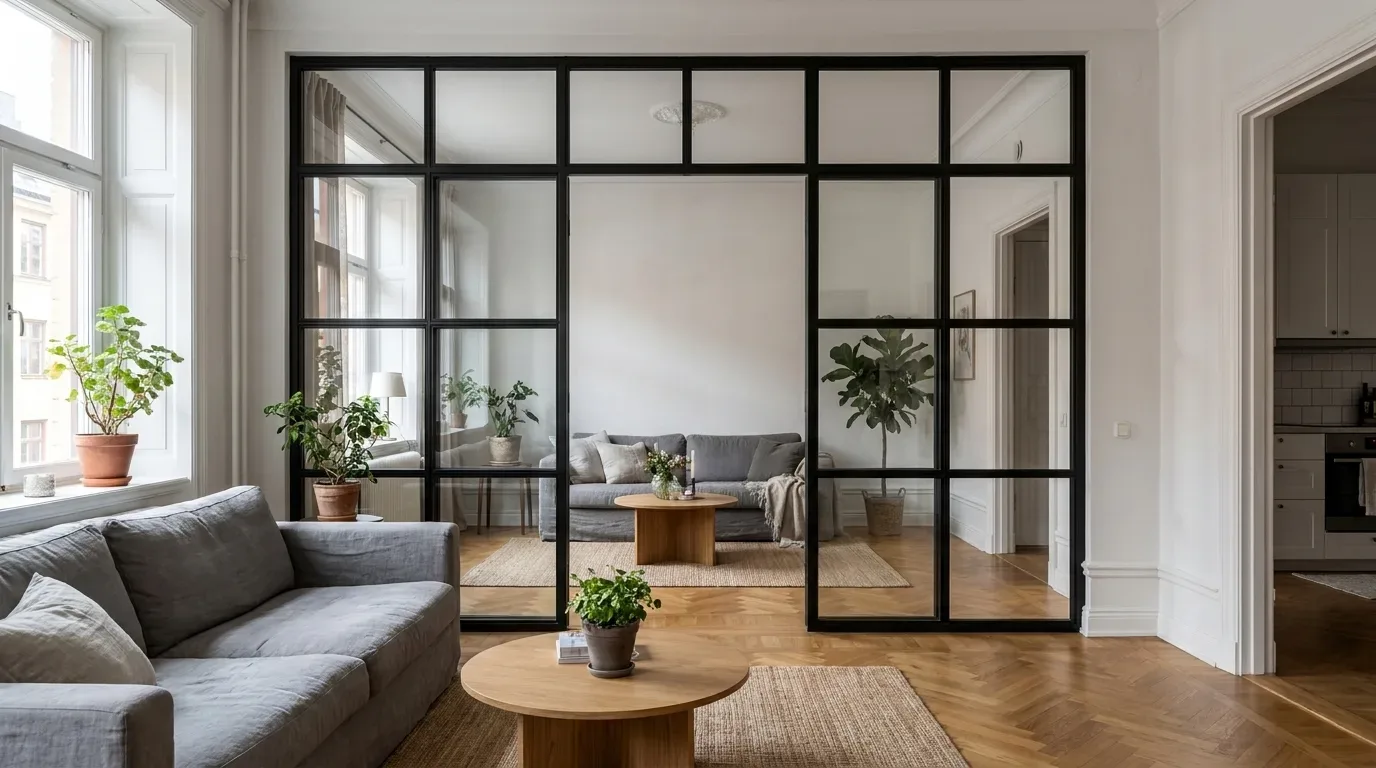
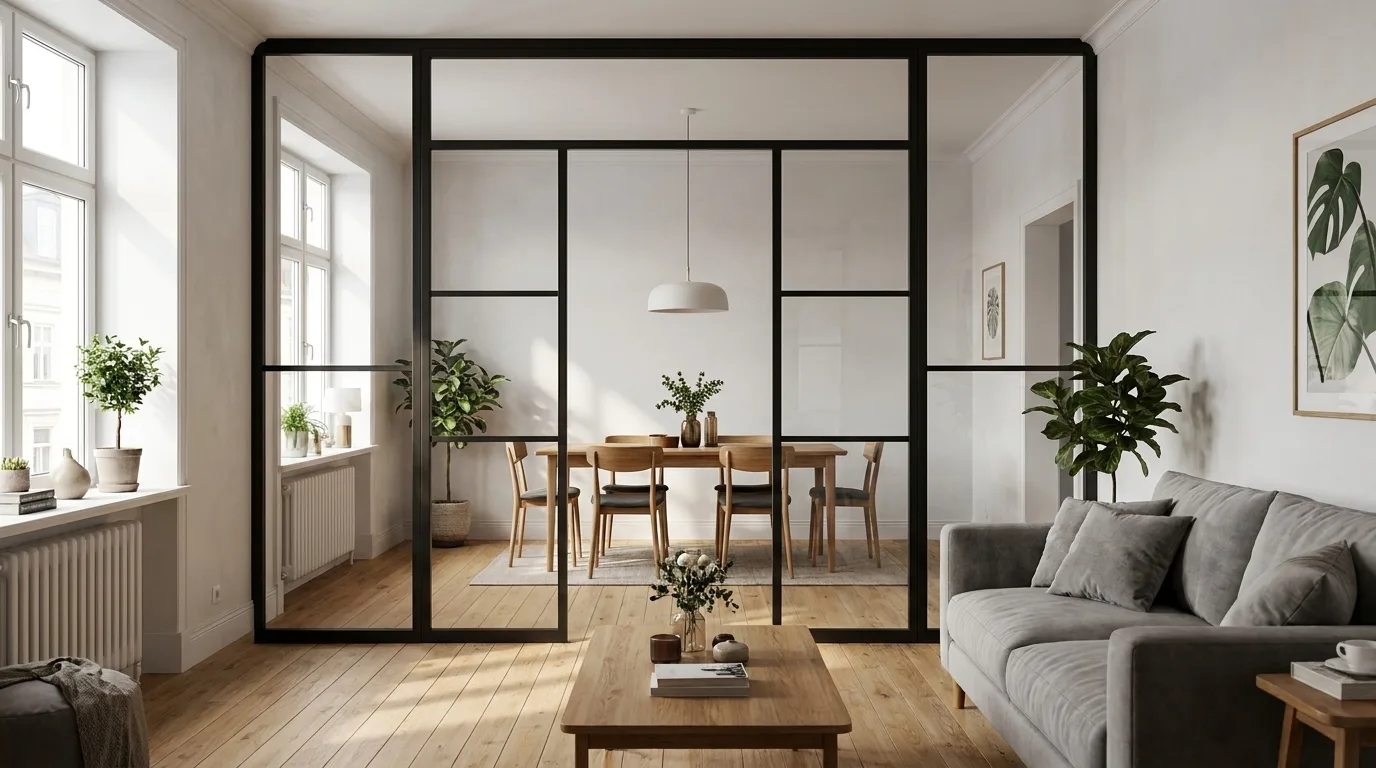
The answer is soft zoning. Instead of building a wall, you use furniture to signal that one area has a different purpose from another. A bookshelf positioned at a right angle to the wall, accessible from both sides, creates a visual boundary without blocking light. A custom room divider does the same with considerably more presence - the glass panels allow light to travel freely while the steel frame gives the division real architectural weight.
This matters especially in studio apartments and one-bedroom flats, where the living area, workspace, and sleeping zone often share the same room. Defined zones make a small home feel organised rather than chaotic - and organisation is one of the most powerful visual tricks for making a space feel larger.
Loft Doors: Light, Division, and Style in One
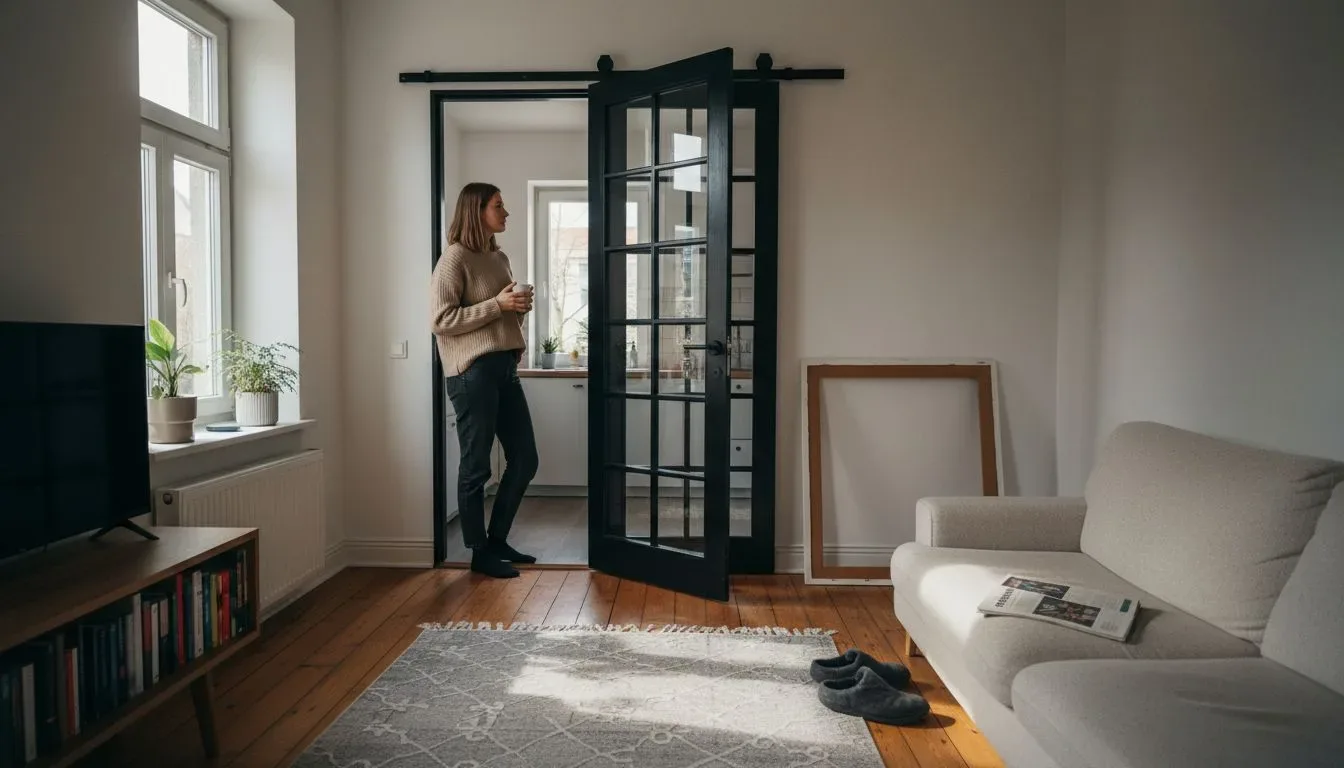
A standard solid door solves the privacy problem but creates a new one: it blocks light and, when open, swings into valuable floor space. In a small room, a door arc of 80 or 90 centimetres is a significant obstacle.
A custom loft door handles this differently. The glass panels - whether clear or frosted - keep light moving between rooms even when the door is closed. The steel frame, finished in powder coating for a scratch-resistant and even surface, adds a design element rather than just a functional barrier. And because you specify the exact dimensions you need, there is no wasted swing space, no awkward gap at the top, and no shimming required to make a standard door fit an non-standard opening.
In our experience configuring these pieces for customers across Europe, the most common source of fitting problems is not a production error - it is a measurement taken at the wrong point. Always measure the clear opening (the space between finished wall surfaces, not the rough structural opening), and measure in at least three places: top, middle, and bottom. The smallest measurement is the one that matters.
Custom Dimensions: When Standard Sizes Do Not Fit
Period apartments built before the 1970s often have non-standard ceiling heights, door openings that vary by several centimetres from top to bottom, and alcoves that fit neither a 60-centimetre nor a 80-centimetre standard unit. New-build apartments frequently have the opposite problem: precise dimensions that still do not match any catalogue size because the architect optimised for floor area rather than furniture compatibility.
Custom-made furniture resolves both situations. At Manufaktur X, you enter the exact dimensions you want - not a construction opening measurement, but the finished size of the piece itself. The 3D configurator shows you a real-time preview as you adjust width, height, and depth, and updates the price instantly so there are no surprises at checkout.
Compared to buying a standard shelf from a large retailer and discovering it is 4 centimetres too tall for your alcove, the custom route saves not just frustration but also the cost of returning and replacing a piece that never quite worked.
Material Choices That Work Hard in Small Spaces
The materials you choose affect both how a piece performs and how the room feels around it.
For shelving and table surfaces, solid wood in oak, beech, or ash brings warmth and visual depth - qualities that make a small space feel considered rather than sparse. Solid-glued boards (what craftspeople call Leimholz) give you genuine solid wood at practical widths; veneer options use a real-wood surface layer over a stable core, which is a legitimate choice for dining tables and coffee tables where wide panels might otherwise be prone to movement.
For structural frames - particularly on loft doors and room dividers - powder-coated steel is the material of choice. The powder coating process bonds colour directly to the metal surface under heat, producing a finish that is more scratch-resistant than conventional paint, applies evenly without brush marks, and uses no solvent emissions during curing. In a small room where every surface is visible and close, that quality of finish makes a real difference.
"The key to making a small apartment feel spacious is not just minimising furniture, but choosing pieces that serve multiple functions and do not visually compete with each other."
- Shajay Bhooshan, Design Director, Zaha Hadid Architects, via Dezeen
Light and Visual Scale: Making a Room Feel Bigger Without Moving Walls
Furniture affects perceived space as much as actual floor area. A few practical principles:
- Furniture on legs rather than flush to the floor lets light pass underneath, which reads as more floor space to the eye
- Glass elements in doors and dividers allow sightlines to continue through a room, making the overall space feel connected and larger
- Consistent finishes - matching the wood tone of a dining table to the shelf in the same room, for example - reduce visual noise and make the space feel coherent
- Light colours and reflective surfaces push walls back optically; if your furniture is dark, keep walls and ceilings pale to compensate
Storage Systems That Scale With You
The best storage solution for a small home is one that can be reconfigured as your needs change. Modular shelf systems - particularly those designed to run from floor to ceiling - can be expanded, rearranged, and adapted without starting from scratch.
A solid-wood large shelf unit built to your exact wall width uses every centimetre of available space, whereas a standard catalogue unit typically leaves gaps at each side that collect dust and look unfinished. Over time, the precision fit of a custom piece justifies its additional cost simply by eliminating the workarounds that standard furniture forces on you.
Beyond shelving, the highest-impact storage upgrades in small homes tend to be:
- Beds with drawer bases - the under-bed zone is often the largest unused storage volume in a flat
- Built-in window seat benches with hinged lids - useful seating and hidden storage in one compact unit
- Wall-mounted desks that fold flat when not in use
- Kitchen rails and magnetic strips that move storage off worktops and onto walls
Planning Your Space Before You Buy
The single most valuable step you can take before purchasing any furniture for a small room is to plan it digitally first. Moving a 3D model is free; moving a delivered sofa is not.
The Manufaktur X 3D configurator lets you set the exact dimensions of a piece, choose your wood species and frame finish, and see an accurate preview before you commit. Pricing updates in real time as you configure, so you always know what a change in size or material costs. For customers who have spent time measuring carefully and thinking through their layout, the configurator typically takes under ten minutes from first click to completed order.
EU-wide delivery means the same process is available whether you are furnishing a flat in Amsterdam, a townhouse in Milan, or an apartment in Krakow - production takes 5 to 6 weeks from order confirmation, and every piece is made in the EU to consistent quality standards.
Frequently Asked Questions
What is the most effective furniture type for a very small flat?
Pieces that serve two or more functions give you the greatest flexibility - extendable dining tables, benches with storage, and beds with drawer bases are the highest-impact choices. Wall-mounted and fold-flat options recover floor space that fixed furniture would permanently occupy.
How do I measure correctly for a custom-made door or room divider?
Measure the clear finished opening (between plastered or tiled surfaces, not the raw structural gap), at three heights: top, centre, and bottom. Use the smallest of the three measurements as your width. For height, measure from finished floor to finished ceiling or door frame. Enter these exact dimensions when configuring - you are specifying the finished size of the piece, not a construction opening.
Is custom furniture practical for a rented apartment?
Yes - most custom furniture is freestanding and leaves no permanent trace. Loft doors can be installed with reversible fixings in many cases. Always check your tenancy agreement for any specific restrictions, but custom pieces are generally no more invasive than standard furniture.
How does powder-coated steel compare to painted finishes on room dividers?
Powder coating bonds the colour to the metal surface electrostatically and then cures it under heat, producing a finish that is significantly more scratch-resistant than liquid paint, has no brush marks or sag lines, and does not release solvents during the process. For a piece used daily - opened and closed, touched repeatedly - powder coating holds up far better over time.
What wood species are available for shelves and tables?
Manufaktur X works with oak, beech, and ash. Each has a distinct character: oak is the hardest and most open-grained, beech is finer and slightly lighter in tone, ash has a pronounced grain that works well in contemporary interiors. All three are sourced and processed in the EU.
👉 Configure your custom loft door