Room Dividers Without Drilling: What Is Actually Possible - and What ManufakturX Makes
The short answer: a true "no-drill" room divider is a freestanding screen or folding panel - a decorative, movable piece of furniture. A permanent steel-and-glass partition wall, by contrast, is always fixed to the structure - bolted into the floor, wall, or ceiling. The made-to-measure room divider from ManufakturX is exactly the second type: custom-built, securely mounted, and built to stay. This guide explains both options honestly, so you can decide which one genuinely fits your situation.
What "No-Drill Room Divider" Actually Means
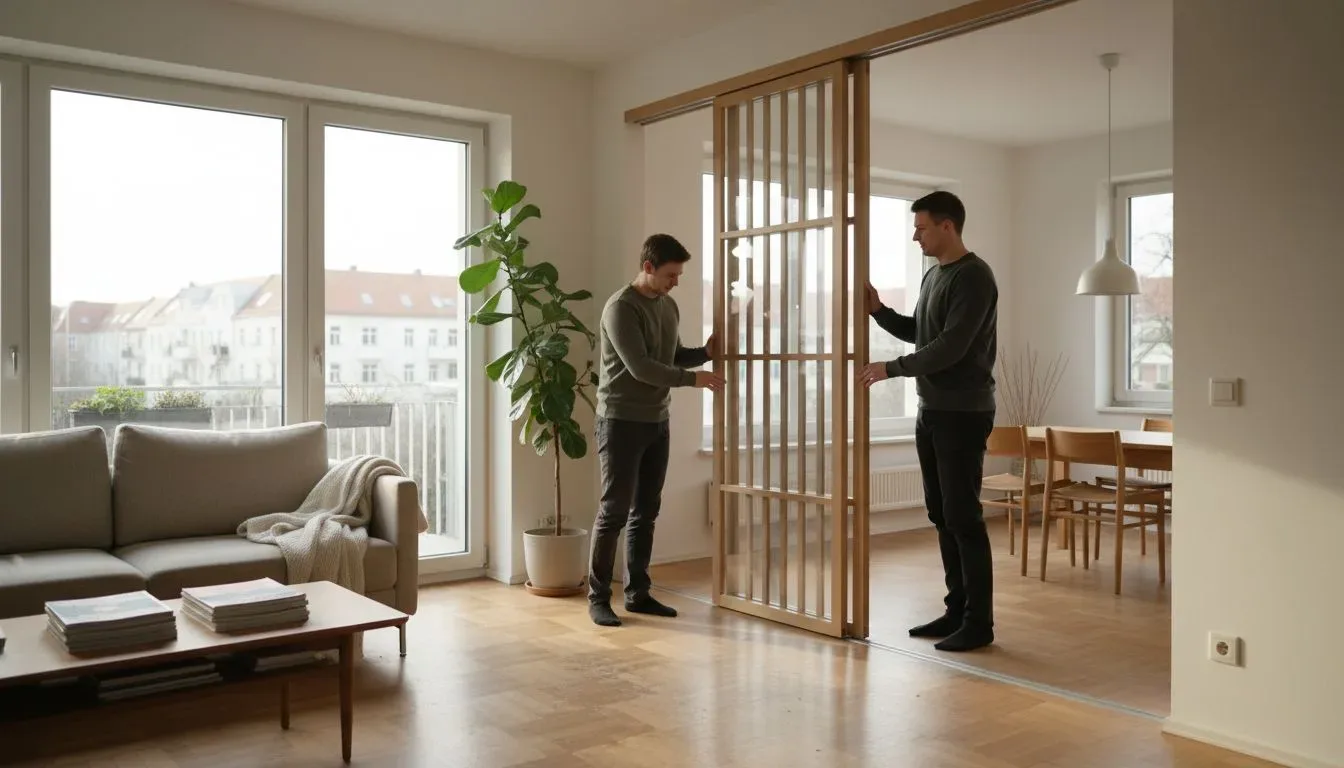
When people search for a room divider that requires no drilling, they typically mean one thing: no holes in walls, floors, or ceilings. In practice, only freestanding structures meet this description - the classic folding screen, a room-height divider panel braced between floor and ceiling via tension, or a heavy decorative screen that simply stands on its own base. These elements stay upright through their own weight or a spring-tension mechanism and can be repositioned at any time.
It is worth being direct here: ManufakturX does not manufacture freestanding screens or tension-fit panels. Our room divider is a fixed steel-and-glass wall that is bolted in place. If a no-drill, fully movable solution is what you need, that is a different product category - and not one we produce.
The Freestanding Alternative: Folding Screens and Panel Dividers
If drilling is genuinely not an option - for example, in a short-term rental or a protected historic building where the landlord explicitly prohibits any fixings - a freestanding screen is the logical choice. It leaves no marks, can be moved in minutes, and requires no tools. Many European homes, whether a 1970s concrete-frame flat or a converted period apartment, have at least one spot where a folding screen works well as a temporary visual break.
But the limitations are real. A freestanding screen is inherently less stable: it can tip over, which matters in homes with children or pets. It rarely reaches full ceiling height - most top out well below 2.5 m, leaving a gap at the top that breaks any sense of a proper room boundary. And because it rests on a base, it functions more as a piece of furniture than an architectural element. For a dressing corner, a soft visual cue between a sofa and a workspace, or a temporary setup during renovation, a screen does the job. For a clean, permanent division between a home office and a living area in an open-plan flat, it does not.
Why a Permanent Steel-Glass Partition Needs to Be Fixed
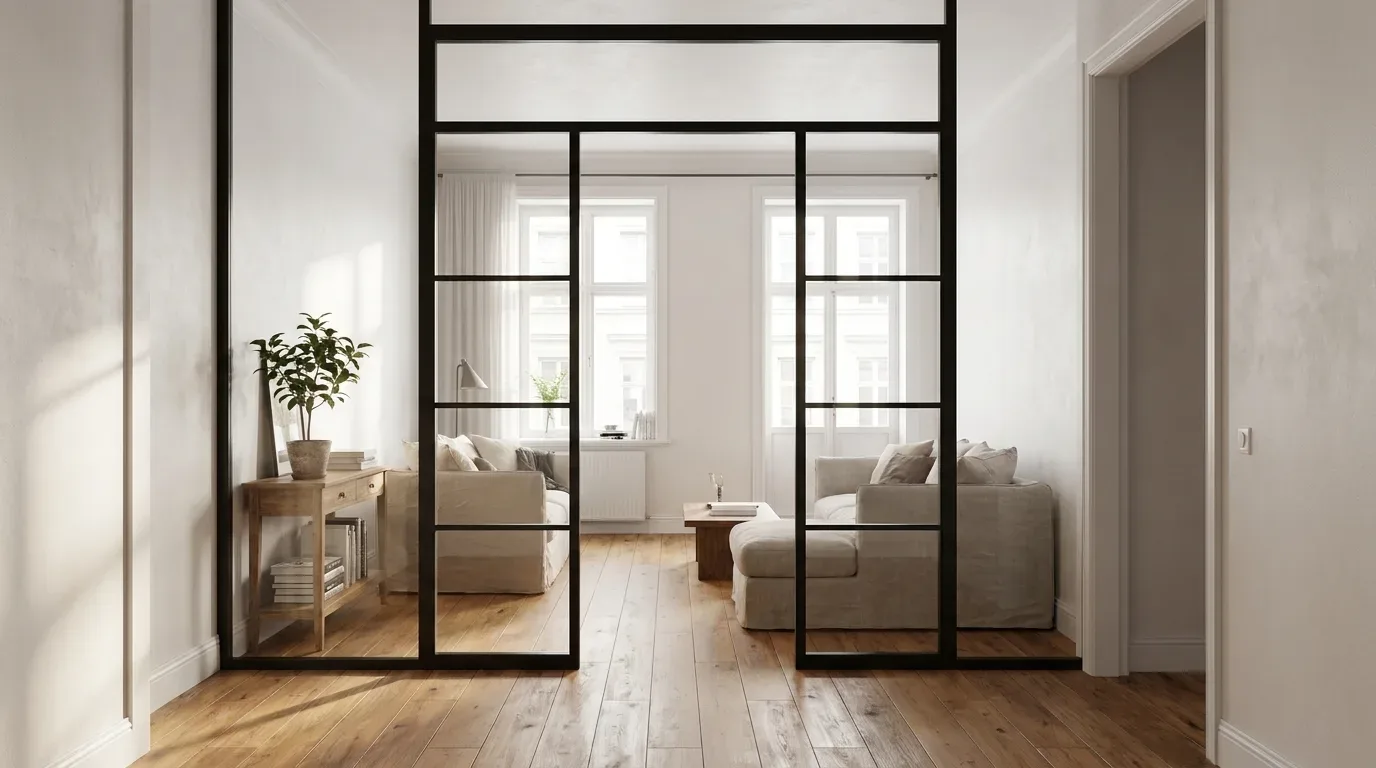
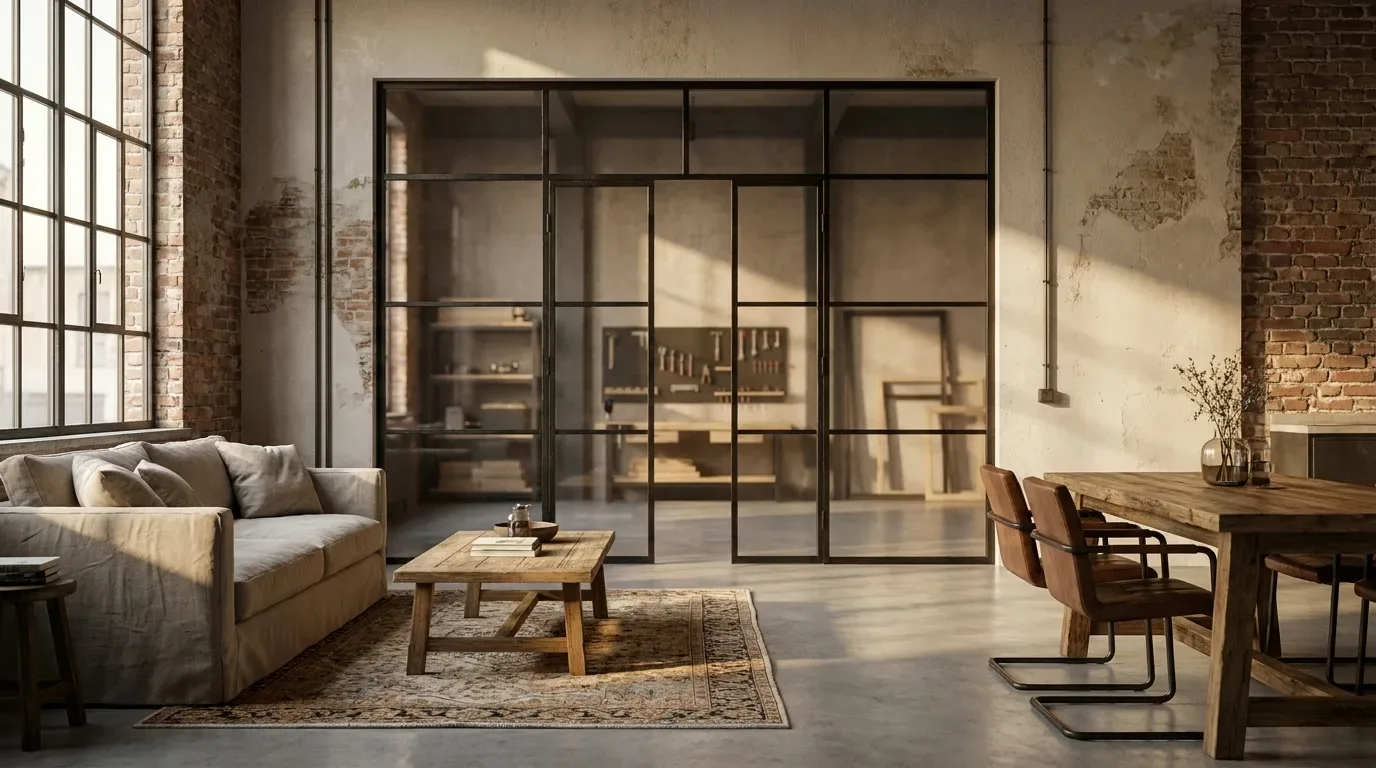
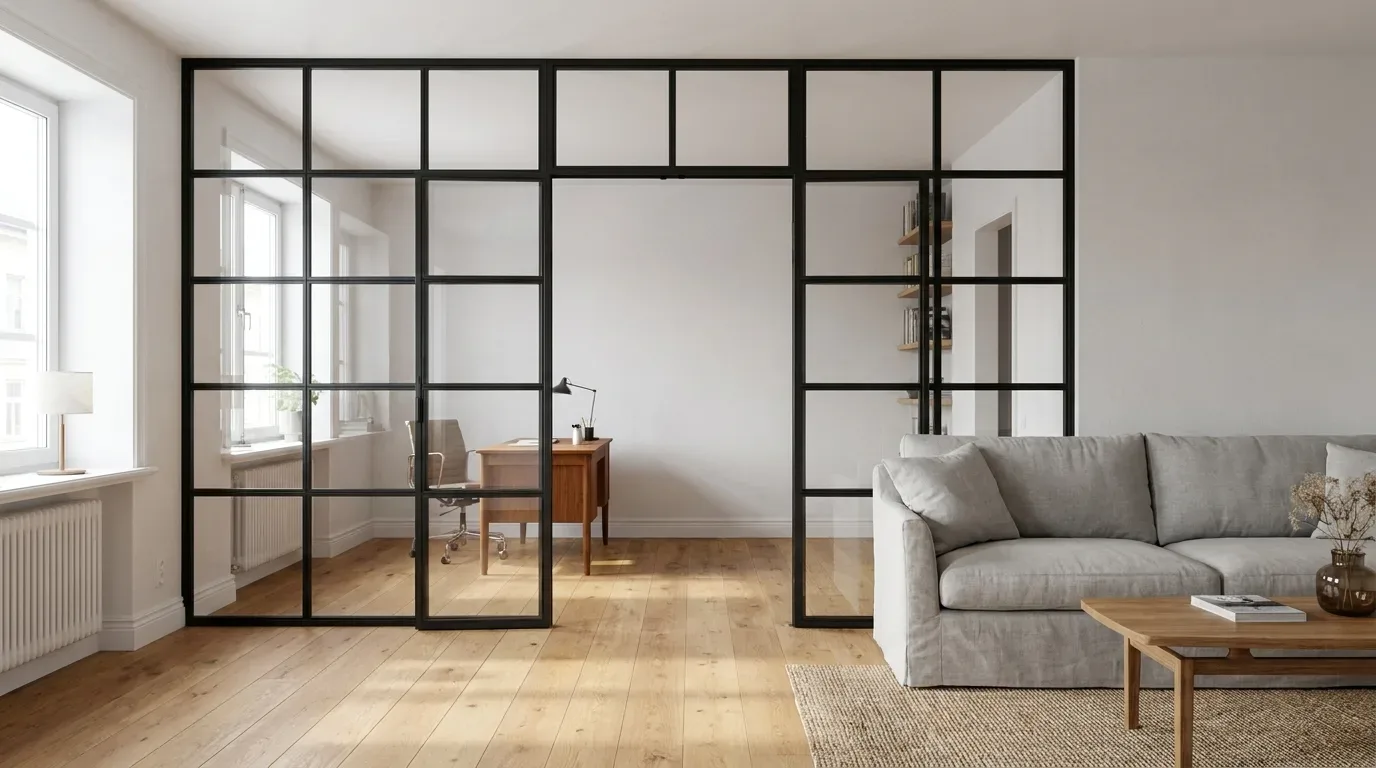
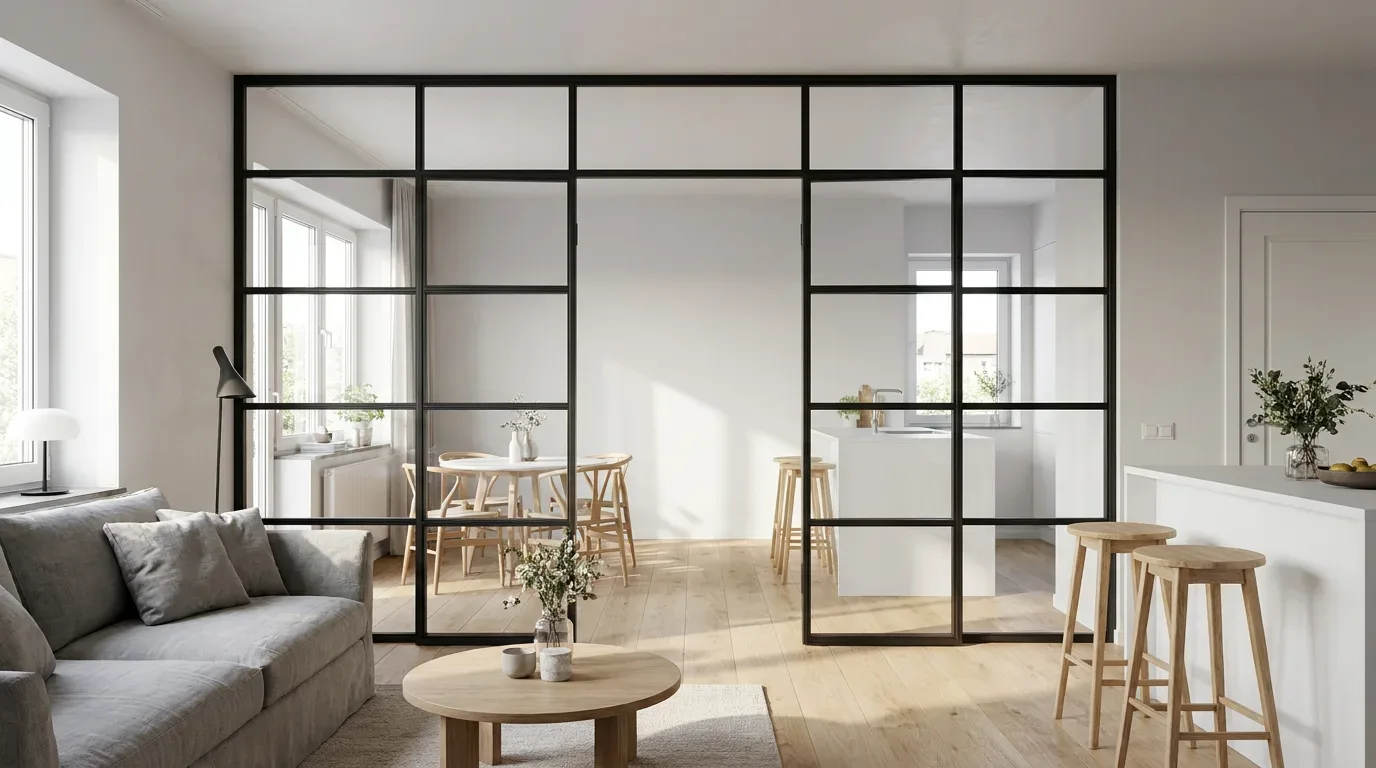
A fixed steel-and-glass wall is bolted because that is what gives it the properties a screen cannot deliver: full ceiling height, structural stability, and a genuine room boundary that does not flex or shift. The powder-coated steel frame - applied through an electrostatic process that produces an even, scratch-resistant and durable finish - carries large glass panels and is secured at the floor and at least one adjacent wall. In taller configurations, a top fixing is added as well. That requires drilling and anchoring.
This is not a compromise or a shortcoming. The anchoring is precisely what makes the wall stand perfectly plumb, stay there year after year, and define the space with architectural clarity. Glass transmits daylight from one zone to the next while keeping areas visually separated - an effect that a low, freestanding screen simply cannot replicate. In our workshop, the most common issue we see is not with the partition itself but with customers underestimating how much the fixed connection to the structure matters for the finished result.
Freestanding Screen vs. Fixed Steel-Glass Partition: A Direct Comparison
| Property | Folding screen / freestanding panel (no drilling) | Fixed steel-glass wall (installed) |
|---|---|---|
| Fixing method | None - stands on its own base | Bolted into floor, wall, or ceiling |
| Drilling required | No | Yes |
| Stability | Low - can be knocked over | High - permanently plumb and secure |
| Height | Usually below ceiling height | Made to measure - full ceiling height |
| Room separation | Decorative, loose visual break | Clear, permanent boundary |
| Can be moved | Yes - at any time | No - permanently installed |
| Made by ManufakturX | No | Yes |
Rented Homes: Is Drilling Allowed for a Permanent Partition?
Rental law varies across Europe, and you should always read your own tenancy agreement - but in most European countries, a reasonable number of properly made fixings that are neatly filled and repainted when you leave are considered normal use of the property. Holes for shelves, curtain rails, and light fixtures are routine in rented homes across the Netherlands, France, Spain, Belgium, and most other EU markets.
The practical approach: if you are planning a steel-glass partition wall in a rented flat, have a short conversation with your landlord before ordering. Most landlords are receptive, particularly if you explain that the holes will be professionally filled on departure. Special cases - listed buildings, properties with unusual tenancy clauses, or social housing with strict modification rules - may require written permission or rule out fixed installations entirely. In those situations, a freestanding screen is the only no-trace option, with all the limitations that come with it.
When a Fixed Steel-Glass Partition Is the Right Choice
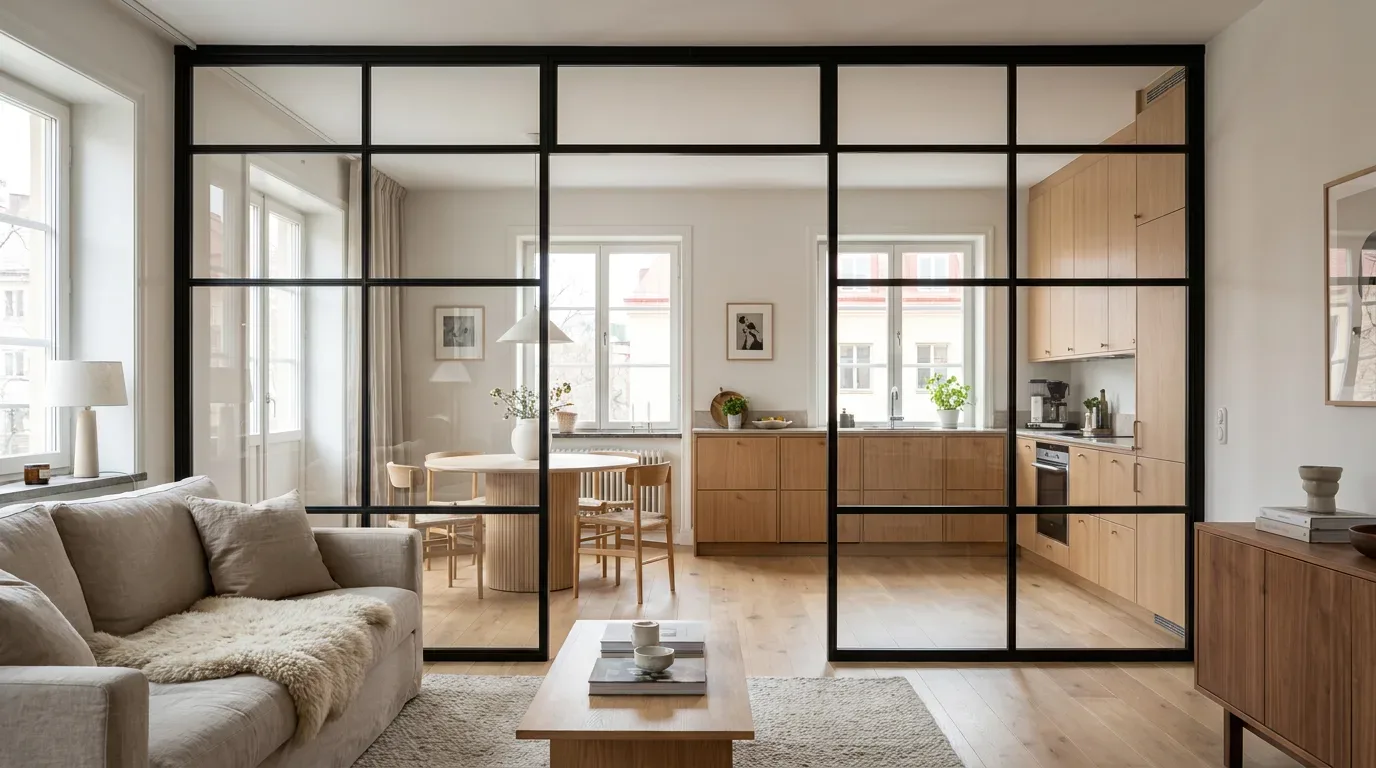
A permanent partition makes sense whenever you want a real, lasting division rather than a soft visual suggestion. The most common scenario across the European homes we work with is the open-plan layout - a single large room that serves as both living space and something else: a home office, a sleeping area in a studio flat, a dining zone separated from a kitchen, or a children's play corner in a larger living room. A fixed steel-and-glass wall creates that boundary without blocking daylight, and without making the space feel smaller or more enclosed.
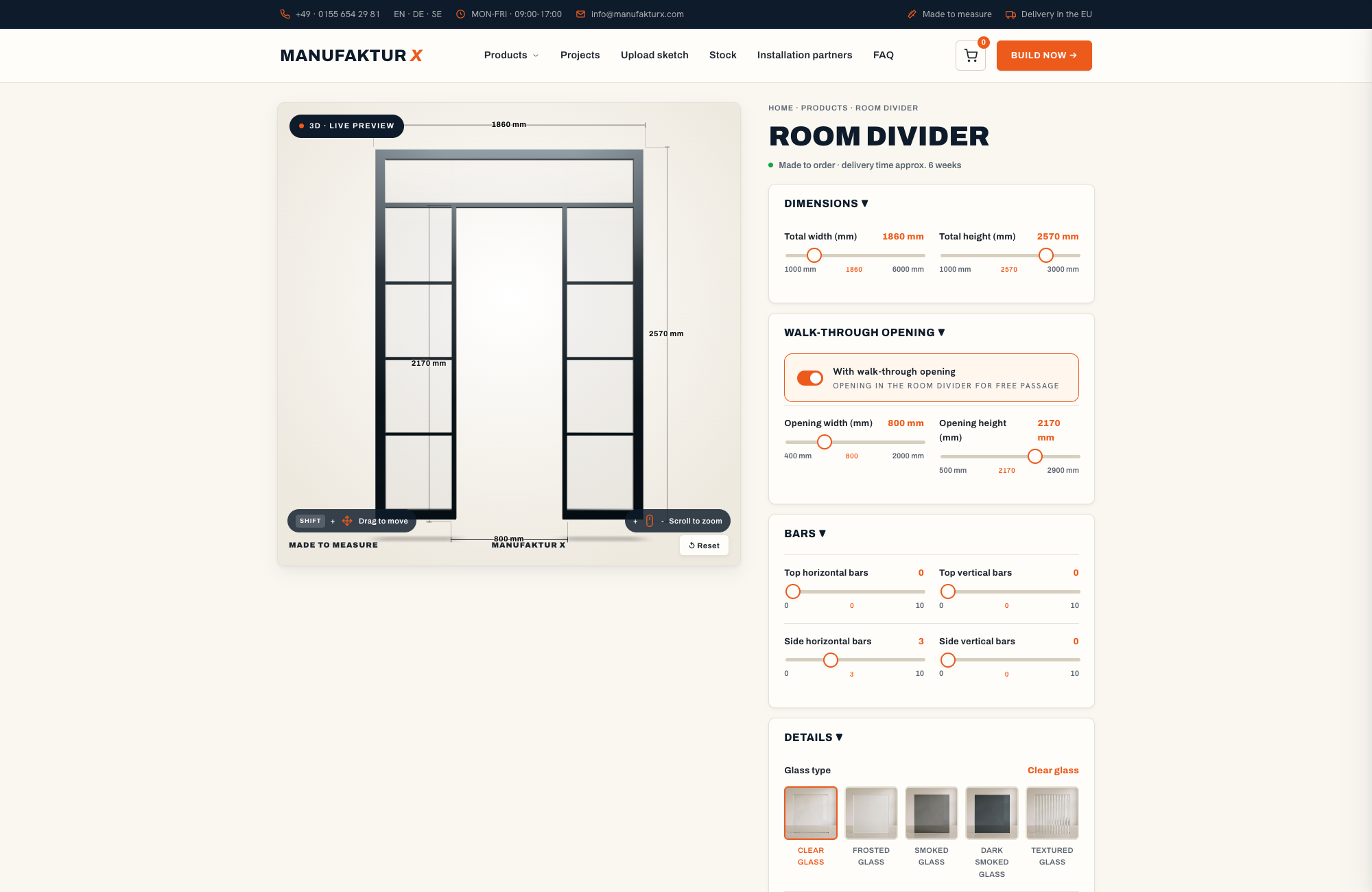
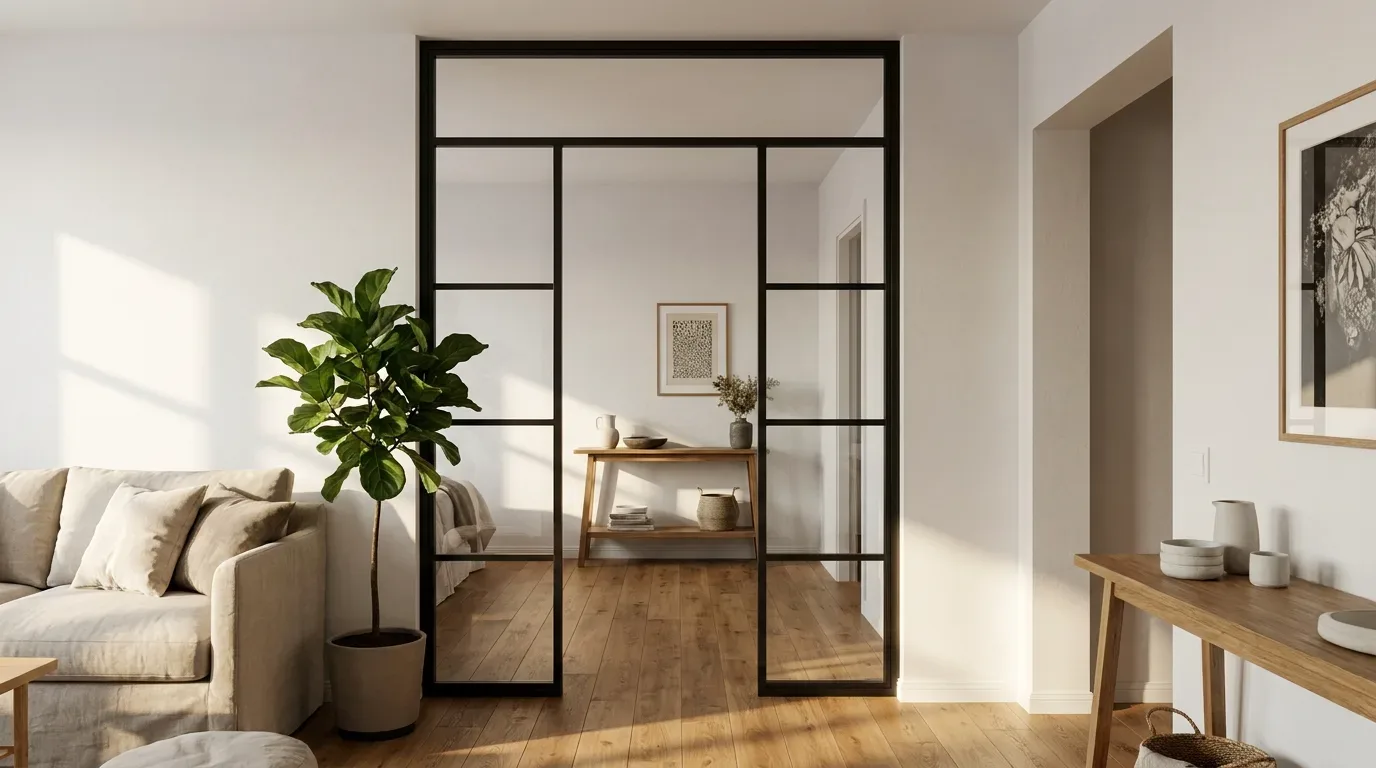
The room divider from ManufakturX is specified entirely to your dimensions. You enter the exact width and height you want - not the structural opening, but the finished partition size. You can include a walk-through opening (without a door leaf) if you need to move between zones without going around the wall. Glass options include clear, frosted (milk), smoked, and dark smoked, plus a ribbed/textured variant; ESG and VSG safety glass are standard. Horizontal and vertical bar patterns (Sprossen) are available and are always distributed evenly across the frame. The powder-coated steel frame comes in any RAL colour. Optional side panels and a top panel close off the wall at the sides and above. If you also need a proper hinged door in the same aesthetic, that is a separate product - see the made-to-measure loft door.
What Does a Made-to-Measure Room Divider Cost?
Pricing for the ManufakturX room divider is fully transparent and calculated in real time. The base price starts at €2,212 in the standard configuration. From there, the final price reflects your dimensions, glass type, bar pattern, and RAL colour choice - with no hidden surcharges. A walk-through opening reduces the total glass area and therefore lowers the price accordingly. You see the exact fixed price in the configurator before you commit to anything.
| Product | From | Note |
|---|---|---|
| Lofttür | 1.157 € | Lowest possible option |
| Raumteiler | 2.212 € | Steel + laminated glass, custom width |
| Großes Regal | 3.200 € | Solid wood, steel frame, floor-to-ceiling |
| Esstisch | 1.580 € | Solid wood, steel frame |
| Couchtisch | 1.155 € | Solid wood, steel frame |
| Sitzbank | 1.100 € | Solid wood, steel frame |
| TV-Board | 1.540 € | Solid wood, steel frame |
| Rohrregal | 1.065 € | Modular pipe shelf |
Every partition is produced in the EU, supplied directly from the manufacturer, with a production and delivery lead time of 5 to 6 weeks. The process is straightforward: enter your dimensions, select your glass and frame colour, and the configurator gives you an immediate price and a real-time preview of your configuration.
Frequently Asked Questions
Is the ManufakturX room divider available in a no-drill version?
No. The ManufakturX room divider is a fixed steel-and-glass wall that is bolted to the structure. We do not offer a tension-fit, clamp-mounted, or freestanding variant. If you genuinely cannot drill, a freestanding folding screen is the right solution - but that is not a product we manufacture.
What is the practical difference between a folding screen and a fixed glass partition?
A folding screen stands freely, can be repositioned, and leaves no marks - but it only provides a loose visual break, it rarely reaches full ceiling height, and it is easy to knock over. A fixed steel-and-glass partition is secured to the structure, stands perfectly plumb at full ceiling height, and creates a genuine room boundary that holds its position permanently. One is furniture; the other is architecture.
Can I install a fixed partition in a rented flat?
In most European rental markets, properly made fixings that are filled and repainted when you vacate are treated as normal use of the property. That said, tenancy agreements differ - speak to your landlord before ordering, especially in protected or listed buildings, or wherever the lease includes specific restrictions on modifications.
Do I need a professional installer, or can I fit it myself?
Installing a fixed steel-and-glass partition involves drilling into the structure, aligning the frame to a precise vertical plumb, and handling large glass panels safely - ideally with two people. Whether you do this yourself or hire a fitter depends on your experience and the specific installation conditions. In our experience, careful measurement before ordering and careful alignment during installation are the two points that determine whether the finished result looks as good as the preview in the configurator.
<<