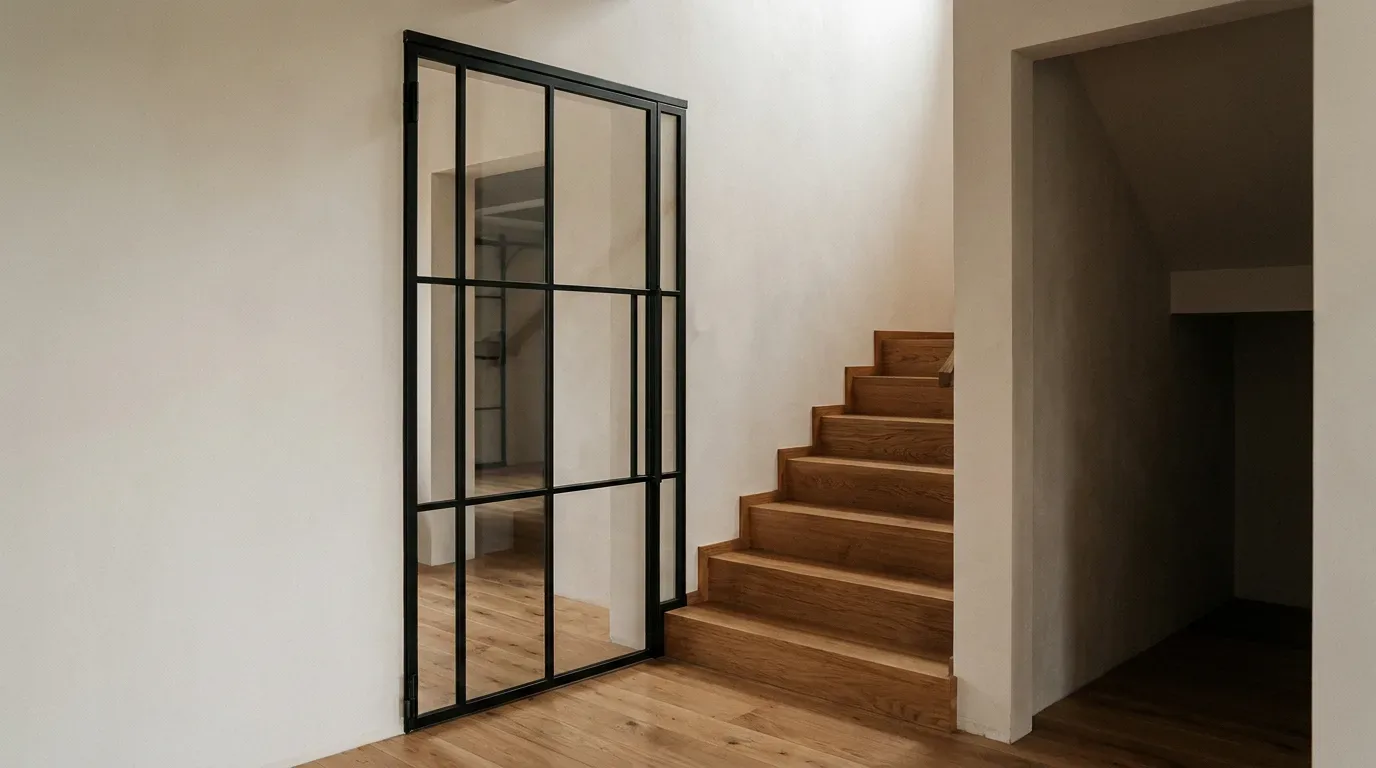
Loft Door EU Manufacturing - How Sustainable Is a Steel and Glass Door Really?
A loft door manufactured inside the European Union travels a few hundred kilometres to reach your home, not the length of several shipping lanes. That single fact reshapes its environmental footprint more than any coating colour or glass choice ever could. This article looks at where the steel originates, how long powder-coated frames and safety-glass panes realistically hold up in daily residential use, and why building a door to your exact opening eliminates the material waste that catalogue sizes leave behind.
An EU-manufactured loft door is the more sustainable option for three concrete reasons: the steel frame is a fully recyclable single material, the supply chain is regional rather than intercontinental, and made-to-measure production in a 5-6 week window means the door arrives sized to your opening - nothing is trimmed away on site.
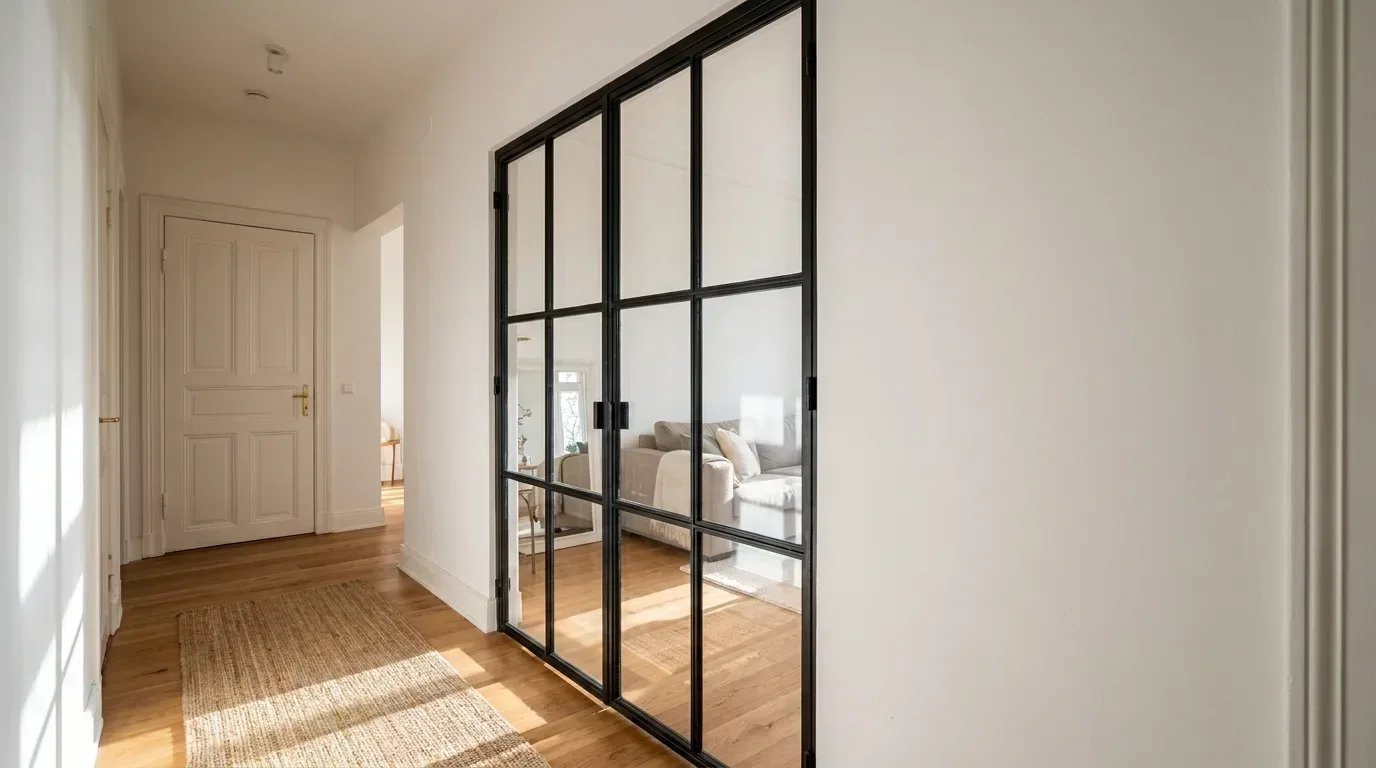
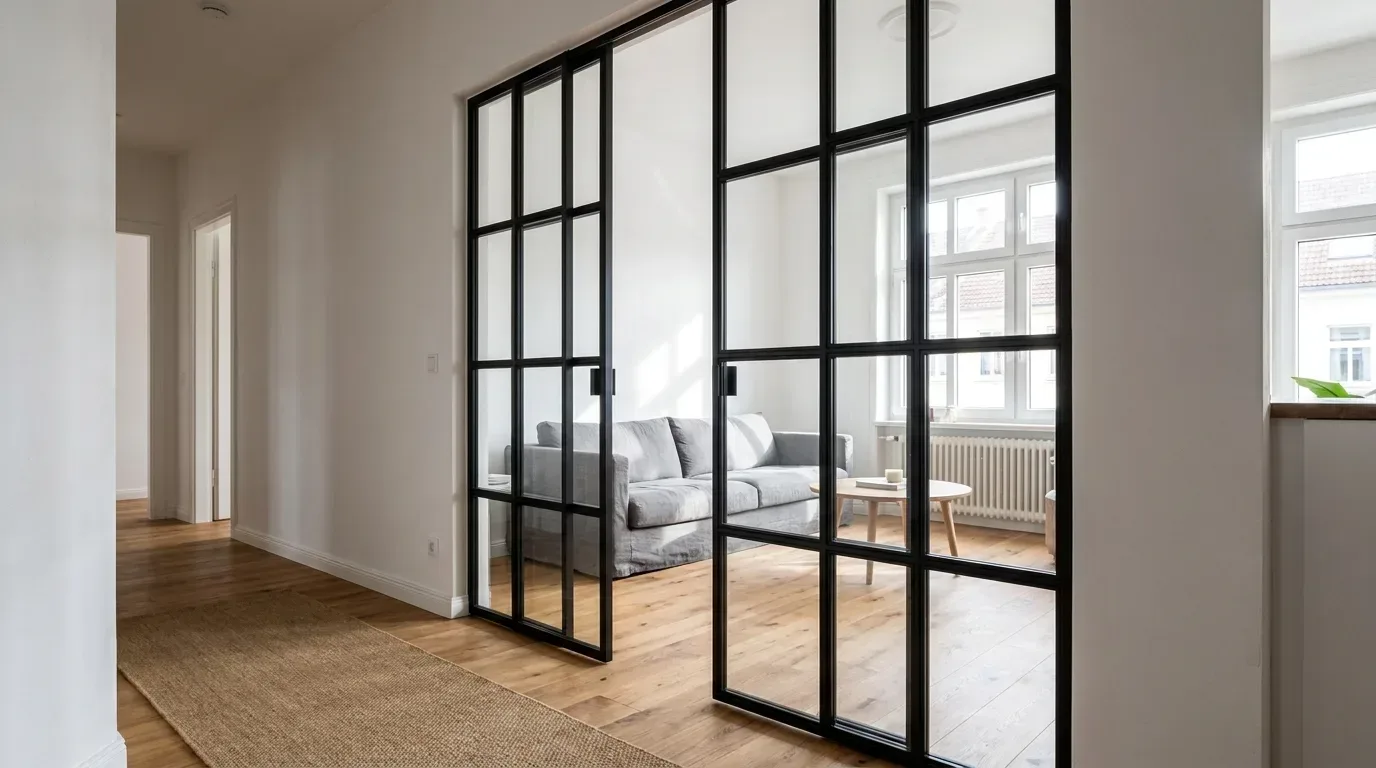
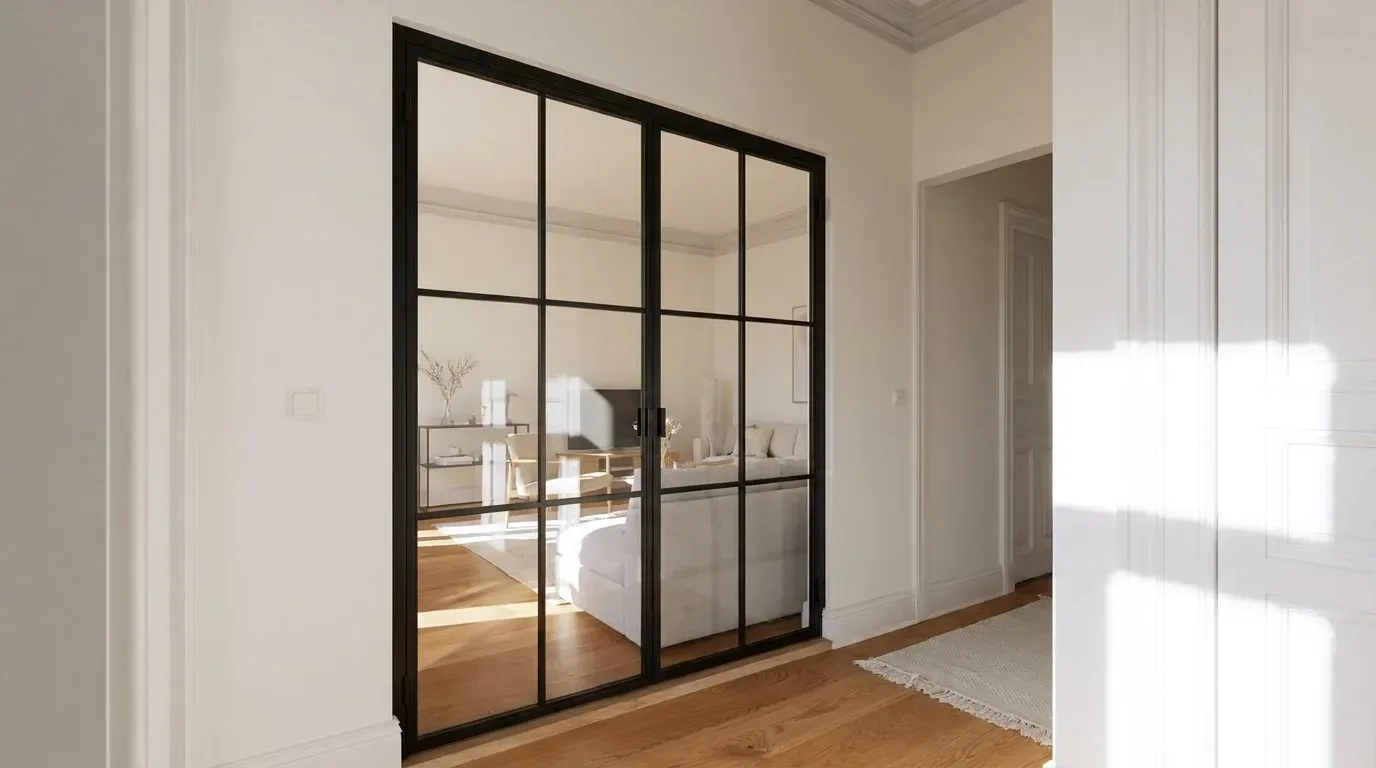
A loft door is a room-height interior door built around a steel frame, with large safety-glass panes divided by narrow profile bars. It physically and acoustically separates two spaces without blocking natural light from passing between them.
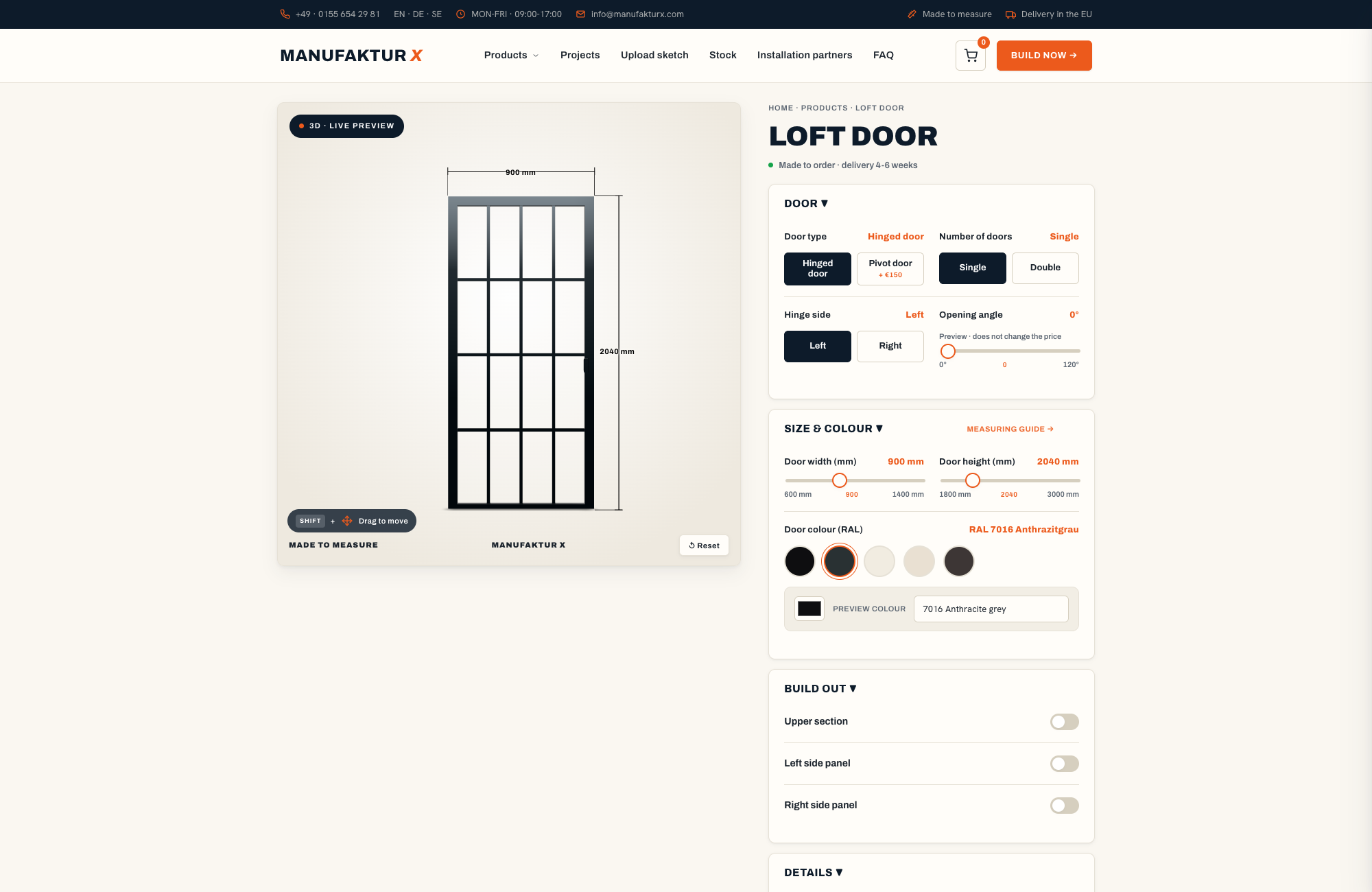
Want to see how the materials and options come together before reading further? The loft door configurator lets you set glass type, bar grid and RAL colour on your own dimensions, with a fixed price updating in real time.
The short version
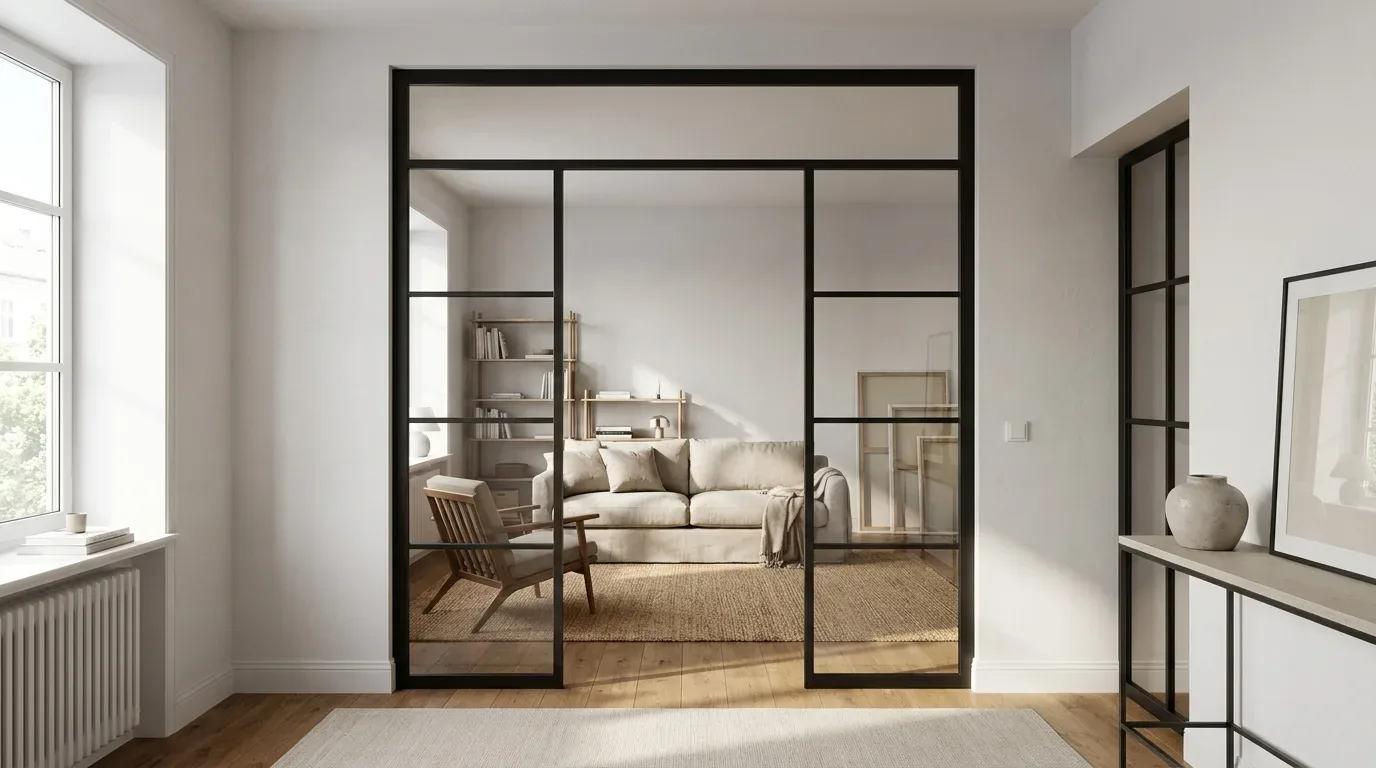
- EU manufacturing keeps the supply chain regional: production, correction and spare parts all stay within the EU, replacing intercontinental freight with a fixed 5-6 week production window.
- The steel frame is the most circular component - structural steel can be remelted into new stock repeatedly, without losing strength or requiring any downgrading.
- Powder-coated steel and safety glass (ESG or VSG) have no defined wear-out point in interior use; the parts that actually need replacing over time are hinges and seals.
- Made-to-measure production means your door arrives sized to your measured opening. No trimming, no shimming, no filler panels at the wall.
- The loft door itself is steel and safety glass only - oak, beech and ash belong to the wider furniture range, and the material comparison below shows when each makes sense.
Key takeaways
| Insight | Why it matters |
|---|---|
| Transport distance is the quiet footprint factor | Material debates dominate, but an imported door adds intercontinental freight to every single unit. EU production replaces that with regional logistics. |
| Steel is circular by nature, not by branding | Steel scrap re-enters production as structural steel of equal strength. A frame at end of life is raw material, not landfill. |
| Longevity is the strongest sustainability lever | A door in active service for decades absorbs its production footprint. No-repaint powder coating and individually replaceable panes make that realistic. |
| Made-to-measure removes on-site waste | Catalogue doors get trimmed, padded or bridged with filler constructions. A door built to your measured opening - with roughly 5 mm clearance per side - needs none of that. |
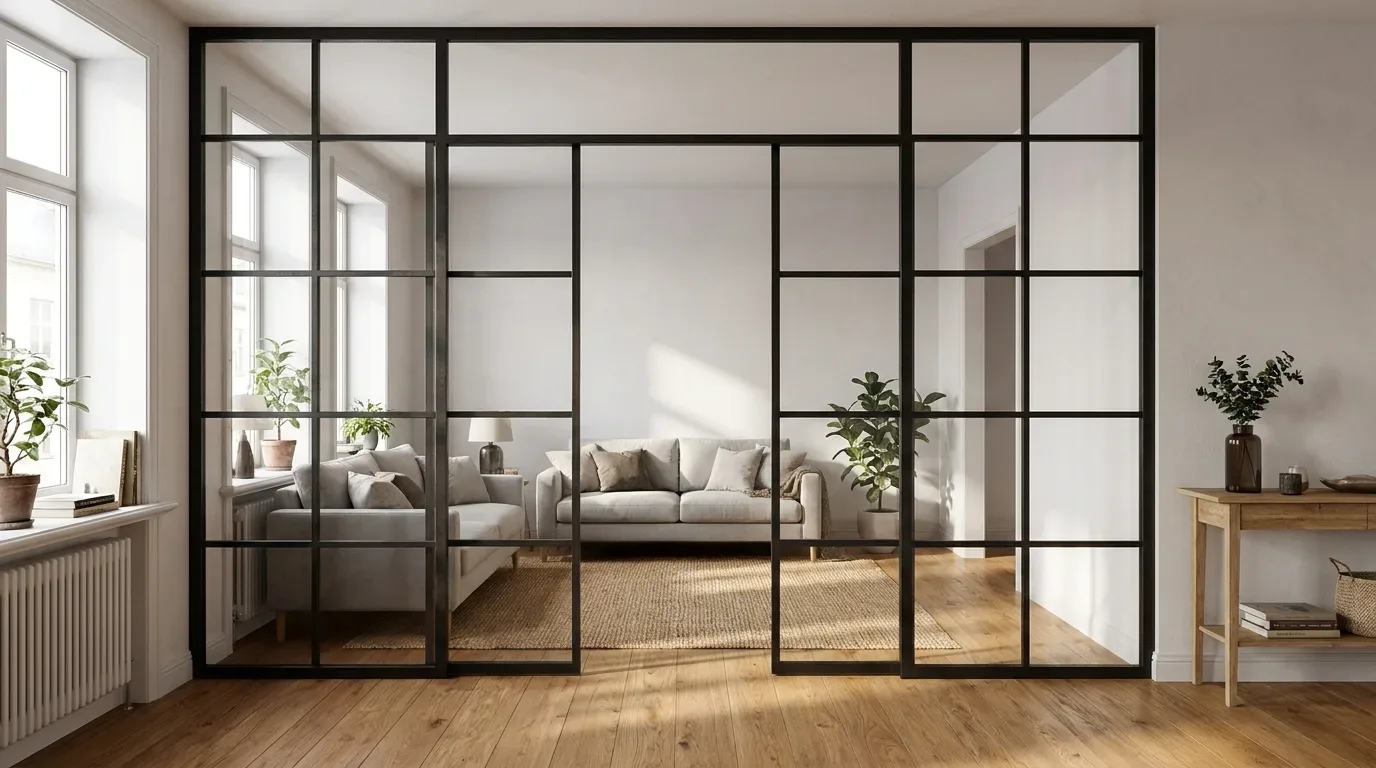
What EU manufacturing actually means for a loft door
EU manufacturing means the steel frame is welded, powder-coated and glazed inside the European Union, using regionally sourced steel and glass, with a fixed production lead time of 5-6 weeks - not an estimate tied to container shipping cycles.
In practice, the EU-made label covers the entire production path: cutting and welding the frame profiles, applying the powder coating in your chosen RAL colour, fitting the safety-glass panes, and a final quality check before the door ships. Nothing arrives as a finished unit in a container from overseas. That matters in two ways at once. An imported door carries an intercontinental freight leg that no surface finish or glass specification can offset - and every spare part it ever needs travels that same route back to you. A short supply chain keeps production, rework and repair in one place: if a weld needs attention, it happens in the same workshop within days, not within a shipping cycle.
Housing compression across Europe makes the glass argument sharper than it might seem. EU households averaged 1.7 rooms per person in 2024 (Source: Eurostat, 2025), with the tightest national figures - in Poland and Latvia - sitting near 1.2 rooms per person (Source: Eurostat, 2025). In a period apartment or a converted warehouse loft where rooms are limited, a partition that absorbs daylight carries a real cost. That is why buyers consistently prioritise light transmission over aesthetics when choosing glass doors. Data from Manufaktur X (based on 162 anonymous configurator sessions): Our own Manufaktur X configurator data supports this: across 17,353+ anonymous configuration sessions, 46% of users previewed clear glass first - daylight is the primary purchase driver in compact European homes.
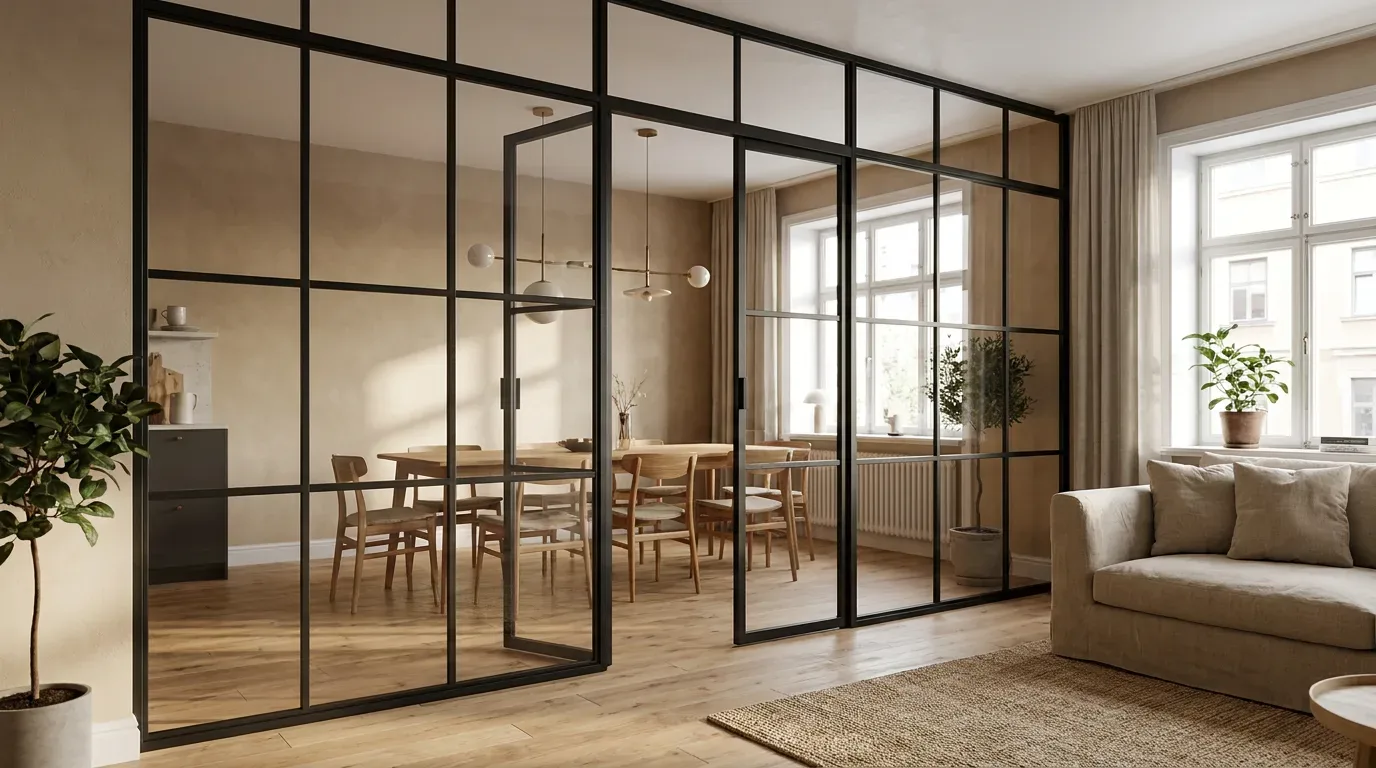
The buying model follows the same reasoning. You configure the door made-to-measure, direct from the manufacturer, and watch a fixed price update live on the loft door product page. No importer, no reseller markup, and no ambiguity: the 5-6 weeks you wait are a production window in an EU workshop, not a shipping estimate.
Where does the steel in a loft door frame come from?
The frames are built from standard structural steel grade S235JR per EN 10025, produced in Europe with a documented material path and a significant share of recycled scrap content.
That grade is deliberately unexotic, and that is the point. European mills produce S235JR in large volumes, much of it fed by electric arc furnaces that remelt steel scrap into new billets - yesterday's steel becoming today's door frame profiles. Origin matters beyond the melting route, though. A frame built from European stock has a traceable path from mill to workshop; imported frames frequently arrive with no material record at all. Looking ahead, the EU's carbon border adjustment mechanism (CBAM) will make the origin of steel a visible cost line in door pricing from Q2 2027 onwards, widening the practical gap between EU-sourced and imported frames in a way that will show up directly in quotations.
Why steel is a genuine closed loop
The circularity of steel is a property of the material, not a claim on packaging. When a steel frame reaches end of life it is not downcycled - it is remelted into structural steel of equal strength, and that cycle has no defined limit. Compare this with a composite door leaf, where foil, foam and board layers are bonded so tightly that separating them is uneconomical, and the whole unit typically ends as mixed waste. A steel frame is a single material, magnetically sortable, with a collection infrastructure that already exists across every EU country.
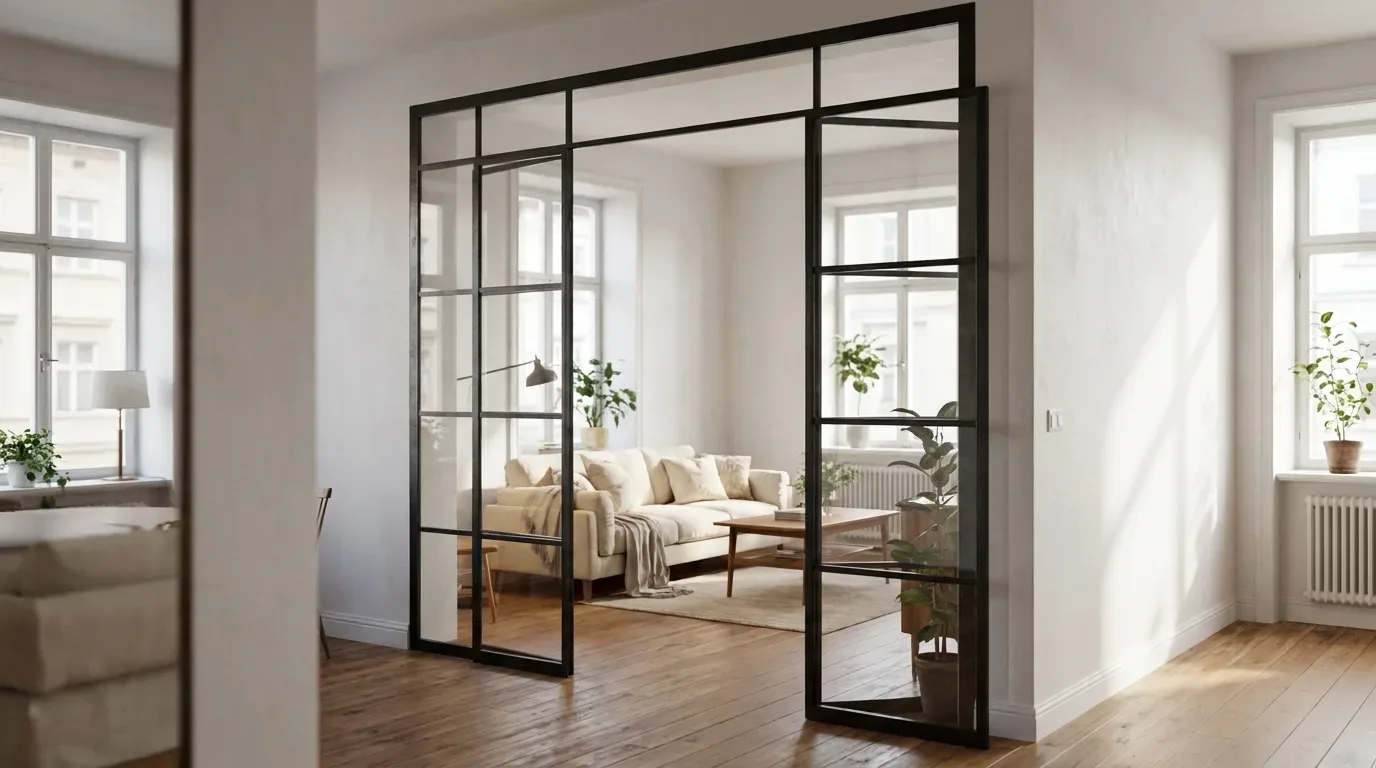
Steel is 100% recyclable and can be recycled again and again without loss of its properties.
What the steel grade designation tells you
The S235JR label decodes simply: S stands for structural steel, 235 is the minimum yield strength in newtons per square millimetre, and JR denotes the tested impact toughness. EN 10025 defines all of it, which means any certified European mill can supply an identical grade decades from now. That is the quiet foundation of long-term repairability - a matching replacement profile can always be produced. A standardised, single-material frame is also an honestly recyclable one: the recycler knows exactly what is in it.
How long does a steel and glass loft door actually last?
In interior residential use, a powder-coated steel frame and safety-glass panes have no defined wear-out point - the components that realistically need attention over time are hinges and seals, not the frame or the glass.
The frame owes its durability to its surface. Powder coating per EN 13438 is applied electrostatically and cured into one closed layer, so it does not chip or flake under the thousands of daily contacts a door frame absorbs the way a brushed-on paint film can. Safety glass on a steel and glass room divider follows the same logic as on a door: the panes are structural components sized for decades of use, not decorative panels. From workshop practice, one pattern repeats consistently: the most common reason a custom door does not fit perfectly is a mis-measured opening, not a production fault. The materials themselves rarely fail. Measurements do. Day-to-day care questions are covered in the FAQ - the short answer is that there is very little to do.
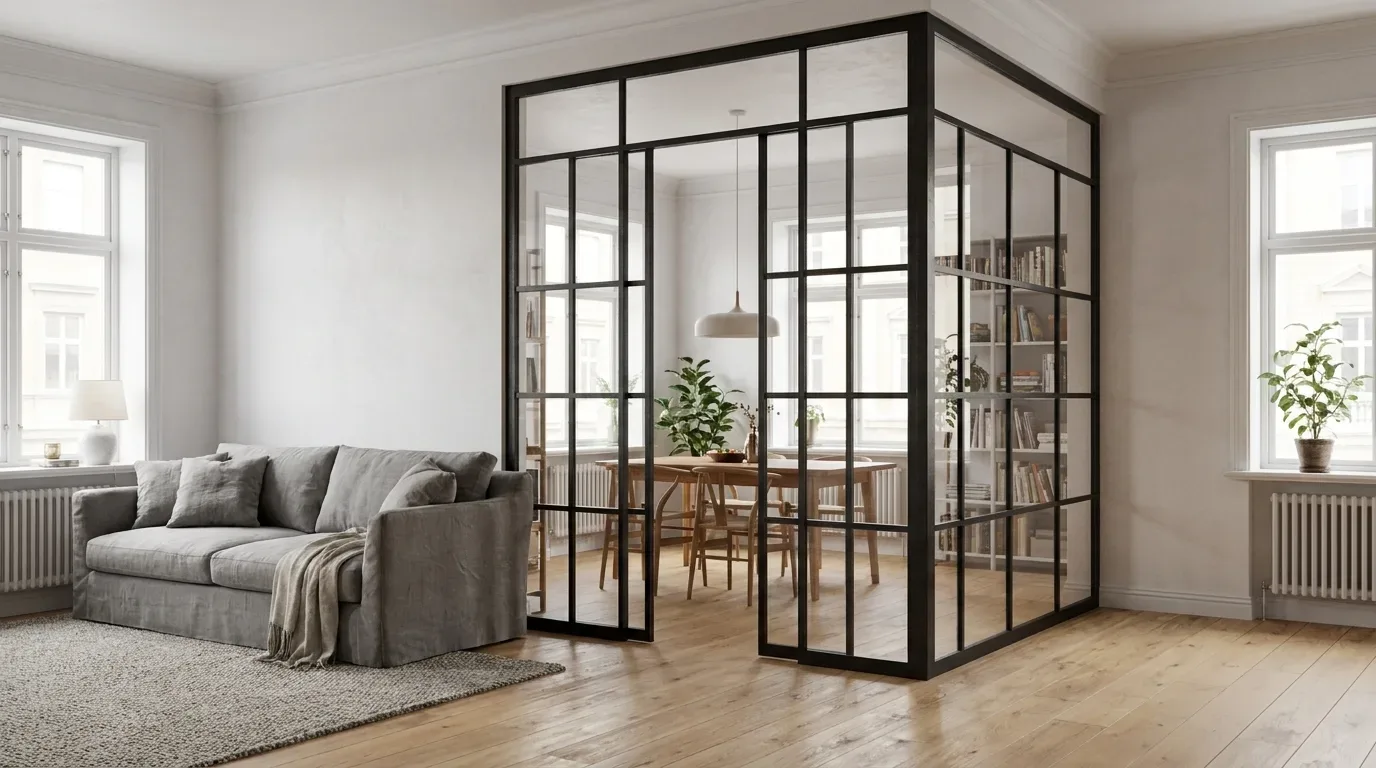
Powder coating against wet paint in everyday use
Here is how the three most common frame surface treatments compare after a few years in a lived-in home:
| Criterion | Powder-coated steel | Wet-painted steel | Foil-wrapped composite |
|---|---|---|---|
| Coating durability | Baked closed surface; resists chipping at grip points and frame edges | Layered film; wears at handle zones and edges, requires periodic recoating | Foil skin; delaminates at edges and cannot be refinished |
| Repairability | Local damage re-coatable; whole frame can be re-powder-coated if needed | Easy to touch up but difficult to match colour evenly | Foil damage is permanent; leaf replacement is typically the only fix |
| Recyclability | Single-material steel, fully recyclable | Recyclable after coating burn-off | Bonded mixed materials, mostly non-recyclable |
| Maintenance | Damp cloth with a mild cleaner | Gentle cleaning plus periodic repainting | Gentle cleaning; keep moisture away from seams |
Choose powder-coated steel where the door needs to outlive the room's next two renovations with minimal upkeep. Wet-painted steel has a place only where an existing frame is being restored in situ. Foil-wrapped composite is best avoided wherever a door sees daily use - its first serious edge damage is irreversible.
ESG or VSG - the difference that only shows at the moment of failure
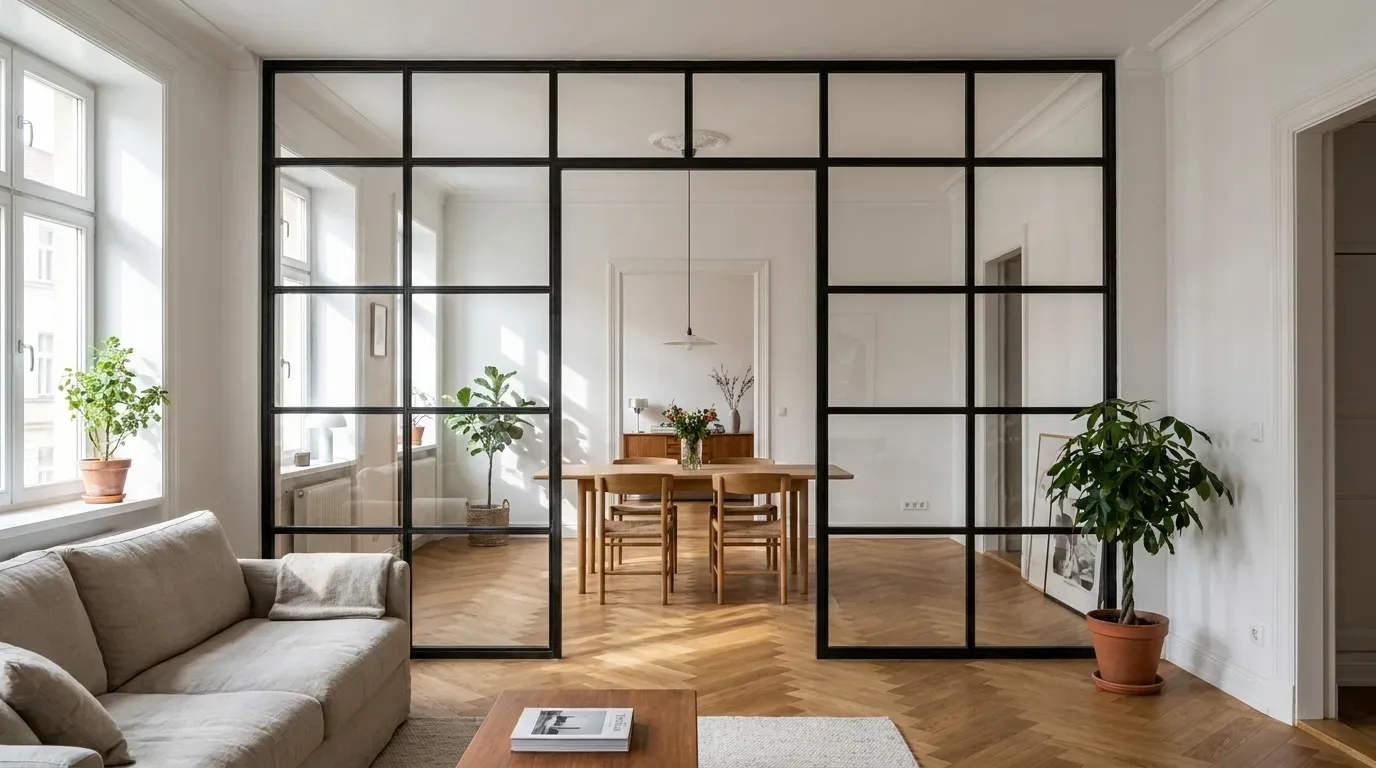
Both are safety glass, and their behaviour looks identical in normal use. The difference appears at breakage: ESG (toughened glass) shatters into small, blunt granules; VSG (laminated glass) cracks but stays held in place by the polymer interlayer bonded between its two panes. For larger pane formats - the kind found in full-height doors in an open-plan flat or a converted period apartment - VSG is the practical recommendation. A large pane that remains in the frame after breaking is a safety property in a busy hallway, not an aesthetic preference.
Repair rather than replace
Longevity is ultimately a repair question. Individual panes, hinges and seals can each be swapped independently, so one damaged component never forces a complete door replacement. That is the mechanism that turns durable materials into a service life measured in decades rather than a line in a brochure.
In Victorian conversions and warehouse lofts, I see the same thing repeatedly: powder-coated steel frames from EU workshops age far better than foil-wrapped imports. After five years of daily use, the difference in edge condition alone justifies the original investment.
James W.
Bespoke furniture maker, London
Steel, glass or solid wood - which material fits which purpose?
For the loft door itself the material question is settled - it is built from powder-coated steel and safety glass only. The real question is which material profile makes sense for each type of piece in a home.
Solid wood earns its place elsewhere in the range. Manufaktur X works with three species - oak, beech and ash - sourced as PEFC- or FSC-certified European hardwoods, and builds them into made-to-measure furniture including dining table tops paired with steel bases. Certification does for timber what mill documentation does for steel: PEFC and FSC trace the wood back to sustainably managed forests, making origin verifiable rather than assumed. The scale of the furniture market makes that verification meaningful. European living-room furniture alone represents a US$60.87bn market in 2024, with 2.32% projected annual growth to 2029 (Source: Statista, 2024) - at that volume, what gets bought and what gets discarded is a bigger lever than any individual purchase feels.
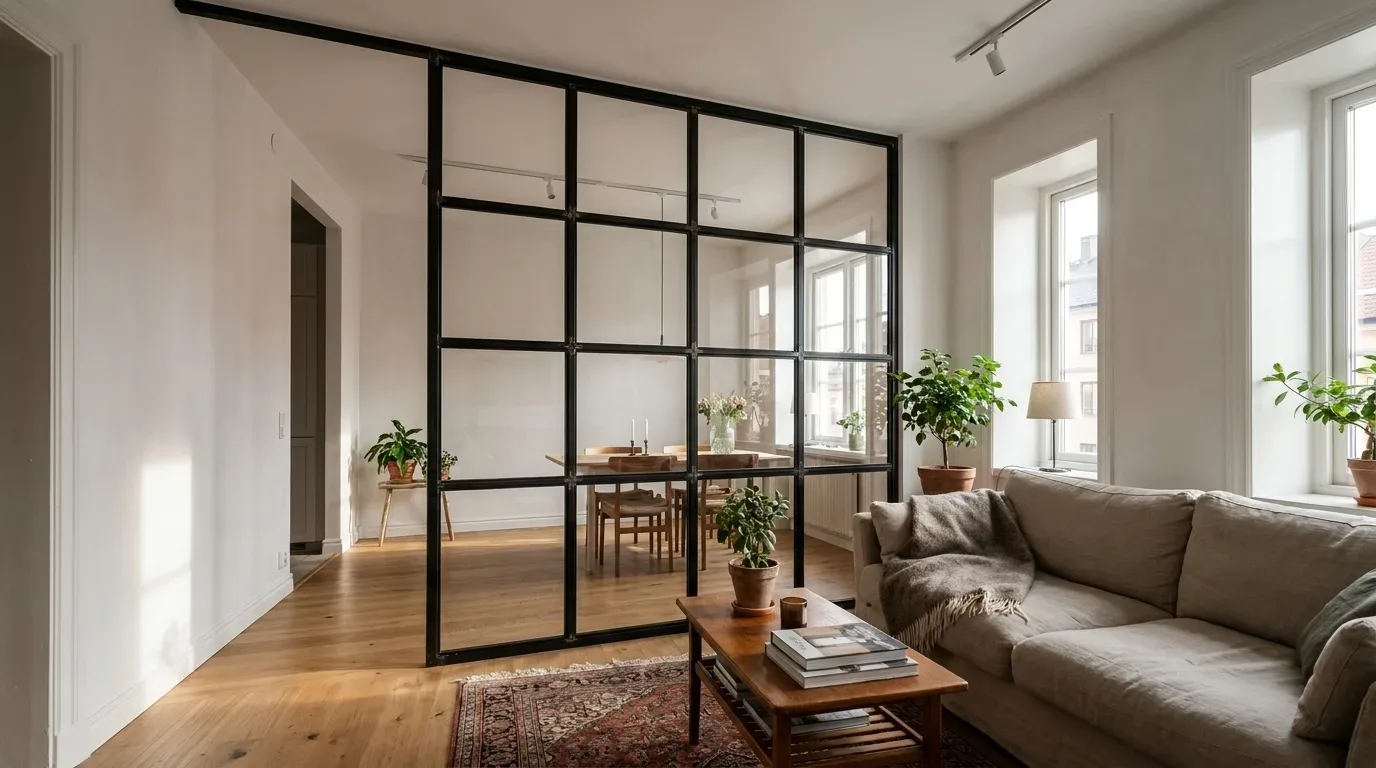
| Criterion | Powder-coated steel | Safety glass (ESG/VSG) | Solid oak / beech / ash |
|---|---|---|---|
| Origin | European mills, documented grade (EN 10025) | EU glass processing, toughened or laminated to order | Certified European forests (PEFC/FSC) |
| Recyclability | Closed loop, no quality loss | Recyclable via separate flat-glass collection | Re-usable as material; renewable at source |
| Service life | Decades; coating resists daily wear | Decades; individual panes replaceable | Decades with periodic surface care |
| Maintenance | Damp cloth | Standard glass cleaner | Re-oiling or lacquer care at intervals |
Choose the steel-glass door where daylight needs to pass freely between rooms and maintenance should stay close to zero. Choose solid-wood pieces where warmth, texture and acoustics lead the decision. Most homes end up with both - glass at the partitions, wood on the surfaces you touch every day.
Prefer to judge materials with your own eyes rather than a comparison table? Browse the glass types and RAL finish options on the loft door page - every choice you make updates the 3D preview and the fixed price live.
From first measurement to delivered door - the 5-6 week EU production cycle
A made-to-measure loft door goes from online configuration to your address in 5-6 weeks, built in an EU workshop to the exact opening dimensions you provide.
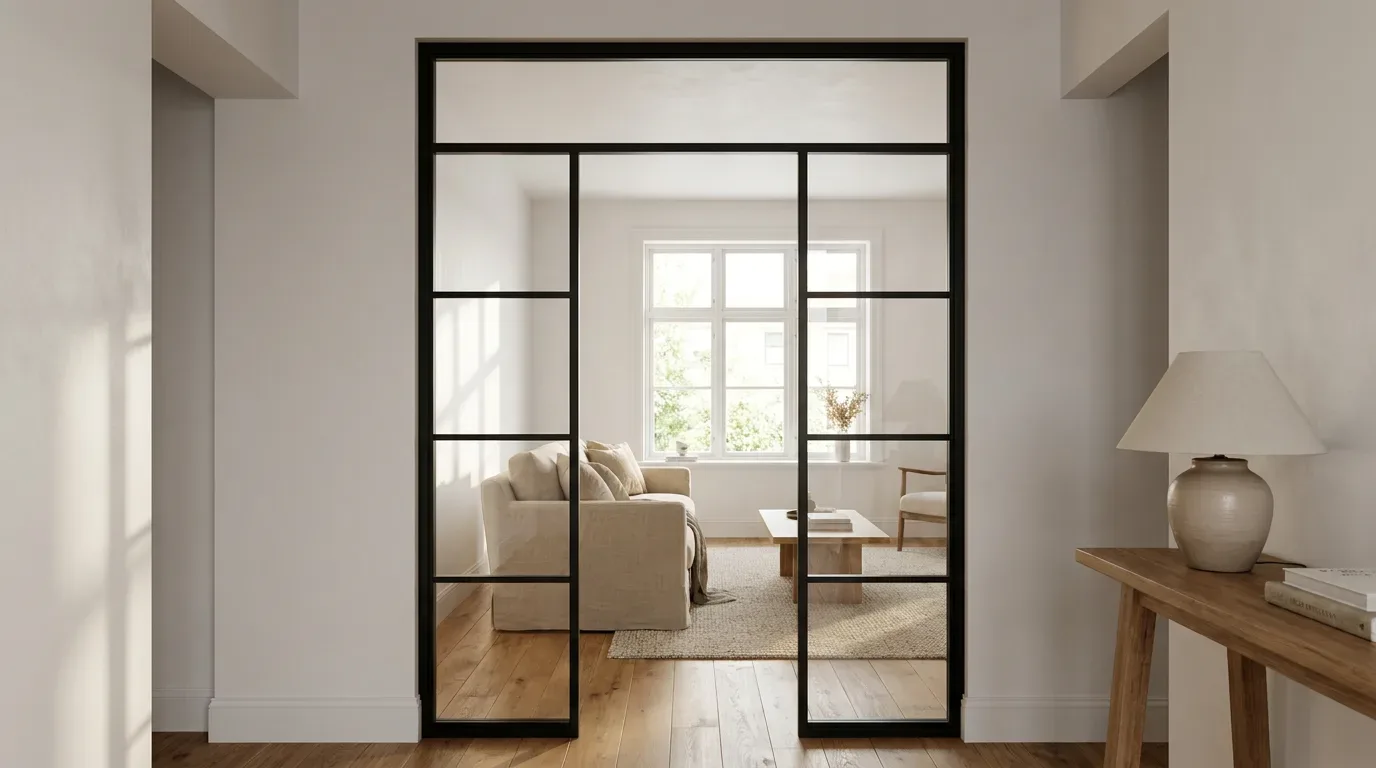
This is where the waste argument becomes concrete rather than abstract. In roughly 70% of our loft-door projects, customers measure a difference between the left and right side of the wall opening - older apartment walls are rarely truly plumb, and a catalogue door answers that with on-site trimming, shimming or filler panels. A frame produced to your measured opening needs none of that. You can configure a made-to-measure loft door in your exact dimensions and the fit is determined in the workshop, not improvised at the wall on installation day.
- Configure online: choose single, double or pivot type, one of five glass options, your bar grid pattern, handle side, hinge position and any RAL colour for the powder coating. The configurator shows a live fixed price as you adjust each option.
- Measure the opening at multiple points - top, middle and bottom on both sides - and enter the smallest value. Production plans approximately 5 mm mounting clearance per side around that figure, which absorbs the unevenness of real-world walls.
- Production runs in the EU workshop: profiles are cut and welded, the frame is powder-coated in your RAL colour, safety glass is fitted, and the finished door is checked against your order specification before shipping.
- Delivery and fitting close the process: install the door yourself using the clearance already engineered in - the steel frame arrives pre-drilled and is screwed straight to the wall, and a heavy or double leaf needs two people - or, if you'd rather leave it to a professional, hire a local carpenter.
Working with EU-sourced steel and certified hardwoods, I have found that doors and furniture built to exact client dimensions require no site adjustment - the precision of EU workshop production eliminates the guesswork that standard sizes always leave behind.
Ricardas P.
Furniture designer, Vilnius
Already have your measurements? Take the smallest reading from several points across your opening, and the configurator turns those numbers into a production-ready order with a live fixed price in a few minutes. Starting from 945 €.
FAQ - sustainable loft doors from EU production
Can the steel and glass be recycled at end of life?
Yes - the steel frame is fully recyclable as scrap and re-enters steel production without quality loss, and safety glass is recyclable through specialist flat-glass collection.
For disposal, remove the panes from the frame first. Safety glass goes to a glazier or a recycling facility - not into a household container-glass bin, because its composition differs from bottle glass. The bare frame can be handed to any scrap-metal collection point.
Does EU made-to-measure production take longer than buying an imported door?
No - EU made-to-measure production runs at a fixed 5-6 weeks, while imported doors add intercontinental shipping time and only come in catalogue sizes that rarely fit a real opening precisely.
A stocked standard size can ship quickly, but fitting it to an actual opening requires trimming or padding - work that costs time and money on site. Made-to-measure inverts that trade-off: a fixed production window, then a frame that arrives ready to hang.
How do you maintain a powder-coated steel frame?
A damp cloth and a mild cleaner are all that is needed - powder coating requires no repainting, oiling or sealing in interior residential use.
Avoid abrasive pads and solvent-based cleaners; both can dull the cured surface. Unlike a brushed-on paint film, the coating forms a single closed layer, so there is nothing to re-seal or reapply on any schedule.
Can a damaged pane or hinge be repaired without replacing the whole door?
Yes - individual panes, hinges and seals are each replaceable, and EU production means the spare part comes from the same workshop that built the door.
Send a photo of the damage through the contact page and the workshop supplies the matching component - hinge, seal or pane - to the original specification.
Configure your EU-made door
| Product | From | Note |
|---|---|---|
| Loft Door | 945 € | Lowest possible option |
| Room Divider | 2,212 € | Steel + laminated glass, custom width |
| Large Shelf | 3,200 € | Solid wood, steel frame, floor-to-ceiling |
| Dining Table | 2,370 € | Solid wood, steel frame |
| Coffee Table | 1,800 € | Solid wood, steel frame |
| Bench | 1,100 € | Solid wood, steel frame |
| TV Stand | 1,540 € | Solid wood, steel frame |
| Pipe Shelf | 1,065 € | Modular pipe shelf |
If you want to see how an EU-made door looks in your exact opening, set your glass type, bar grid and RAL colour in the live 3D configurator on the loft door page - the fixed price updates in real time. For questions about a specific opening size or installation, the team responds directly via the contact page.