
April 25, 2026 · ManufakturX Team
How Doors Create Effective Room Division: A Complete Guide
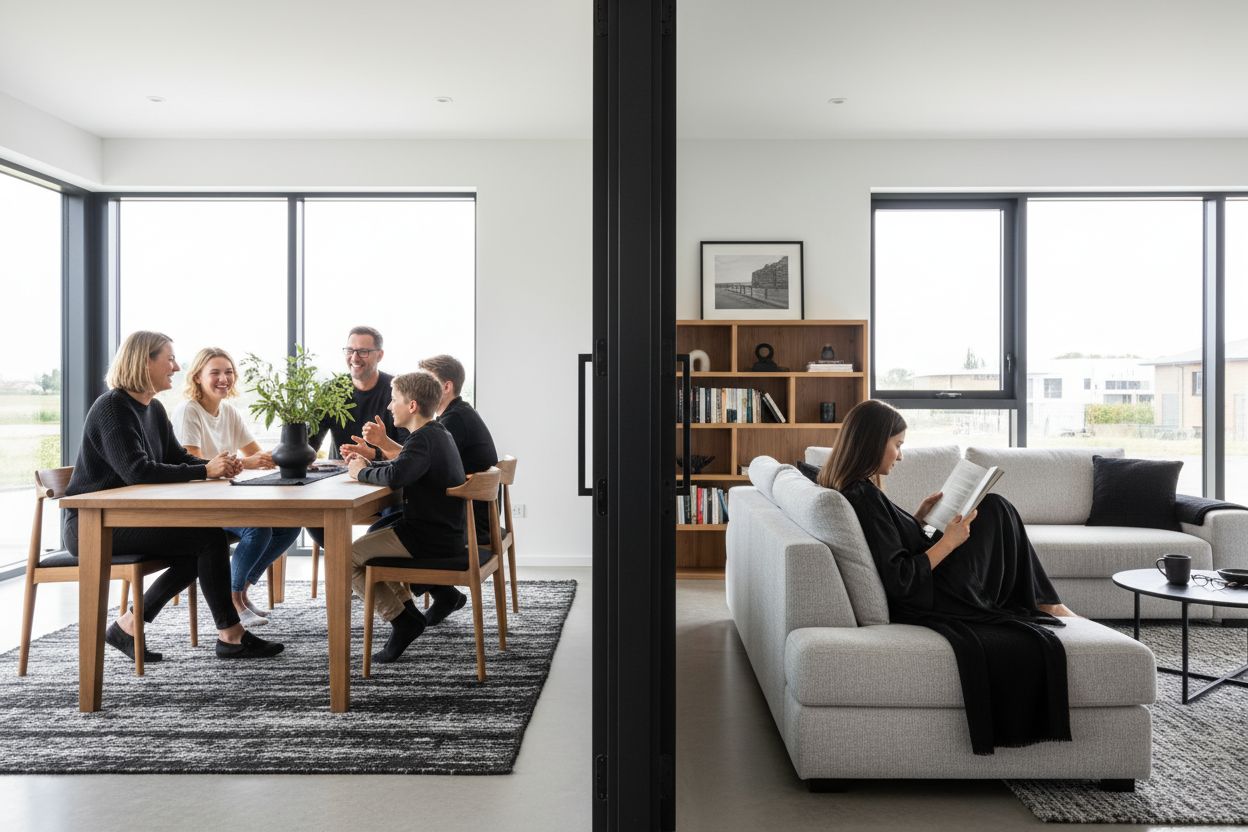
Doors surround us in every home and office space we inhabit. Most people rarely consider that these elements serve purposes far beyond simple passages. Research demonstrates that doors significantly influence our spatial perception and overall comfort levels. They simultaneously separate and connect areas while shaping our daily experiences in ways most homeowners never realize.
Essential Summary
| Key Insight | Explanation |
|---|---|
| Doors actively shape spatial experiences. | Beyond mere passages, they structure how we perceive and utilize living spaces. |
| Strategic division enhances comfort. | Well-designed doors create privacy while positively influencing emotional atmosphere. |
| Adaptability drives modern solutions. | Contemporary door systems enable flexible usage patterns that adjust to changing needs. |
| Visual design impacts room character. | Materials, finishes, and styling choices define the overall impression and ambiance. |
| Doors balance connection with separation. | They create harmony between openness and seclusion in residential and commercial environments. |
Understanding Spatial Division Through Door Systems
Spatial division using doors represents a cornerstone principle in architecture and interior design, extending far beyond creating simple pathways between rooms. This approach enables designers to define, organize, and distinguish different areas within a structure.
Core Principles of Space Separation
A door functions as more than a basic opening—it serves as a sophisticated architectural component that actively shapes and functionally differentiates spaces. It establishes both physical and psychological boundaries between distinct areas, significantly influencing how occupants perceive and utilize their environment. Research in spatial psychology confirms that doors create meaningful transitions rather than mere divisions.
Practical Functions of Room Division
Effective spatial separation through doors accomplishes several critical objectives:
- Sound management between different activity zones
- Climate control and air circulation regulation
- Visual privacy and sight line management
- Adaptable configuration for living and working spaces
The impact extends well beyond structural considerations. Doors can establish moods, define atmospheres, and fundamentally alter how spaces function in daily life.
| Function | Description |
|---|---|
| Sound Management | Controls noise transmission and creates acoustic separation between zones |
| Climate Control | Maintains distinct temperature zones and preserves desired environmental conditions |
| Visual Privacy | Prevents unwanted sight lines while creating personal retreat areas |
| Flexible Configuration | Enables adaptable usage through variable door solutions |
| Atmosphere Creation | Influences emotional climate and spatial functionality |
| Connection Balance | Harmonizes openness with privacy across different areas |
Contemporary architecture increasingly views spatial division as a dynamic design element that seamlessly integrates flexibility, aesthetics, and functionality.
Benefits of Strategic Door Placement
Strategic door placement serves as a fundamental aspect of modern architectural design, influencing both practical functionality and occupant wellbeing. These elements extend far beyond basic transition points, serving as sophisticated tools for optimizing residential and commercial environments.
Practical Advantages of Space Organization
Doors enable dynamic and flexible space utilization by creating areas that maintain connection while providing separation. This allows different zones to meet varying requirements for privacy, acoustics, and functionality. Environmental psychology studies indicate that proper spatial division significantly improves productivity and comfort levels.
Psychological and Social Considerations
Door placement carries profound implications beyond physical function. These elements serve as symbolic boundaries that define social interactions and personal territories. Key psychological functions include:
- Establishing privacy zones and personal retreat spaces
- Managing social encounters and interpersonal dynamics
- Communicating accessibility or exclusion signals
- Providing emotional boundaries and mental organization
In modern living concepts, doors increasingly function as intelligent design elements that not only separate but also connect and transform spaces. They enable adaptive space usage that flexibly responds to changing requirements throughout different times and activities.
Implementation Strategies for Effective Room Division
Creating effective room division through doors requires careful consideration of architectural, functional, and design elements. Successful implementation balances intelligent space definition with maintaining flow and accessibility throughout the environment.
Technical Planning Considerations
Practical implementation demands precise coordination of various technical parameters including material selection, sizing, and operational characteristics such as swing direction and opening mechanisms. Design professionals emphasize that contemporary doors function as sophisticated architectural elements rather than simple barriers.
Design Elements for Door-Based Room Division
Doors represent complex design tools that significantly contribute to spatial atmosphere, aesthetics, and functionality. Thoughtful door selection can fundamentally transform how spaces are perceived and experienced by occupants.
Visual Impact and Aesthetic Considerations
The visual influence of doors extends well beyond their separating function. Material choices, color schemes, and design styles serve as critical factors that define room character. Interior design experts recognize that doors can function as focal points that establish the overall spatial impression.
Functional Design Principles
Effective room design with doors must address multiple functional aspects:
- Acoustic dampening and sound control properties
- Light transmission and transparency characteristics
- Thermal insulation capabilities
- Movement patterns and accessibility requirements
- Universal design and barrier-free access
For renovation or new construction projects, modern door solutions offer innovative possibilities for creating individualized and functional spaces. The right door choice can prove decisive for comfort, energy efficiency, and aesthetic harmony.
Contemporary spatial design views doors as dynamic design components that not only separate but also connect, transform, and reinterpret spaces. They serve as interfaces between different living areas while reflecting individual design preferences and functional necessities.
| Design Dimension | Examples/Explanation |
|---|---|
| Material Selection | Wood, glass, metal combinations affect acoustics, appearance, and tactile experience |
| Color Coordination | Harmonizes with room design while creating visual accents |
| Style Direction | Contemporary, traditional, minimalist approaches shape room character |
| Sound Control | Door thickness and sealing properties improve noise isolation |
| Light Management | Glass doors increase illumination while solid doors provide complete privacy |
| Accessibility Features | Smooth operation and accessible hardware enhance user comfort |
| Ergonomic Design | User-friendly operation and movement accommodation |
Real-World Applications for Smart Room Division
Room division through doors finds application across diverse environments, enabling flexible and functional design approaches for various living and working contexts. The versatility of modern door solutions opens innovative possibilities for space organization and usage optimization.
Residential Space Applications
Contemporary living concepts demand intelligent space division solutions that simultaneously provide openness and privacy. Sliding systems, glass partitions, and flexible room dividers create dynamic living environments that adapt to individual requirements. Open floor plans benefit from strategic door concepts that organize space into functional zones.
Commercial and Professional Applications
In professional environments, doors play crucial roles in workspace efficiency and organizational structure. Important applications include:
- Office landscapes with flexible meeting areas
- Healthcare facilities requiring infection control
- Industrial production sites with safety zones
- Educational institutions with variable learning spaces
Modern space division transcends traditional concepts. Innovative door systems transform environments by creating intelligent transitions between different functional areas, uniting flexibility, aesthetics, and functionality.
Transform Your Spaces with Custom Door Solutions
Struggling with standard doors that fail to provide optimal solutions for flexible and stylish room division? When your spaces require more than basic separation—perhaps enhanced privacy or an exclusive atmosphere—conventional options often fall short. Throughout this article, you've discovered how crucial the right door is for spatial comfort and functionality. Tailored solutions create genuine added value by combining modern aesthetics, premium materials, and flexible usage possibilities.
Explore inspiration and design your door exactly according to your vision—quickly, easily, and directly through our 3D configurator. Discover the possibility of creating or connecting new areas with custom-made solutions. Your individual design preference is just a few clicks away. Learn more today at manufakturx.com and transform your spaces with unique door solutions that perfectly match your lifestyle.
Frequently Asked Questions
How do doors affect acoustic properties in living spaces?
Door-based room division significantly influences acoustics by dampening sound transmission between different areas. Well-insulated doors, particularly solid wood constructions, provide superior sound control and contribute to quieter, more private atmospheres.
What advantages do glass doors offer for space separation?
Glass doors enable visual connectivity and light transmission while maintaining physical boundaries. They're ideal for open living concepts where increased illumination and spatial flow are desired without sacrificing privacy options.
How can flexible door systems optimize room functionality?
Flexible doors such as sliding panels or movable partitions allow dynamic space reconfiguration. They enable quick structural adjustments according to changing needs, promoting versatile usage patterns.
What role do doors play in creating personal retreat areas?
Doors are essential for establishing retreat spaces as they define privacy and personal boundaries. They help control social interactions and provide withdrawal options when greater tranquility and seclusion are desired.
About the Author

Alexander Stelzner
Founder & CEO, Manufaktur X
Alexander Stelzner is an expert in custom-made steel-glass constructions and solid wood furniture. With years of experience in design and manufacturing, he leads Manufaktur X – where every piece is individually crafted to order in the EU.