
July 8, 2025 · ManufakturX Team
5 Revolutionary Industrial Design Trends Transforming European Interiors
How Industrial Design is Revolutionizing Modern European Living
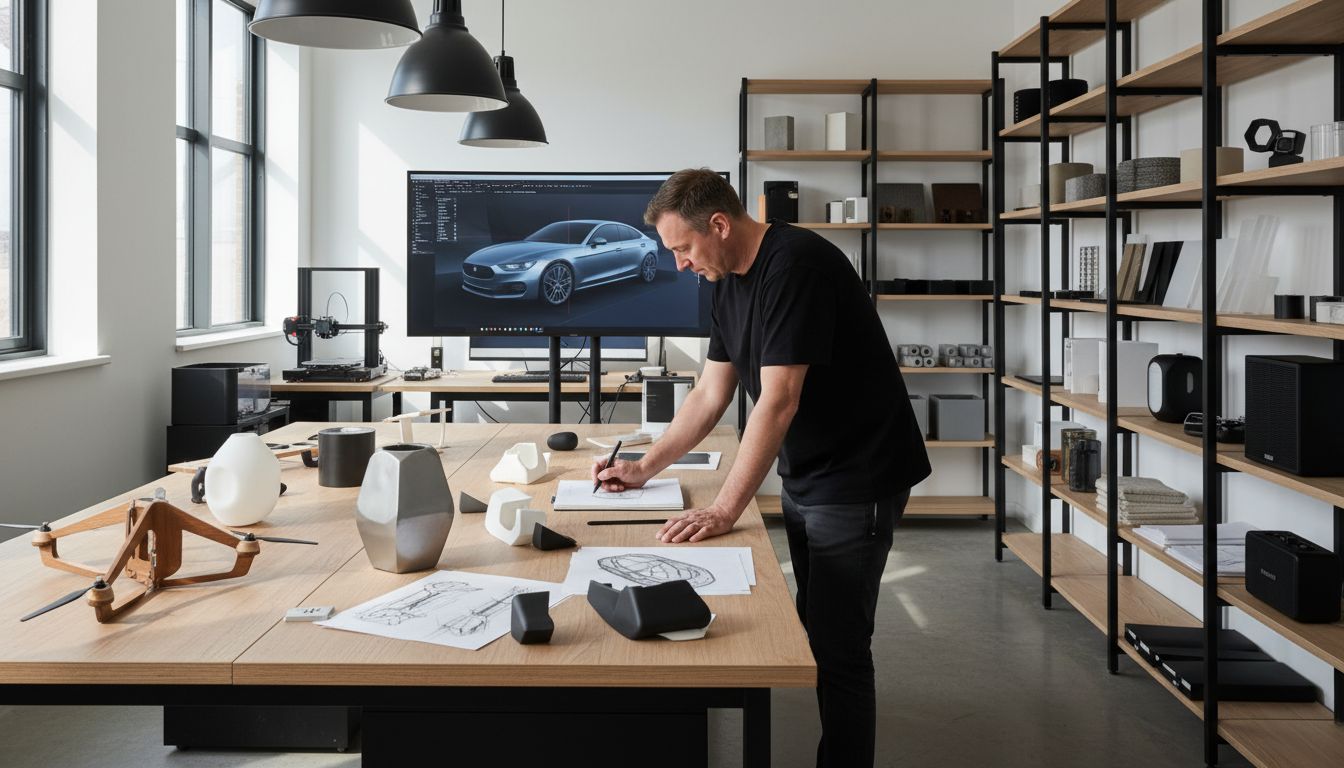
Contemporary industrial design has evolved far beyond its factory origins, creating sophisticated interior solutions that blend raw materials with refined aesthetics. Today's design movements prioritize functionality without sacrificing beauty, establishing new standards for how we experience our living spaces.
European homeowners are increasingly embracing design elements that offer both visual impact and practical benefits. This shift reflects a broader cultural movement toward intentional living, where every element serves a purpose while contributing to the overall aesthetic harmony.
Sustainable Materials Leading the Design Revolution
Environmental consciousness has become the cornerstone of modern industrial design. Rather than an afterthought, sustainability now drives material selection and manufacturing processes from the ground up.
Key developments include:
- Responsibly sourced solid woods like oak, ash, and walnut
- Powder-coated steel frames offering superior durability and eco-friendly production
- Safety glass innovations that reduce environmental impact
- Manufacturing processes designed for longevity over disposability
This sustainability focus extends to custom furniture solutions. When you invest in made-to-measure loft doors or bespoke room dividers, you're choosing pieces designed to last decades rather than seasons.
The Economics of Sustainable Design
Interestingly, sustainable design often proves more cost-effective long-term. Custom pieces from ManufakturX, crafted with powder-coated steel and premium safety glass, require minimal maintenance while maintaining their appearance for years.
Flexible Living Solutions for Modern Lifestyles
European living spaces are becoming increasingly adaptable, reflecting our changing work patterns and lifestyle needs. The traditional concept of fixed room functions is giving way to fluid, multi-purpose environments.
This transformation manifests in:
- Convertible workspaces that seamlessly transition from office to living area
- Room dividers that create privacy without permanent walls
- Modular furniture systems adapting to changing needs
- Smart storage solutions maximizing space efficiency
Custom room dividers exemplify this trend perfectly. They allow instant space reconfiguration – creating a focused work environment during business hours, then opening up for entertaining in the evening.
Minimalism with Personality: The New Aesthetic Standard
Contemporary minimalism has evolved beyond stark simplicity. Today's approach combines clean lines with carefully chosen details that reflect individual personality and cultural context.
This refined minimalism features:
- Monochromatic color schemes punctuated by strategic accents
- Textural contrasts creating visual interest without clutter
- Negative space used as a design element itself
- Quality materials speaking for themselves
Industrial elements like steel-framed glass doors serve as architectural jewelry – striking enough to command attention while maintaining the clean aesthetic that defines modern minimalism.
Cultural Influences on European Minimalism
Scandinavian hygge, Italian attention to craftsmanship, and German engineering precision all contribute to a uniquely European interpretation of minimalist industrial design. This cultural fusion creates spaces that feel both internationally sophisticated and personally meaningful.
Smart Technology Integration Without Compromise
The most successful technology integration happens when digital capabilities enhance rather than dominate the design. Modern industrial interiors showcase technology that works invisibly, appearing only when needed.
Successful integration includes:
- Intuitive controls requiring no learning curve
- Hidden wiring and seamless connectivity
- Multi-functional elements combining analog and digital features
- Customization options adapting to personal preferences
The 3D configurator technology demonstrates this approach – sophisticated engineering enabling effortless customization with real-time visualization and instant pricing.
Artisanal Craftsmanship in the Digital Age
Perhaps surprisingly, our digital era has sparked renewed appreciation for handcrafted quality. Mass production's limitations have made bespoke craftsmanship more valuable than ever.
This renaissance manifests through:
- Visible construction details becoming design features
- Custom sizing replacing standard measurements
- Personal consultation replacing catalog selection
- Made-in-EU quality standards ensuring lasting value
Each custom piece tells a story – from initial concept through 5-6 weeks of careful manufacturing, resulting in furniture that perfectly matches your space and lifestyle.
The Value of Made-to-Measure
Custom manufacturing allows for exact dimensional requirements rather than compromising with standard sizes. Whether designing dining tables for unconventional spaces or creating room dividers for specific architectural features, precise measurement ensures perfect integration.
Implementing Industrial Design in Your Space
Successfully incorporating these trends requires thoughtful planning and quality execution. Start with one significant piece that embodies multiple trends – such as a custom loft door combining minimalist aesthetics, sustainable materials, and flexible functionality.
Consider these practical steps:
- Assess your space's natural lighting and architectural features
- Identify areas requiring flexibility or reconfiguration
- Choose materials complementing existing elements
- Prioritize quality over quantity in purchasing decisions
The beauty of industrial design lies in its adaptability. Elements that work in converted warehouses translate beautifully to traditional apartments, creating unexpected harmony between old and new.
Future-Proofing Your Design Investment
Quality industrial design transcends temporary trends, offering lasting appeal through timeless materials and proportions. When you invest in custom pieces, you're choosing designs that will remain relevant as trends evolve.
Key considerations include:
- Selecting neutral color palettes allowing for accent changes
- Choosing classic proportions over trendy dimensions
- Investing in superior materials and construction
- Designing for adaptability rather than single-purpose use
Ready to transform your space with authentic industrial design? Explore our complete range of custom furniture solutions and discover how quality craftsmanship can enhance your living environment for years to come.
About the Author
Alexander Stelzner
Founder & CEO, Manufaktur X
Alexander Stelzner is an expert in custom-made steel-glass constructions and solid wood furniture. With years of experience in design and manufacturing, he leads Manufaktur X – where every piece is individually crafted to order in the EU.