Custom-Made Furniture: The Complete Guide to Personalised Interiors
Manufaktur X Redaktion · January 22, 2026 · 16 Minuten Lesezeit · Werkstatt Regensburg · 16
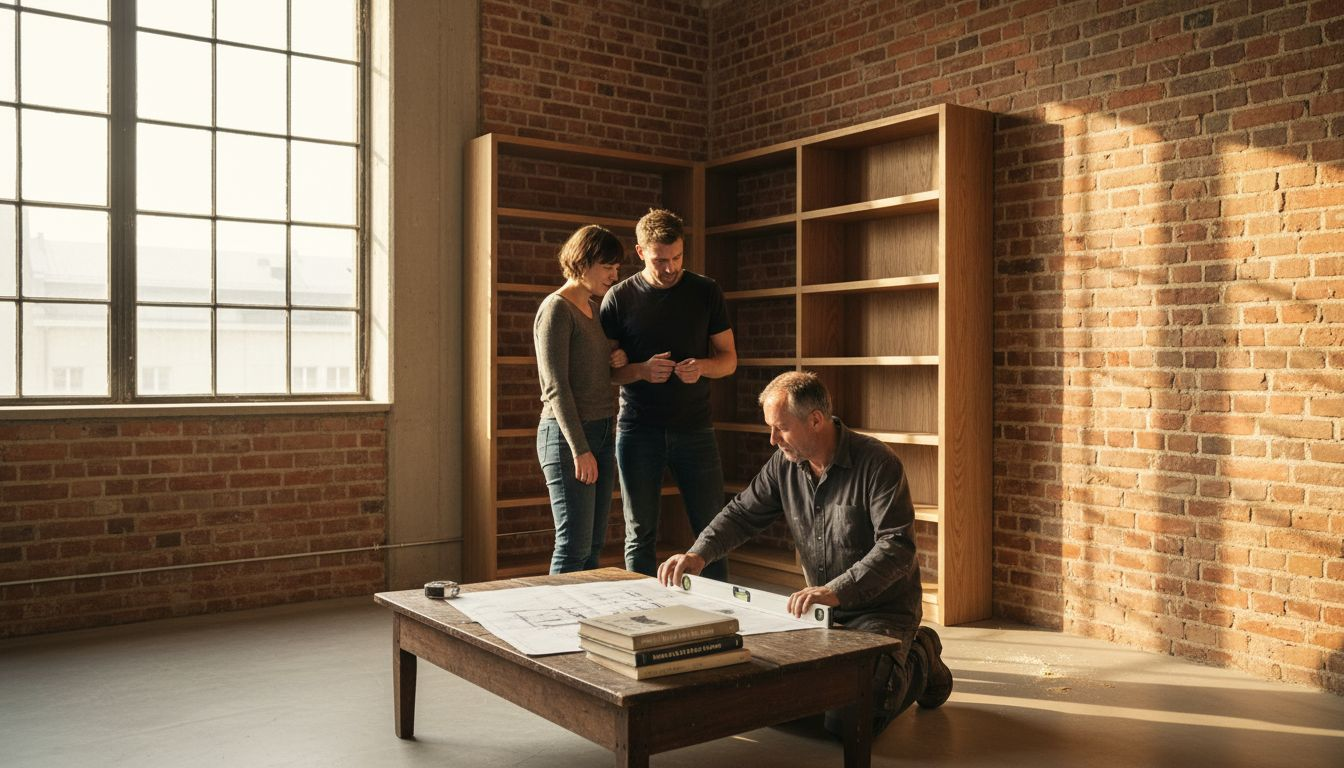
Every room has its own character — and its own contradictions. An opening that measures 1,380 mm instead of the assumed standard. A sloped ceiling that cuts through exactly where a shelf should stand. A converted industrial space where no two walls meet at a right angle. Off-the-shelf furniture was never designed for these realities. Custom-made furniture in solid wood, steel, and safety glass starts where catalogue dimensions end: it adapts to your space, not the other way around.
When Standard Furniture Simply Does Not Fit
Much of Europe's existing housing stock was built before standardised modular furniture existed as a concept. Older apartment buildings, converted warehouses, renovated farmhouses, and loft spaces share a common trait: they were shaped by construction logic, not retail grids. Walls taper. Ceiling heights shift between rooms. Alcoves appear where a radiator or staircase was added decades later.
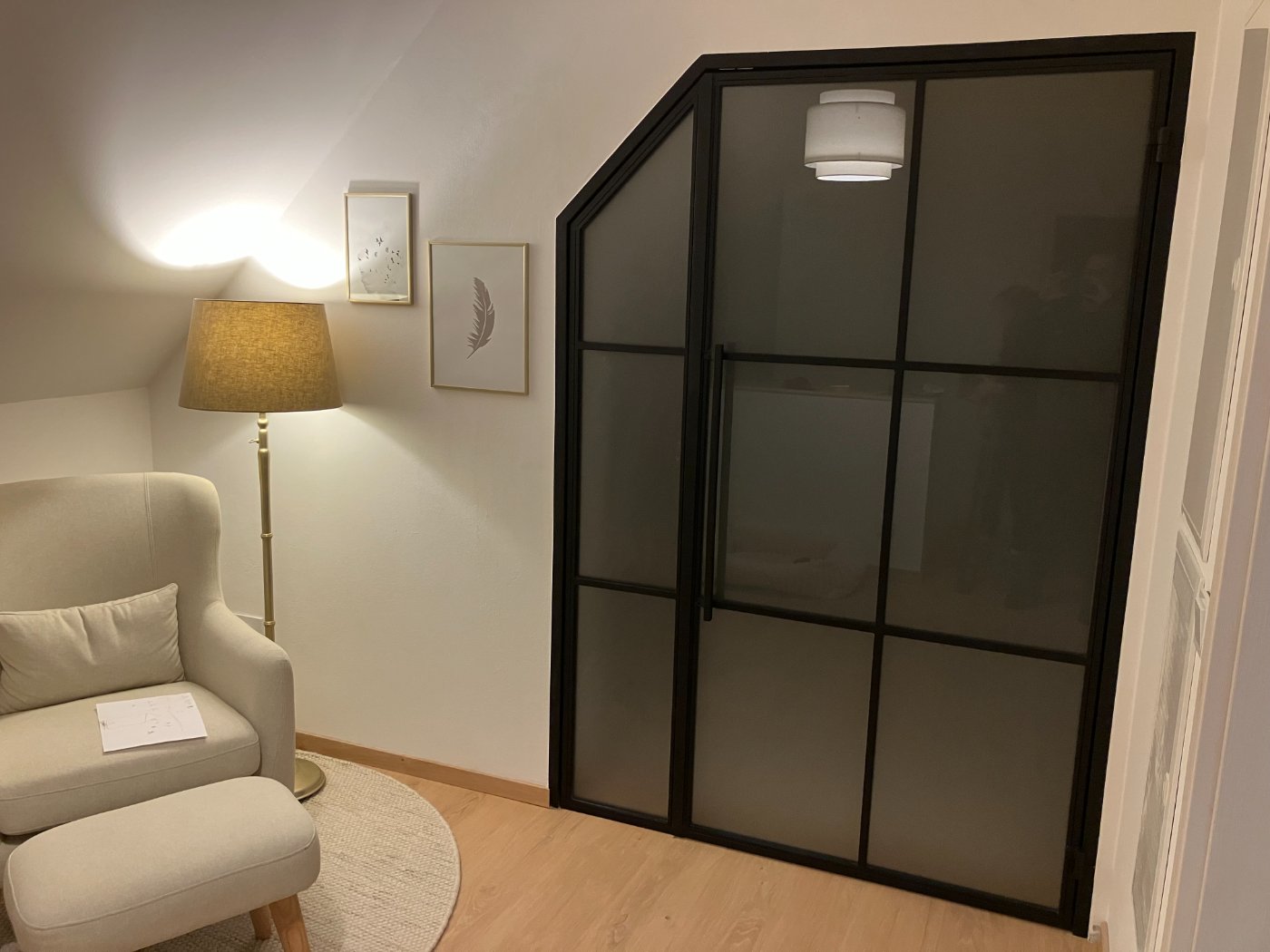
The problem is not aesthetic — it is functional. A shelf that is 4 cm too tall for a knee-wall recess cannot simply be trimmed. A door panel sized for a standard opening will not fill a passageway that runs 1,380 mm wide. In these situations, custom-made furniture is not a luxury upgrade. It is the only solution that actually works.
This distinction matters more than ever as renovation activity across Europe continues to outpace new construction. More people are working with existing architecture — and discovering that existing furniture ranges were not built with that architecture in mind.
"Bespoke interior fittings are not an indulgence. In many existing buildings, they are the only functional answer. Standard dimensions were developed for new-builds with right angles — not for the layered complexity of older structures."
Bauwelt, Issue 12/2022
Many furniture brands market their products as "customisable" — but what they mean is a choice between four widths and three finishes. A shelf at 2,370 mm wide simply does not exist in their range, because the grid stops at 2,200 mm. Genuine custom production, as practised by Manufaktur X, means that width, depth, and height are specified to the millimetre — for your specific room, your specific opening, your specific life.
The Full Product Range: Steel, Glass, and Solid Wood
Manufaktur X produces custom furniture and architectural interior elements across two distinct material families. Understanding which products belong to which group helps clarify what you can configure and how.
Steel and glass products (where glass is a core design element):
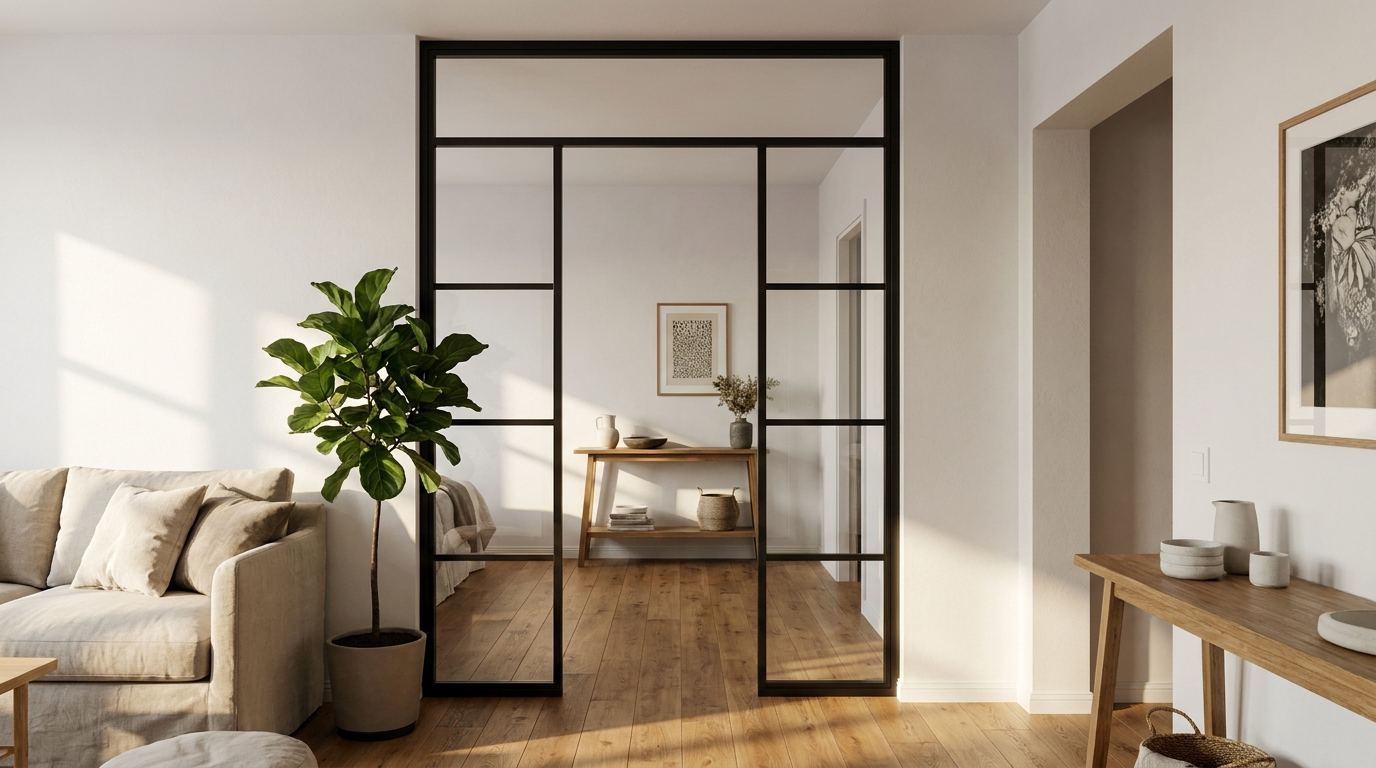
Loft door: A functioning door with a frame stop (left or right hinge), configurable opening direction, opening angle, handle style, and hinges. It connects rooms without blocking light or creating a solid wall.
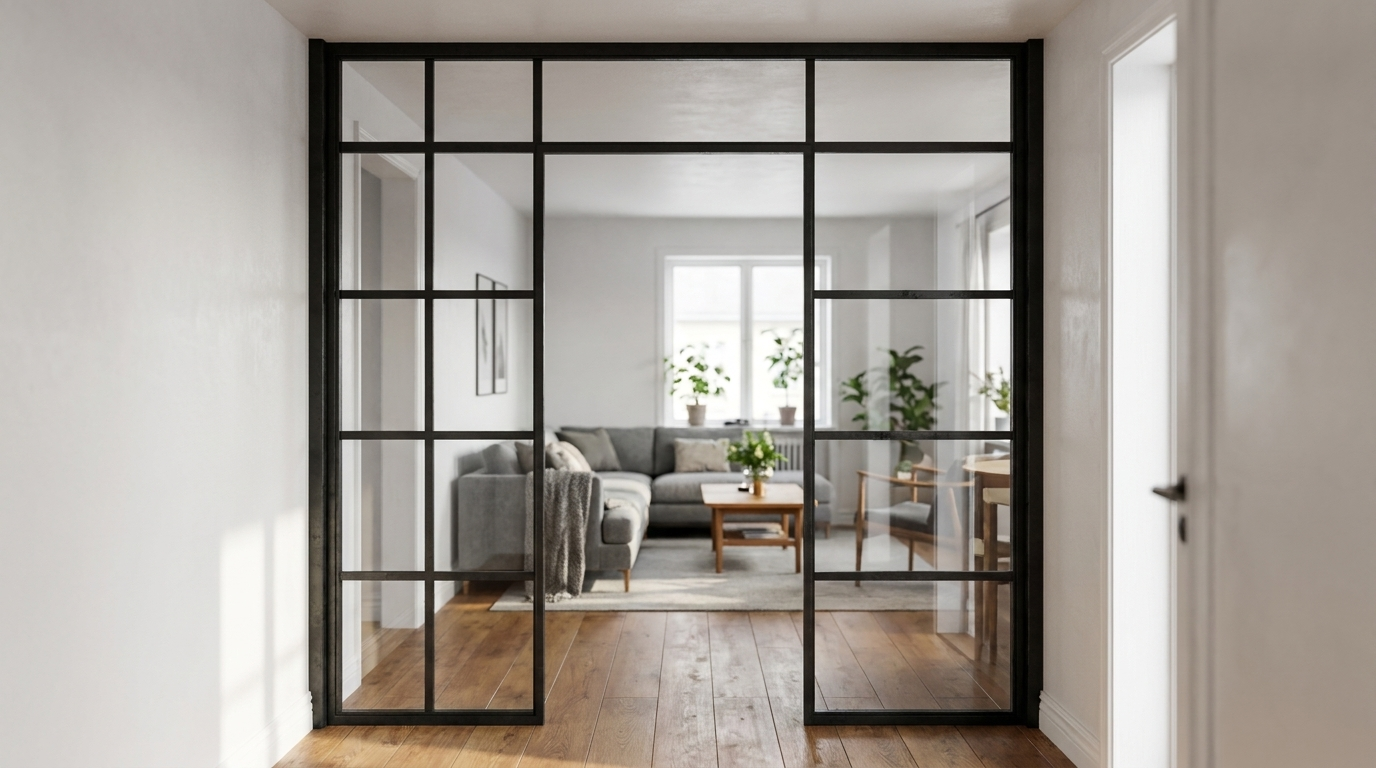
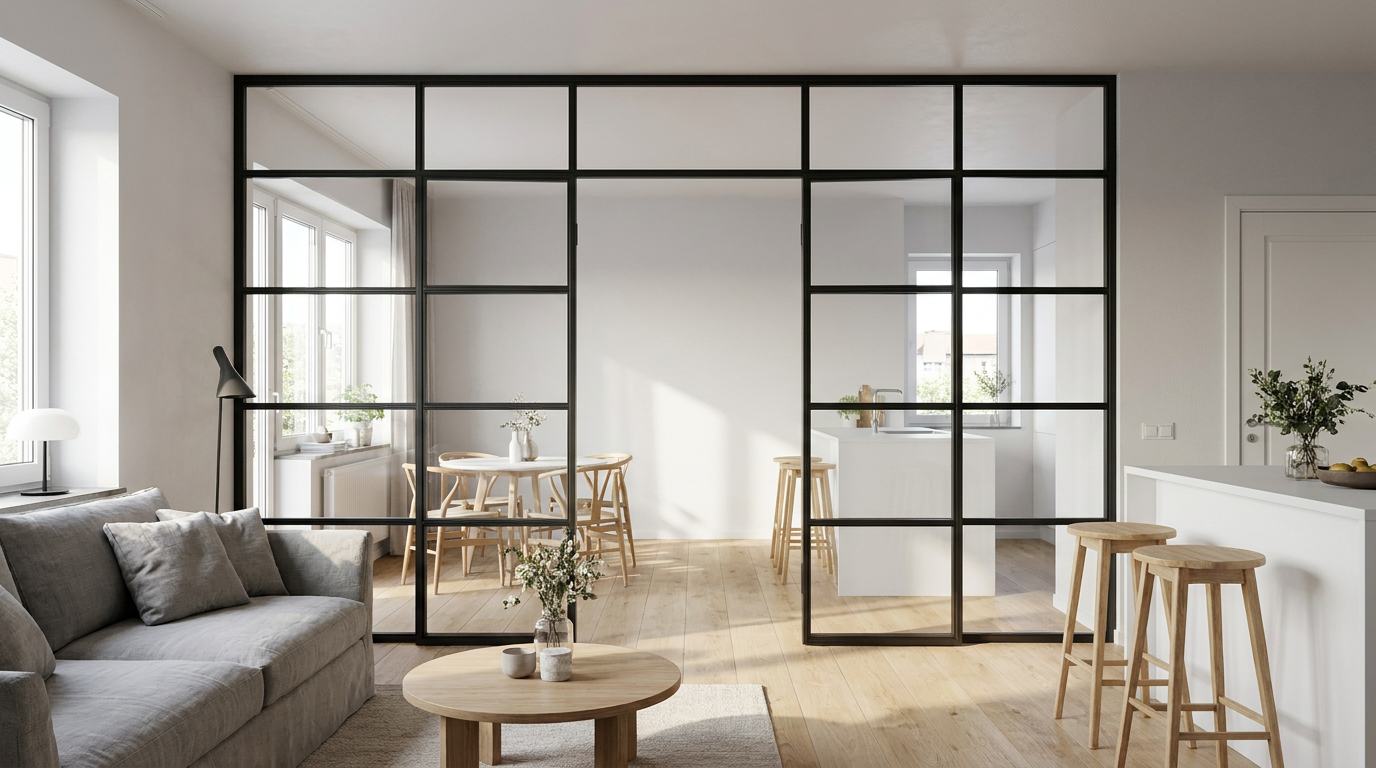
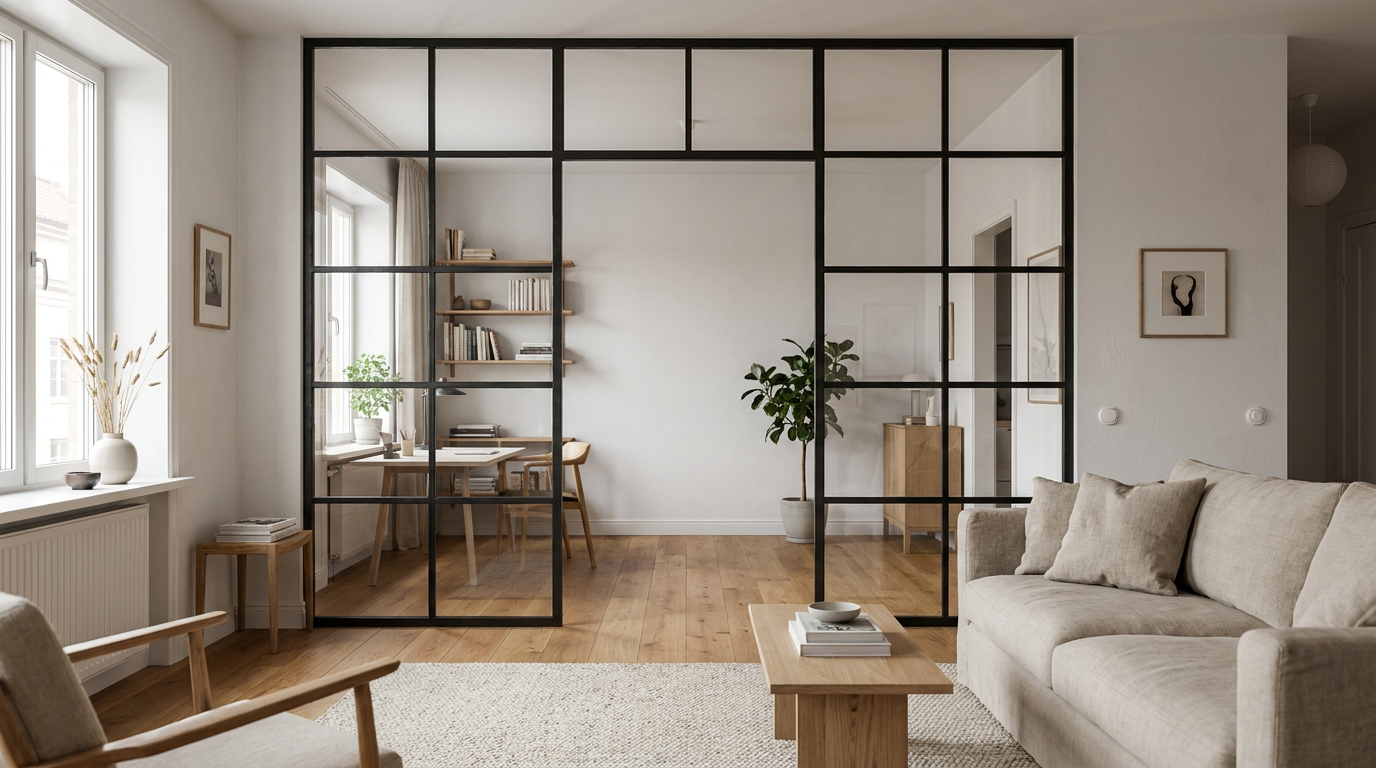
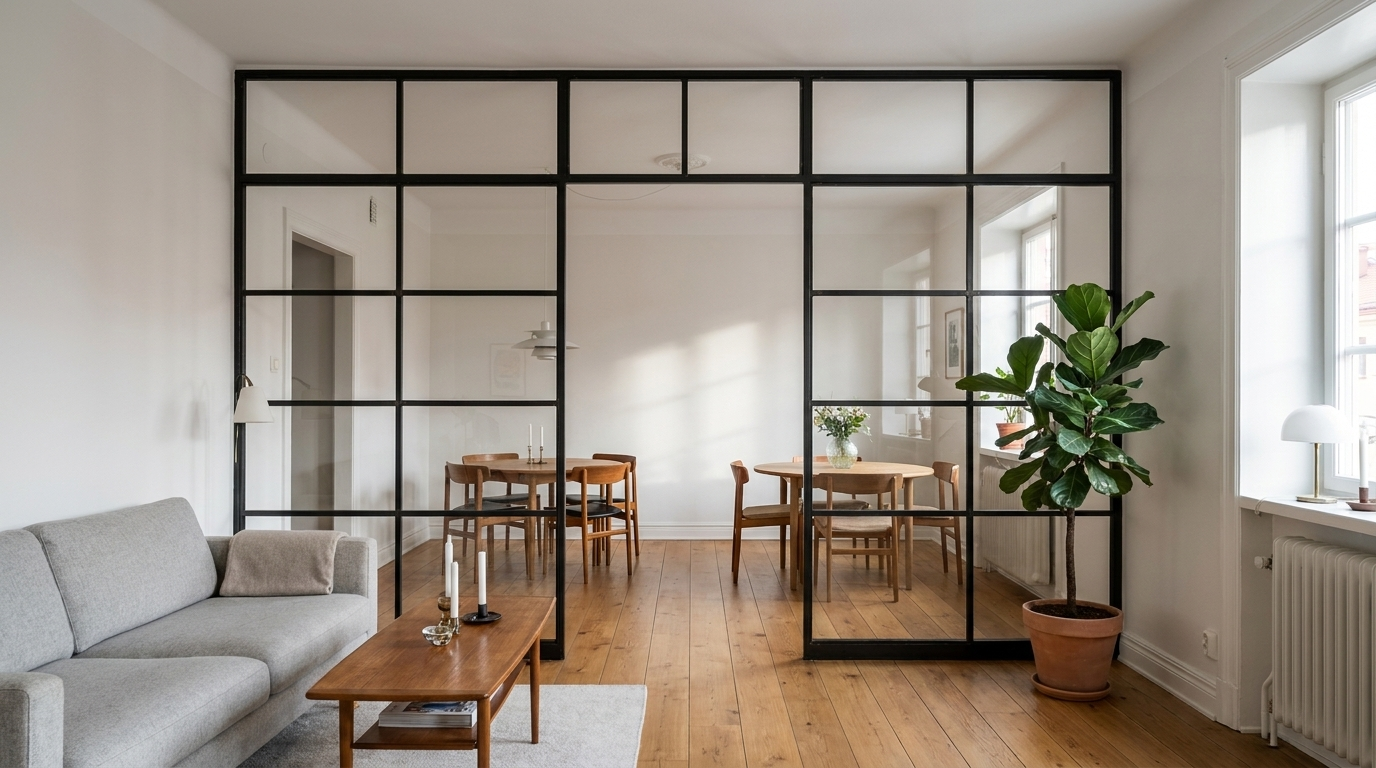
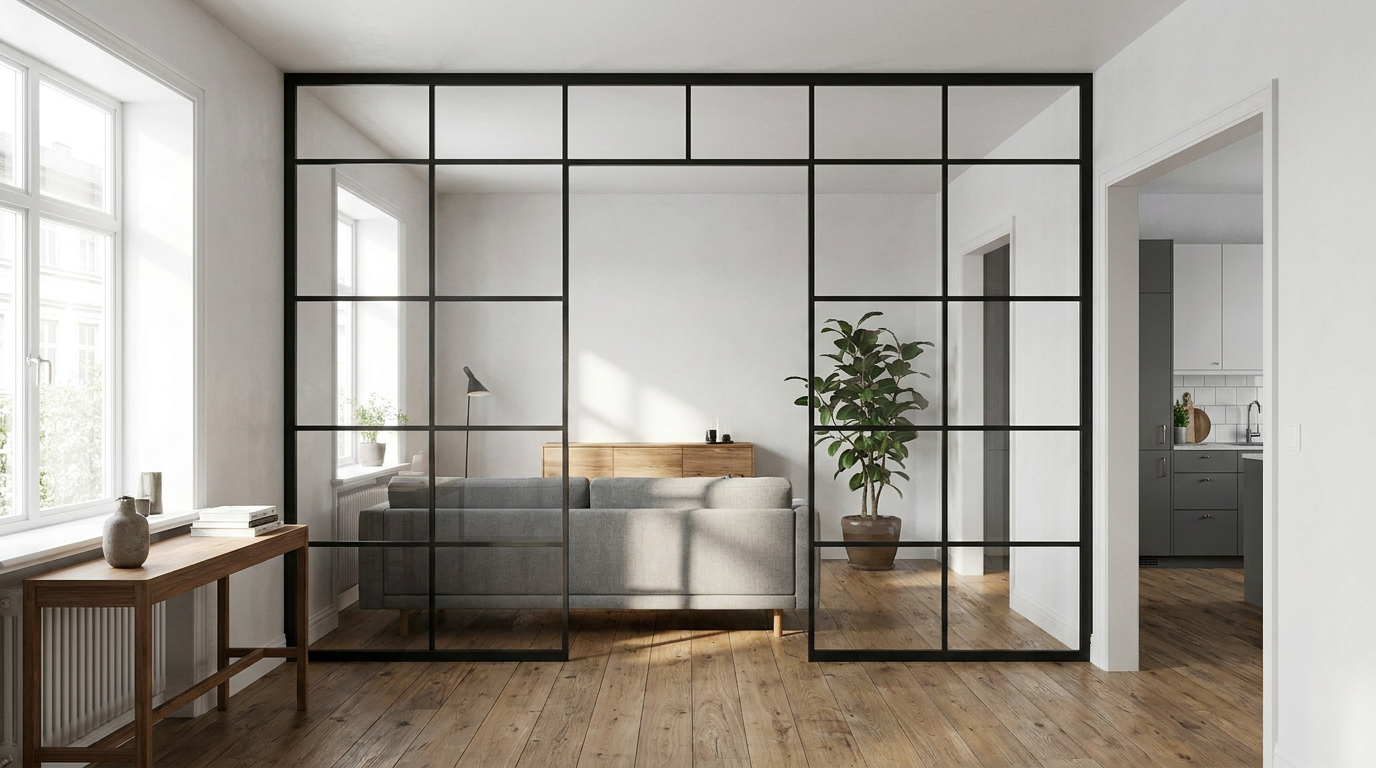
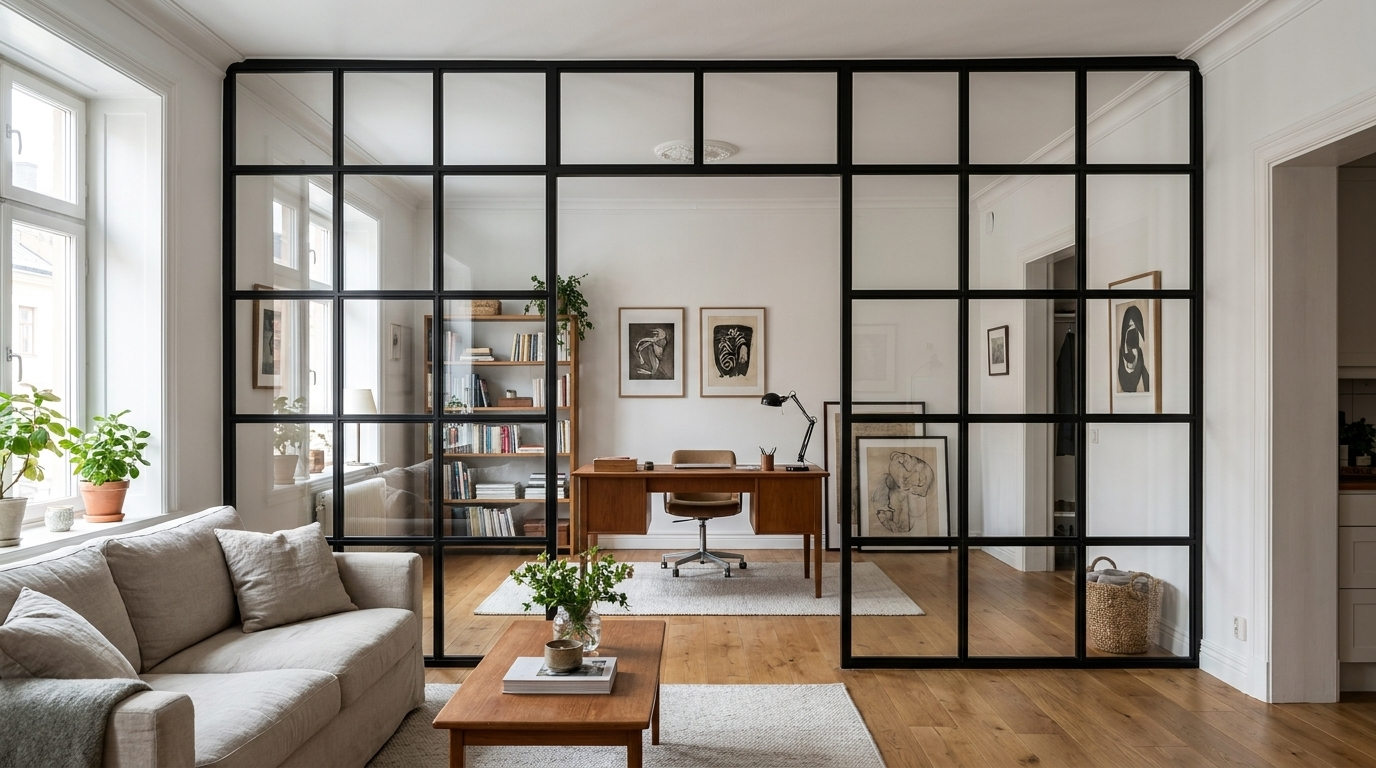
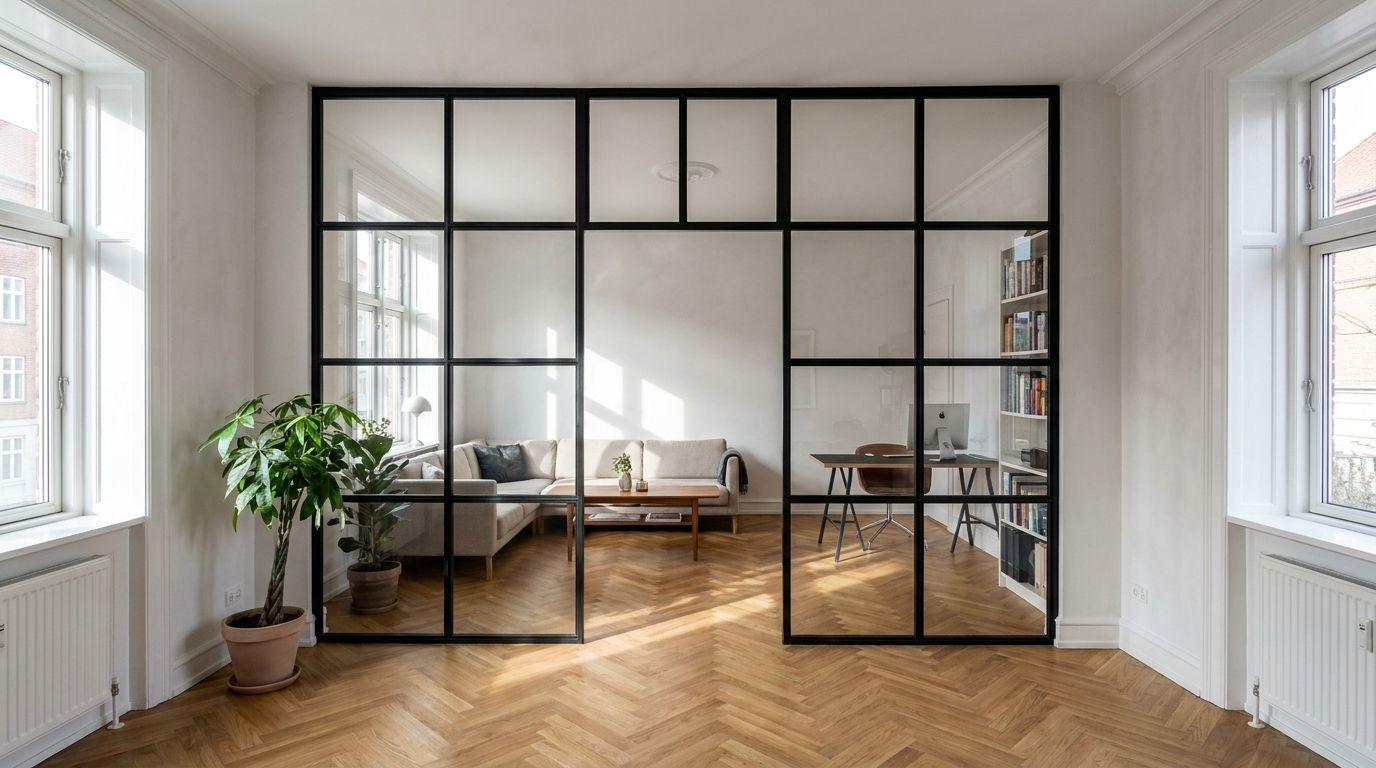
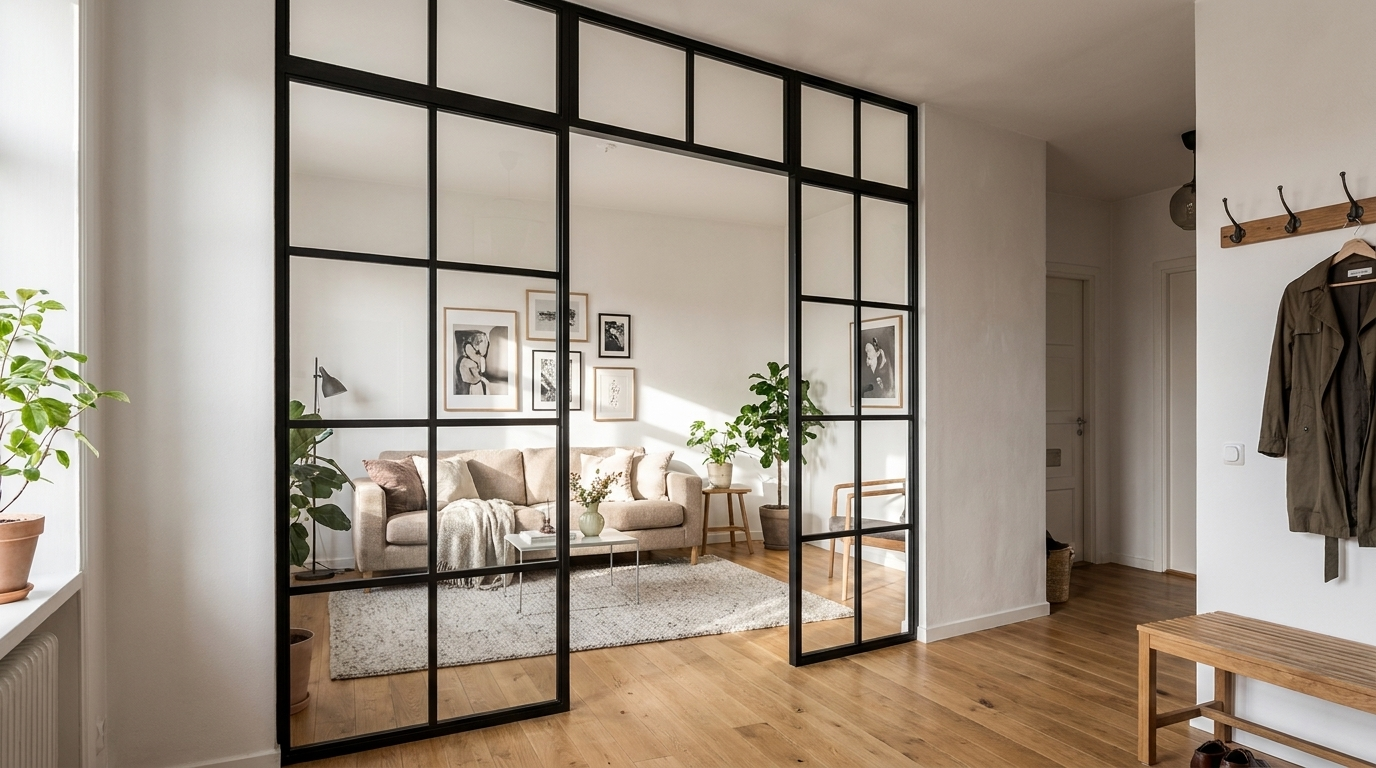
Room divider: A fixed steel and glass partition wall with no door mechanism — no frame stop, no handle, no hinges. Optionally includes a walk-through opening (an unframed gap without a door). Ideal for open-plan spaces that need structure without full separation.
Solid wood and steel products (no glass):
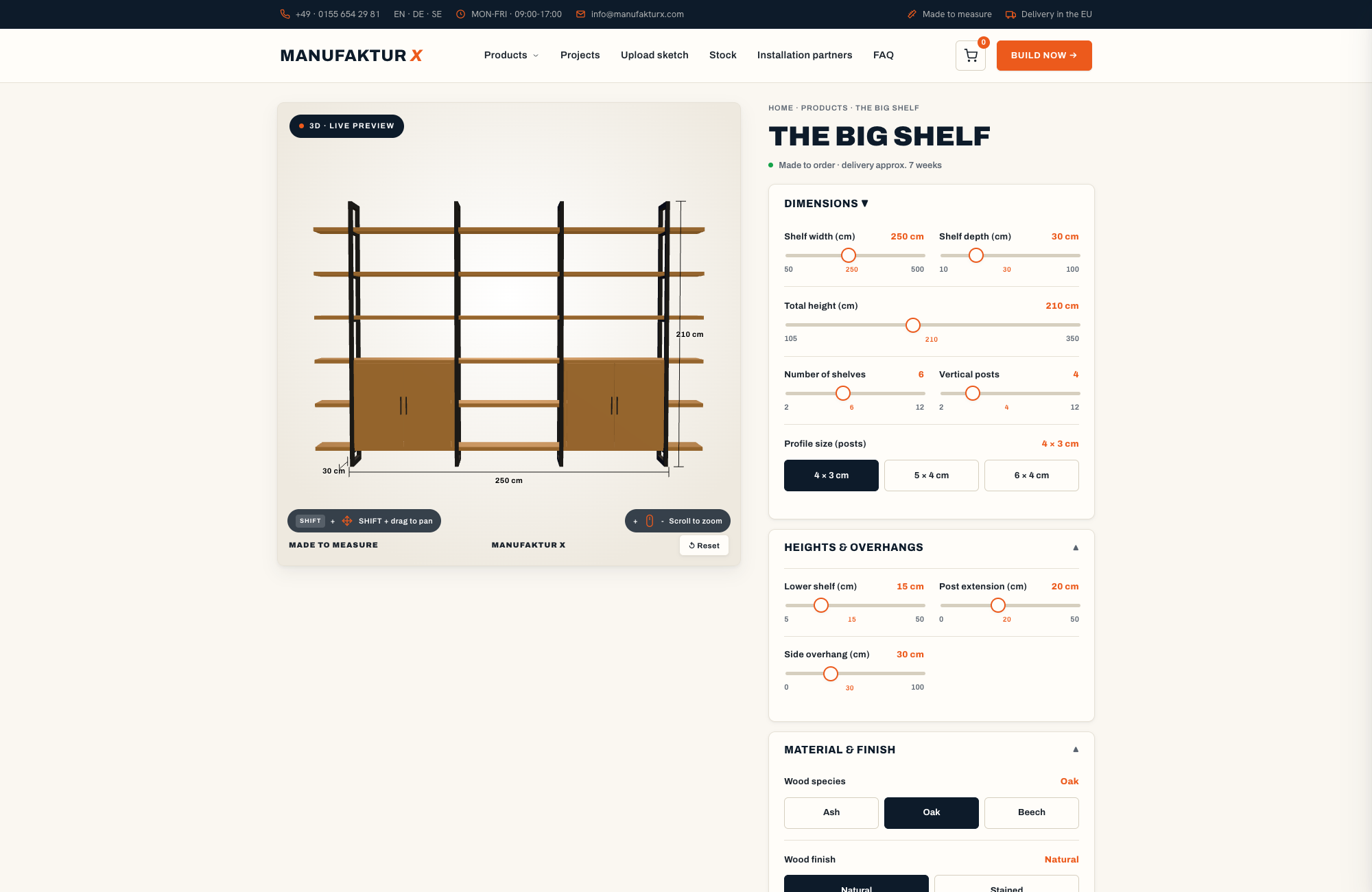
Large shelf: Steel frame with solid wood compartments, optionally including integrated wooden cabinets in the lower section.
Dining table: Solid wood top on a steel base, sized precisely to your seating arrangement.
Coffee table: Custom height, matched to your sofa.
Bench: Solid wood with a steel frame — compact and built to last.
Pipe shelf: Steel tube construction with solid wood shelves, with an industrial aesthetic that works equally well in a loft or a contemporary home.
The loft door starts from EUR 1,157 — the entry price for the most compact configuration. Current pricing across all products is shown in real time in the configurator:
Choosing Your Materials: Solid Wood, Steel, and Glass
Which Wood Species Works Where?
Manufaktur X works exclusively with hardwoods: oak, beech, and ash. The selection is deliberately focused — these three species offer the hardness and longevity that furniture with daily use demands. Softer timbers, however visually appealing, compress and mark under regular contact in ways that cannot be reversed.
Oak: Janka hardness approx. 5.9 kN, Brinell rating 3.8. Open-grained with a warm, characterful appearance. The go-to choice for dining tables and benches that will see years of daily use. Surface scratches can be treated and re-oiled without visible scarring.
Ash: Janka hardness approx. 6.1 kN, Brinell rating approx. 4.0. Slightly harder than oak with a lighter, more linear visual grain. Works particularly well for large shelves where load-bearing performance matters and visual weight should remain low.
Beech: Janka hardness approx. 6.3 kN, Brinell rating 3.2. Pale and even-grained, giving a clean and contemporary look. Better suited to lower-abrasion applications than to heavily used work surfaces.
All three can be compared directly in the 3D configurator — pricing updates in real time with every change. More than 50 stain colours allow you to shift the appearance of any species from near-natural to deeply pigmented.
One important note on solid wood: it moves. Seasonal shifts in humidity — dry winters from central heating, more moisture in summer — cause wood to expand and contract across the grain. For table tops wider than 1,000 mm, allow for a dimensional tolerance of ±3 mm. This is not a production flaw; it is the material behaving as it should. A solid wood table develops a patina over the years that laminate or veneered board products cannot — because those products deteriorate before any patina has time to form.
Steel Frames and Powder Coating
All steel frames and structural elements receive a RAL powder coating applied at a layer thickness of 60–80 µm. Powder coating differs fundamentally from conventional wet paint: the dry powder is electrostatically applied and then cured under heat, producing a finish that bonds to the metal surface rather than sitting on top of it. The result is a surface that is scratch-resistant, colour-consistent across the entire frame, and significantly more durable than painted alternatives. It is also a cleaner process environmentally, with no solvent emissions during application.
After 15–20 years of use, steel frames can be recoated rather than replaced — a meaningful difference when you are thinking in decades rather than product cycles.
Glass Options for Loft Doors and Room Dividers
Glass appears only in loft doors and room dividers. There are exactly five glass design options:
Clear glass
Frosted glass
Smoked glass
Dark smoked glass
Textured glass
Separately, you choose your glass type: ESG (toughened single-pane safety glass) or VSG (laminated safety glass). These are distinct decisions. ESG shatters into small, blunt fragments without sharp edges. VSG consists of two glass layers bonded by a plastic interlayer; if broken, the interlayer holds the fragments together. For fixed room dividers without elevated safety requirements, ESG is appropriate. For loft doors in homes with children, or for larger panel dimensions, VSG is the technically justified choice.
Custom Furniture vs. Standard Retail: An Honest Comparison
Criterion
Standard retail furniture
Custom-made furniture
Dimensional fit
Limited — frequent compromises required
Exact fit to room and requirements
Design freedom
Constrained by manufacturer's range
Every detail freely configurable
Material quality
Often veneered board or mixed wood
Solid wood, steel, safety glass
Expected lifespan
Typically 5–10 years
20 years or more
Residual value
Low — difficult to repair or refinish
High — can be refinished and restored
Suitable spaces
Standard rooms with right angles
Slopes, alcoves, any geometry
Planning Your Custom Furniture: Five Practical Steps
Custom production is unforgiving of measurement errors — once a piece is manufactured to your specified dimensions, those dimensions cannot be changed. The following five steps turn a good idea into a finished piece that fits perfectly.
Step 1: Define Your Space and Your Needs
Before touching a tape measure, be clear about what the piece needs to do. Is this a dining table for six, or eight? A room divider that preserves a sightline, or one that creates genuine visual separation? A shelf that stores books, or one that also needs to carry equipment?
Document the following:
Exact room dimensions — including ceiling height, any sloped sections, and all architectural irregularities
The precise opening width and height for loft doors, measured at multiple points
Your preferred colour palette and material direction
Your budget, including a realistic upper range
A simple mood board — even just a folder of reference images — makes every subsequent decision faster and more consistent.
Step 2: Measure Accurately — and Then Measure Again
Custom furniture is produced to ±1 mm accuracy. Measure the width, height, and depth of your installation point at a minimum of three positions each: top, centre, and bottom for vertical measurements; left, centre, and right for horizontal ones. In older buildings especially, these readings frequently differ by 10–25 mm between positions.
Always enter the smallest measured dimension into the configurator. For loft doors, subtract the installation gap in addition — allow approximately 5 mm clearance per side (left, right, and top). Note the positions of electrical outlets, radiators, and window frames before finalising your plan.
Practical tip: Use a laser distance meter where possible, and photograph the space before you begin configuring. Having a visual record of the exact conditions prevents costly mismatches between the room as remembered and the room as it actually is.
Step 3: Choose Materials and Design
Consider how the piece will relate to what already exists in the room. Wood brings warmth and texture. Steel adds structural clarity and a contemporary edge. Glass introduces light and a sense of spatial continuity without physical openness.
Ask yourself:
Does this material complement the existing surfaces and furniture?
Does the design serve the function I actually need?
Does the style fit the architecture of the space — not just the current decoration?
Will I still find this appealing in ten years?
For loft doors, Manufaktur X offers three handle styles: Elongated, Subtle, and Half-Moon. Bar patterns for glass panels and surface treatments can also be individually specified.
Step 4: Configure Online or Submit a Custom Sketch
Two routes are available after you have your measurements and material preferences in hand:
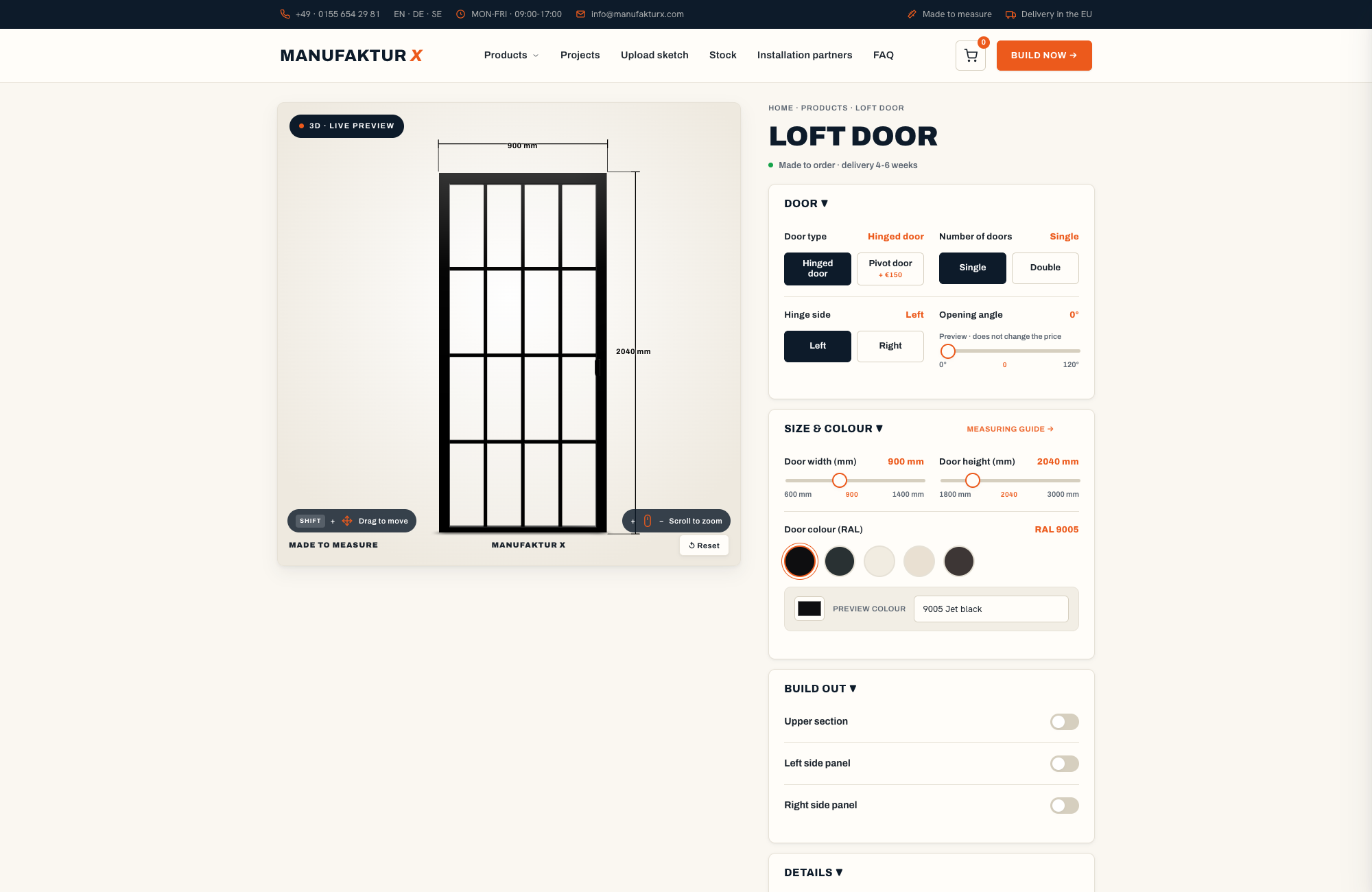
Option A — 3D Configurator: The online configurator at ManufakturX walks you through every decision in sequence. As you adjust dimensions, wood species, stain colour, steel finish, glass type, and handle style, the 3D preview and the price both update in real time. Delivery costs and production timelines are shown transparently in the shopping cart — no surprises at checkout.
Option B — Custom Sketch Upload: If your project has requirements that fall outside the configurator's scope, you can upload a sketch directly at manufakturx.com. The team reviews the feasibility and provides a tailored quotation.
Step 5: Installation and Final Checks
Begin by checking that all components have arrived undamaged. Standard tools for installation include a cordless drill, spirit level, tape measure, hammer, and screwdrivers. After installation, test every function systematically: doors should close flush, drawers should run without resistance, shelves should carry their expected load without flex.
Post-installation checklist:
All components present and undamaged?
Dimensions match the original specification?
All moving parts functioning correctly?
Structure level and stable?
No scratches or surface damage introduced during installation?
How the ManufakturX 3D Configurator Works
The configurator is designed to make custom ordering as straightforward as buying from a catalogue — while giving you far more control than any catalogue ever could. The sequence runs as follows:
Select product type: Choose from loft door, room divider, dining table, coffee table, bench, large shelf, or pipe shelf
Set dimensions: Enter your exact desired width, height, and depth — not the construction opening size, but the finished piece size you want
Choose wood species: Oak, ash, or beech
Select stain colour: From more than 50 options
Choose steel finish: Any RAL colour, applied as powder coating
Configure glass (loft door and room divider only): Select design — clear, frosted, smoked, dark smoked, or textured — and type: ESG or VSG
Choose handle style (loft door only): Elongated, Subtle, or Half-Moon
Review the 3D preview: Adjust until the result matches your vision
Check price and delivery: Both are shown transparently throughout
Every change — however minor — updates the price immediately. What you see in the cart is what you pay.
Real Applications: How Custom Furniture Solves Specific Problems
Loft Doors: Light Without Openness
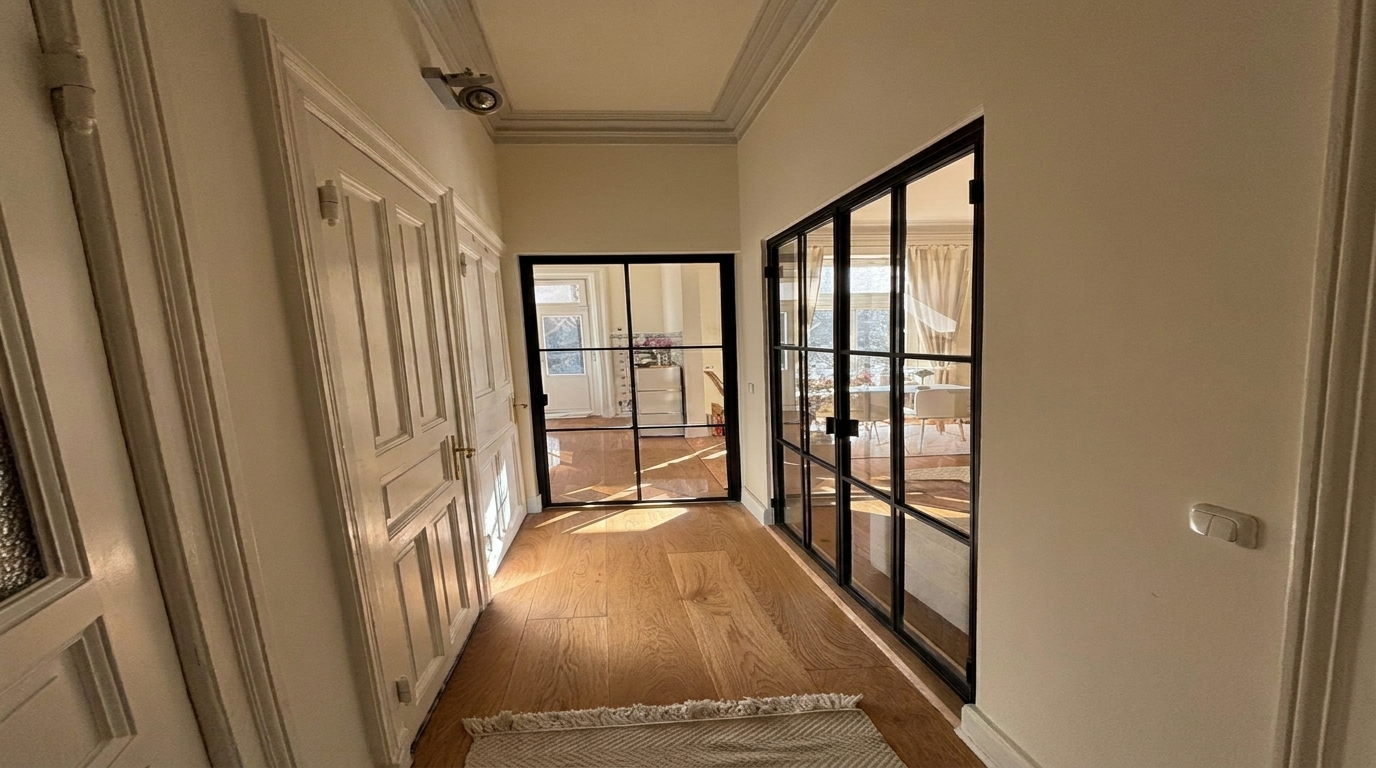
A custom loft door allows two rooms to be separated without cutting off light or creating the visual weight of a solid wall. The glass panels carry light through both sides of the door, keeping spaces connected by atmosphere even when they are physically divided. Because every door is made to the dimensions you specify — not to a manufacturer's standard — it does not matter whether your opening is 980 mm or 1,480 mm wide.
Loft doors work particularly well for:
Separating kitchen and living areas in open-plan apartments
Creating a home office boundary that can be closed or opened as needed
Non-standard opening widths that no off-the-shelf door can fill
Any space where light flow and visual connection matter as much as acoustic separation
Room Dividers: Structure Without Construction
Converted industrial buildings, open-plan apartments, and large renovated spaces often create the same challenge: the space is too open for comfortable everyday living, but adding a conventional wall means dust, drying time, and permanent structural change.
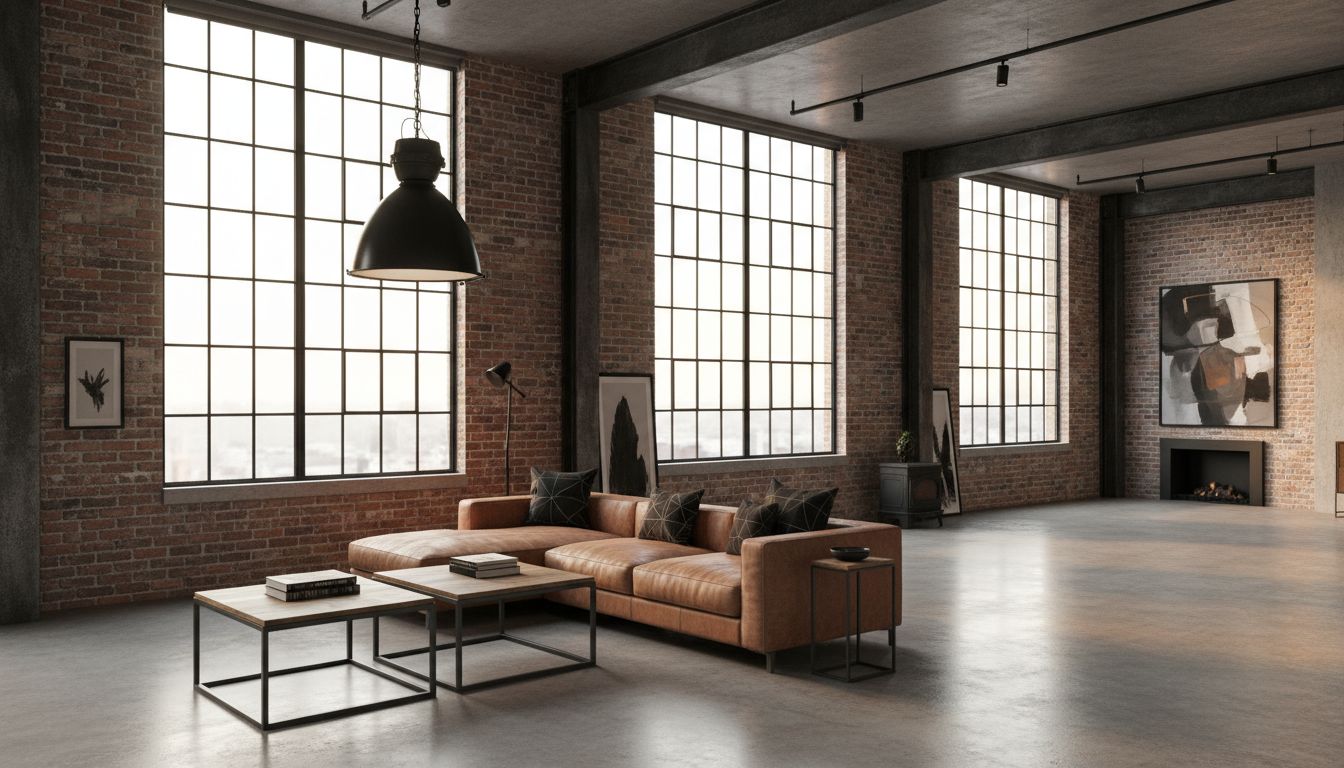
A steel and glass room divider addresses this without any of those drawbacks. It installs as a fixed element — not a movable screen — but does not require work on the building structure itself. Visually, steel and glass partitions function less like neutral dividers and more like deliberate architectural features, in the same register as exposed concrete or visible brickwork. If you want movement through the divider, a walk-through opening — an unframed gap without a door — can be integrated into the design.
Tables, Shelves, and Benches: Solid Wood Meets Steel
The solid wood and steel range from Manufaktur X covers every surface you sit at, eat at, store things on, or rest against:
Large shelf: Steel frame with solid wood compartments, fitted precisely to your wall recess. Lower sections can include integrated wooden cabinets.
Dining table: Solid wood top on a steel base, sized to the exact length, width, and height your seating arrangement requires.
Coffee table: Produced at the height that suits your sofa — not the height a manufacturer decided was standard.
Bench: Solid wood and steel, space-efficient and durable.
Pipe shelf: Steel tube structure with solid wood shelves, combining an industrial character with genuine load-bearing capacity.
Custom furniture costs more upfront than mass-produced alternatives. But the comparison becomes more meaningful when spread over the product's actual lifespan. A solid oak dining table at EUR 2,000 used over 20 years costs EUR 100 per year. A retail product at EUR 800 with a realistic lifespan of 8–10 years costs EUR 80–100 per year — with no residual value and no possibility of refinishing when the surface deteriorates.
Solid wood can be sanded and re-oiled after years of use. Powder-coated steel can be recoated. Veneered board cannot be recovered once the surface is damaged. The entry price for a Manufaktur X loft door starts at EUR 1,157. All other product prices are shown in real time within the configurator.
Production and Delivery Timelines
Production begins from the point of order confirmation. All products are manufactured within 5–6 weeks. Plan this lead time into your renovation or interior project from the start — particularly if your schedule involves other tradespeople or a moving date.
The exact delivery window is displayed in the shopping cart and confirmed at the time of order.
When Does Custom Furniture Make Sense?
Deciding factor
Custom furniture recommended
Standard furniture sufficient
Space geometry
Slopes, alcoves, irregular dimensions
Standard rooms with right angles
Intended duration
Long-term home, permanent installation
Short-term or frequently relocated
Budget horizon
Higher upfront, lower cost per year
Limited budget, immediate need
Design requirements
Specific vision, unique result required
Standard designs are acceptable
Sustainability priority
High — longevity and repairability matter
Lower priority for these factors
Care and Longevity: Protecting Your Investment
Custom-made furniture in solid wood and powder-coated steel is not maintenance-free — but the maintenance it requires is simple, and the payoff is furniture that improves rather than degrades over time.
Oiled surfaces: Re-oil once or twice per year to keep the wood fibres supple and protect against moisture absorption. Minor surface marks can be treated with a localised application of oil without refinishing the entire piece.
Waxed surfaces: Similar care to oiled surfaces, with slightly greater water resistance. Re-wax when the surface begins to look dull.
Powder-coated steel: Wipe with a damp cloth. Avoid abrasive cleaning products, which can break down the coating over time.
Glass: Clean with standard glass cleaner or a damp cloth.
Refinishing after years of use: Solid wood can be sanded back and re-treated, restoring it to a condition close to new. This is a significant advantage over any board-based product, which must be discarded once the surface fails.
Where possible, choose oiled or waxed surfaces over lacquered ones. They age more gracefully, can be repaired in place, and develop a depth of character that factory lacquer never achieves.
Quality and Sustainability: Made in the EU
All Manufaktur X products are manufactured within the European Union and pass through quality control before dispatch. EU production means consistent material standards, traceable supply chains, and shorter transport distances compared to globally sourced alternatives — all of which contribute to a lower overall environmental footprint.
The sustainability case for custom furniture goes beyond production origin:
Longer lifespan means fewer replacement purchases over time
Repairability means less waste when surfaces age
European production means shorter shipping routes
Pieces made specifically for a space tend to stay in that space — reducing the impulse to replace and refresh
A solid wood shelf that gets re-oiled at twenty years and continues in use is a fundamentally different object — economically and ecologically — from a veneered board unit that goes to landfill at ten.
Frequently Asked Questions About Custom Furniture
What exactly is custom-made furniture, and who is it for?
Custom-made furniture is produced individually to your specified dimensions, material choices, and design preferences. It is most relevant for spaces with non-standard geometry — sloped ceilings, alcoves, irregular openings — and for people who want a coherent interior over a long timeframe. Anyone who prioritises solid materials and sustainable production over low upfront cost will find custom furniture a better long-term value than mass-produced alternatives.
Which wood species does Manufaktur X use?
Manufaktur X works exclusively with three hardwoods: oak, ash, and beech. All three are among the hardest and most durable timber species suited to furniture production. Over 50 stain colours are available to adjust the appearance of any species, from near-natural tones to deeply pigmented finishes.
What is the difference between a loft door and a room divider?
A loft door is a fully functioning door: it has a frame stop (left or right hinge configurable), an opening direction, a handle (Elongated, Subtle, or Half-Moon), and hinges. A room divider is a fixed steel and glass partition wall with none of those elements — no frame stop, no handle, no hinges. If you want movement through a room divider, a walk-through opening can be integrated as an unframed gap without a door.
How do I measure correctly for a loft door or room divider?
Measure the width and height of your opening at a minimum of three points — top, centre, and bottom for height; left, centre, and right for width. In older buildings, these readings can differ by 10–25 mm between positions. Always enter the smallest measured dimension into the configurator. For loft doors, subtract the installation gap additionally — approximately 5 mm clearance per side (left, right, and top). The piece will be manufactured exactly to the dimensions you enter.
What glass options are available?
Five glass designs are available: clear glass, frosted glass, smoked glass, dark smoked glass, and textured glass. For the glass type, you choose between ESG (toughened single-pane safety glass) and VSG (laminated safety glass). VSG is recommended for larger panel dimensions and for homes with children.
How long does production take, and what does a loft door cost?
All products are produced within 5–6 weeks from order confirmation. The loft door starts from EUR 1,157 for the most compact configuration. All other prices are displayed in real time in the configurator, with no hidden costs added at checkout.
Can I submit a custom sketch for unusual projects?
Yes. If your project has requirements beyond what the configurator covers, you can upload a sketch via the Manufaktur X website. The team reviews feasibility and provides a tailored quotation based on your specific requirements.
How do I care for solid wood furniture over time?
Oiled surfaces should be re-oiled once or twice a year. Minor surface marks can be treated locally without refinishing the whole piece. Waxed surfaces should be re-waxed when they begin to appear dull. After extended use, solid wood can be sanded back and re-treated entirely — returning it to a near-original condition. This is not possible with veneered board products, which must be replaced once the surface fails.
Geschrieben in der Werkstatt Regensburg. Wir bauen Lofttüren, Raumteiler und Maßmöbel - und schreiben gelegentlich darüber, wenn wir etwas Nützliches zu sagen haben.