
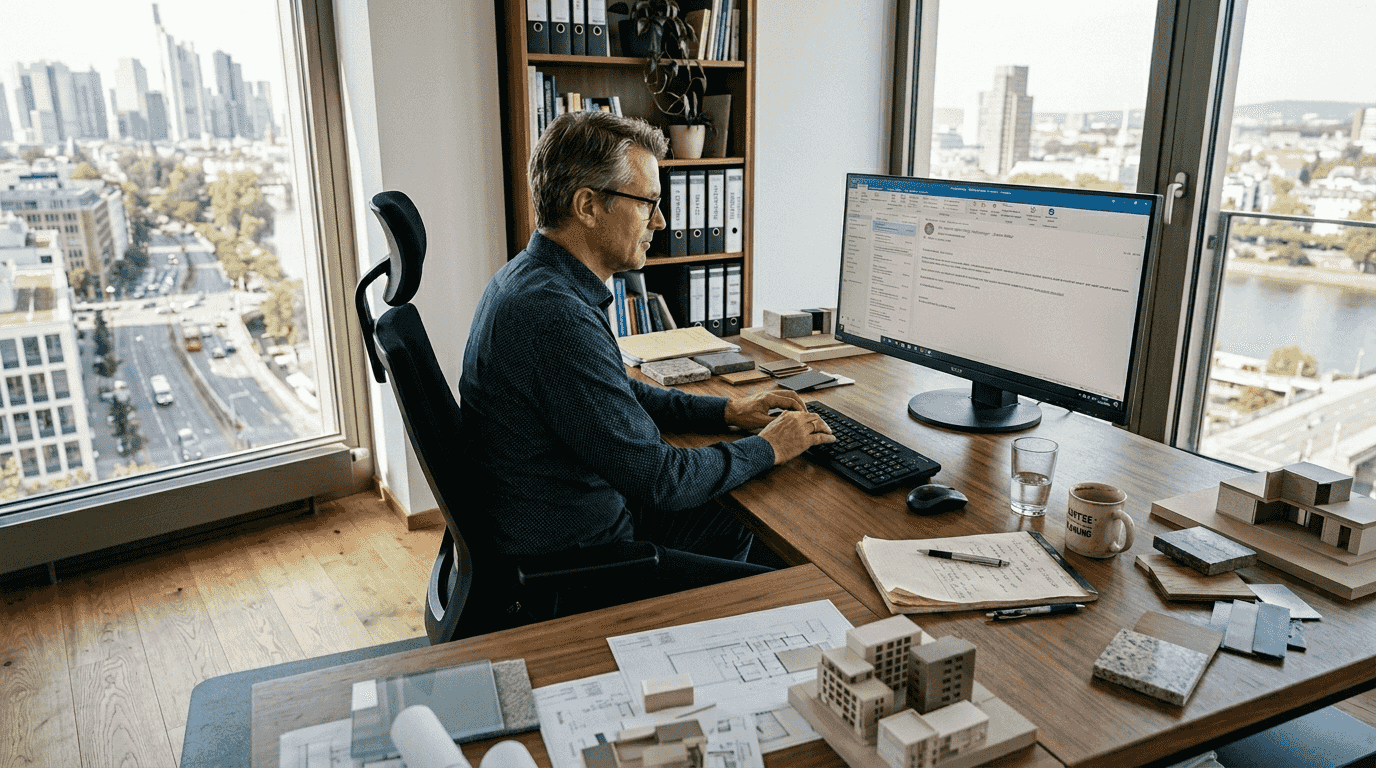
March 22, 2026 · ManufakturX Team
Custom Office Furniture: Planning, Materials & Benefits
Why Custom Office Furniture Transforms Modern Workspaces
Standard office furniture rarely meets the unique demands of contemporary work environments. Today's businesses require tailored solutions that accommodate specific spatial constraints, workflow patterns, and individual employee needs. Custom-made furniture delivers measurable improvements in both space utilization and workplace satisfaction.
Research demonstrates that properly designed custom office furniture can boost productivity while creating healthier work environments. This comprehensive guide explores how strategic planning, premium materials, and ergonomic design principles combine to create offices that enhance both performance and employee wellbeing.
The Science Behind Precise Measurement and Ergonomic Design
Creating effective custom office furniture begins with understanding the fundamental relationship between accurate measurements and ergonomic principles. Professional-grade measurement accuracy forms the foundation of successful custom furniture projects, ensuring every piece fits perfectly within existing architectural constraints.
Essential Measurement Protocols for Office Furniture
Successful custom furniture installation depends on millimeter-precise measurements. Even minor discrepancies can result in costly fitting issues, particularly with built-in storage systems, conference tables, or reception counters. When measuring your office space, document multiple points along each dimension, as building surfaces often contain slight variations.
Key measurement considerations include:
- Ceiling heights at multiple points for tall storage units
- Wall-to-wall distances accounting for baseboards and moldings
- Electrical outlet and HVAC system locations
- Door swing clearances and traffic flow patterns
- Natural light sources and their impact on workspace positioning
Ergonomic Benefits That Drive Business Results
Ergonomically designed custom furniture reduces workplace injuries by 20-30% while simultaneously increasing employee productivity. Unlike standard furniture that forces workers to adapt to predetermined dimensions, custom solutions accommodate individual body measurements and work habits.
Optimal ergonomic specifications for office furniture include work surface heights between 68-76 cm, allowing natural arm positioning during typing and writing tasks. Under-desk clearance should provide minimum 60 cm depth for comfortable leg positioning, while monitor placement requires 50-70 cm viewing distances at eye level.
Material Selection: Balancing Durability with Sustainability
Material quality directly impacts both furniture longevity and environmental responsibility. Premium materials like solid oak, ash, walnut, and cherry provide decades of reliable service while maintaining their aesthetic appeal. These natural materials age gracefully, often improving in appearance over time.
Steel components benefit from powder coating rather than traditional painting methods. Powder coating creates scratch-resistant, evenly colored surfaces that withstand heavy commercial use. This eco-friendly finishing process produces no volatile organic compounds while delivering superior durability compared to liquid paint systems.
"High-quality materials reduce replacement needs by over 50% across 15-year periods, significantly lowering both costs and environmental impact."
Safety glass integration enhances both functionality and visual appeal in modern office environments. Loft doors featuring safety glass create sophisticated room divisions without completely closing off spaces, maintaining open communication while defining distinct work zones.
Sustainable Material Advantages
Investing in premium materials delivers multiple benefits beyond initial cost considerations. Sustainable furniture reduces frequent replacements, conserving production resources and minimizing waste. Quality materials also enable easier repairs and modifications when office layouts require updates.
Consider modular designs that accommodate future changes through adjustable components like height-variable desk frames or expandable shelving systems. These flexible solutions adapt to evolving business needs without requiring complete furniture replacement.
Strategic Space Planning for Maximum Efficiency
Custom furniture transforms underutilized areas into functional workspace, typically improving space efficiency by up to 20% compared to standard furniture arrangements. This enhancement means increased storage capacity, improved movement flow, and more efficient daily operations within the same square footage.
Creating Functional Work Zones
Effective office design divides space into distinct functional areas: focused work zones, collaborative spaces, and relaxation areas. Each zone requires specific furniture solutions that support intended activities while maintaining visual cohesion throughout the office.
For collaborative areas, consider custom dining tables that serve dual purposes as meeting spaces and casual work surfaces. These versatile pieces accommodate both formal presentations and informal team discussions.
Strategic planning steps include:
- Comprehensive space assessment documenting existing conditions
- Employee needs analysis through surveys and workshops
- Functional zone designation balancing privacy with collaboration
- Furniture specification matching each zone's requirements
- Material coordination ensuring aesthetic consistency
- 3D visualization confirming design concepts before production
Implementation Strategies for Custom Office Projects
Successful custom furniture projects require early stakeholder involvement and clear communication protocols. Engage employees throughout the planning process, as they understand daily operational challenges and can provide valuable insights about functional requirements.
Project Timeline and Coordination
Custom office furniture production typically requires 5-6 weeks from final design approval to completion. Complex projects involving multiple pieces or specialized finishes may extend this timeline. Plan additional time for delivery coordination and professional installation to ensure seamless integration.
The manufacturing process at ManufakturX follows strict quality controls, with each piece handcrafted in EU facilities using traditional techniques combined with modern precision tools. This approach ensures consistent quality while supporting European craftsmanship traditions.
Maximizing Return on Investment
While custom furniture requires higher initial investment than standard options, total cost of ownership often favors quality custom pieces over 15-year periods. Premium furniture eliminates frequent replacement cycles while maintaining functionality and appearance throughout extended use.
Modular design concepts provide additional value by enabling future reconfigurations without complete furniture replacement. As businesses grow or restructure, well-designed custom pieces adapt to new requirements through component additions or rearrangements.
Explore Custom Solutions with Advanced Planning Tools
Ready to transform your office environment with custom furniture solutions? Explore our complete range of office furniture options designed specifically for modern workplace needs.
Our advanced 3D configurator enables real-time visualization of custom furniture concepts. Select materials, adjust dimensions, and preview final appearances before committing to production. This transparent planning process eliminates costly surprises while ensuring final results match your exact specifications.
Experience the difference of handcrafted quality made in the EU, combining sustainable materials with precision manufacturing for furniture that serves your business for decades.
Frequently Asked Questions About Custom Office Furniture
What is the typical production timeline for custom office furniture?
Production time is 5-6 weeks from final order confirmation. Projects involving multiple pieces or complex specifications may require additional time. Include 1-2 weeks for delivery and installation coordination in your project timeline.
Which materials work best for commercial office environments?
Solid wood species like oak, walnut, ash, and beech provide excellent durability and natural beauty. Powder-coated steel offers strength and easy maintenance for desk frames and shelving systems. Safety glass works well for room dividers and partition systems. Material selection depends on usage intensity, budget parameters, and design preferences.
How should I maintain custom office furniture?
Solid wood surfaces benefit from periodic conditioning with appropriate oils or waxes every 12-18 months. Clean surfaces using slightly damp cloths while avoiding harsh chemical cleaners. Metal components require only dry dusting for maintenance. Glass surfaces clean easily with standard glass cleaning products. Regular care preserves both appearance and functionality for decades.
About the Author
Alexander Stelzner
Founder & CEO, Manufaktur X
Alexander Stelzner is an expert in custom-made steel-glass constructions and solid wood furniture. With years of experience in design and manufacturing, he leads Manufaktur X – where every piece is individually crafted to order in the EU.