Understanding Steel Frame Glass Partitions: When Transparency Meets Structure
Light-Preserving Space Division
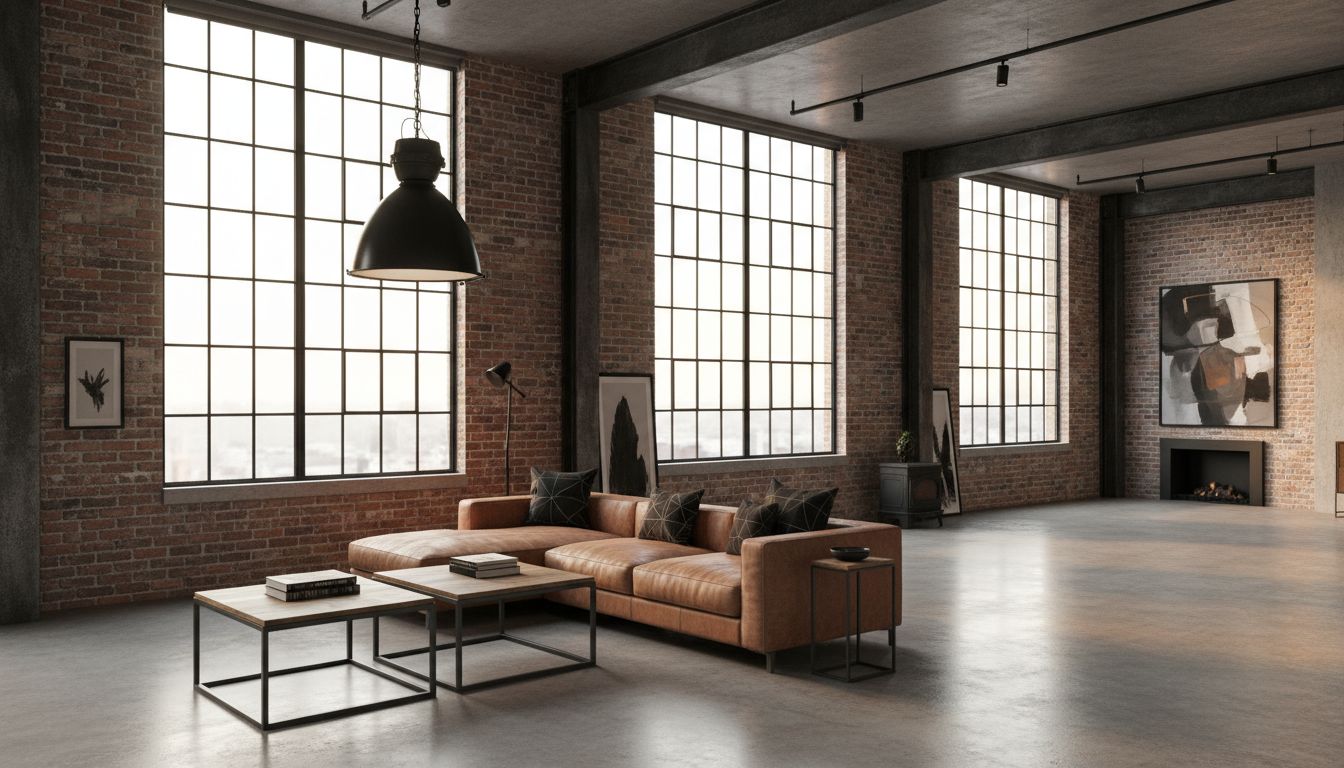
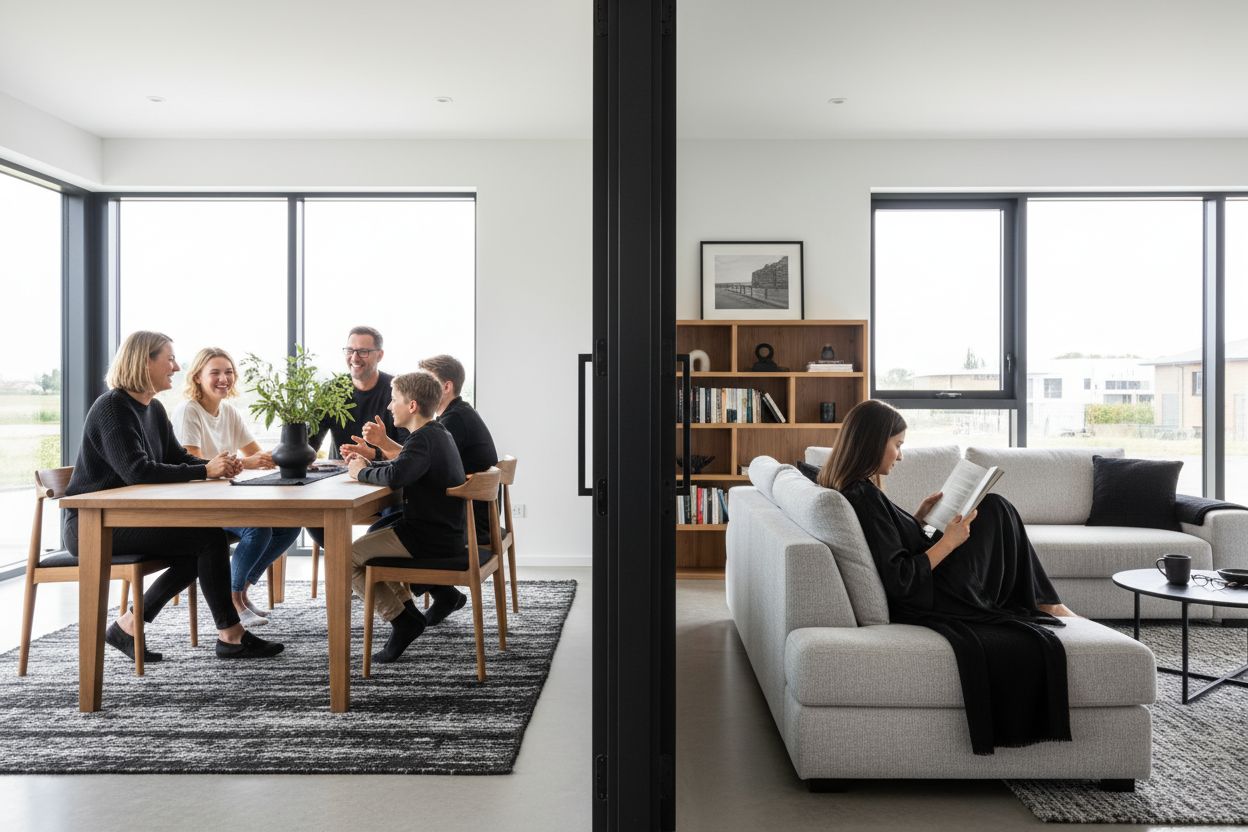
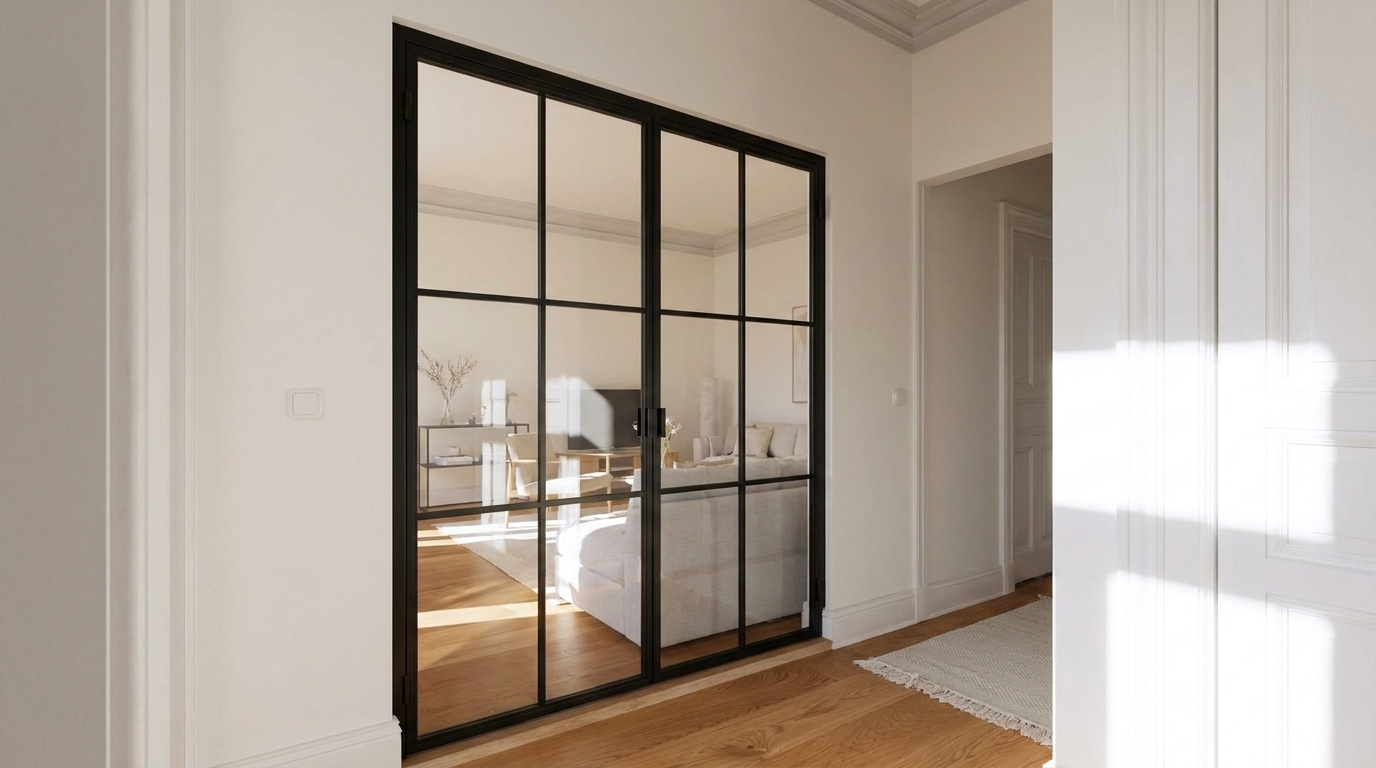
Traditional solid walls create absolute separation but sacrifice natural light flow and visual continuity. Steel-framed glass partitions offer an elegant alternative: functional room division without compromising daylight distribution or spatial flow. The visible steel framework isn't merely structural necessity—it's an intentional design element that references industrial heritage and loft aesthetics. Light from south-facing windows continues reaching adjacent areas, while sight lines remain controlled based on your glass selection.
"Contemporary steel-glass partitions have evolved from industrial necessity to sophisticated interior architecture—yet only custom fabrication achieves the proportional refinement that discerning spaces demand."
European Architecture Review, Spring 2024
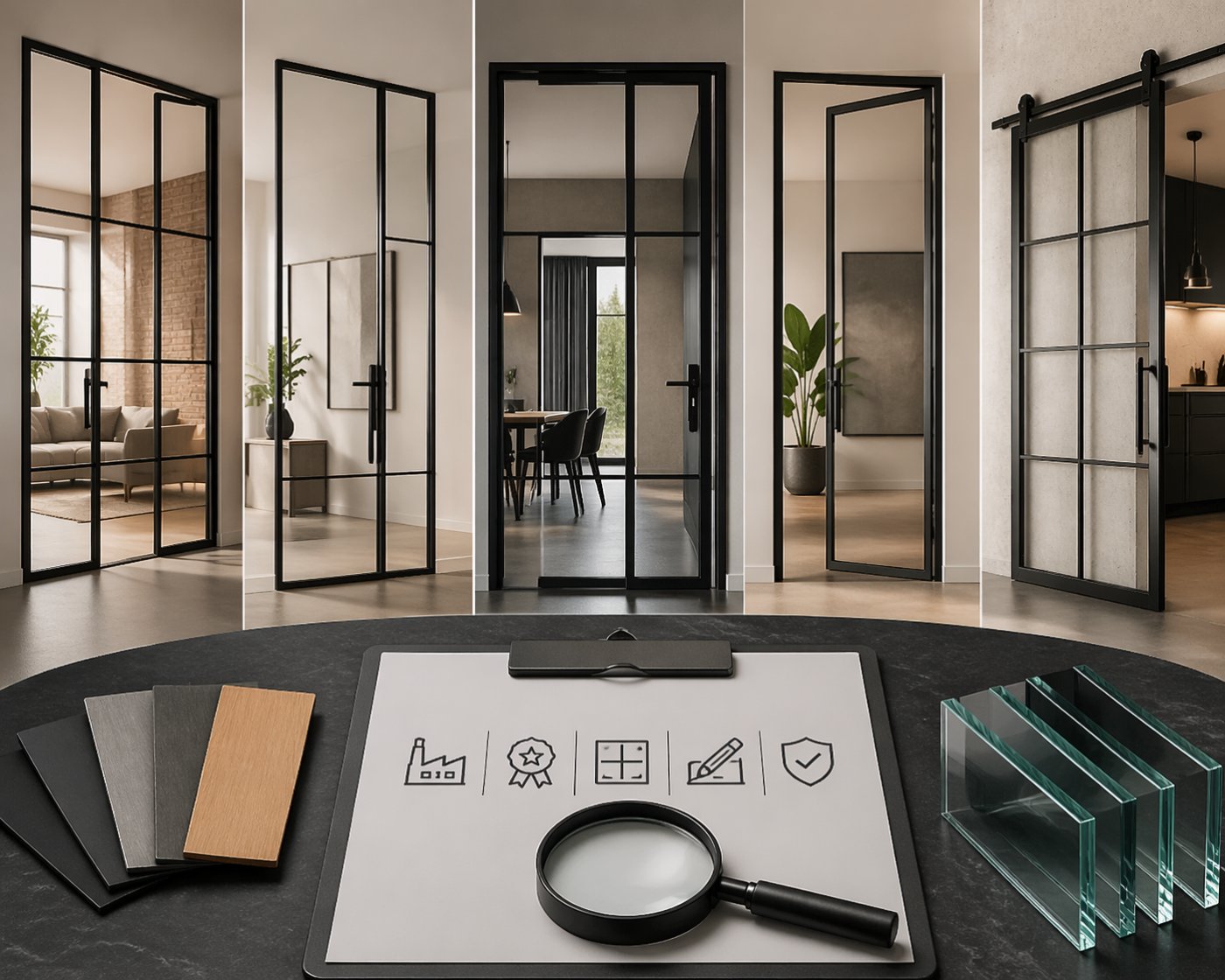
Configuration Options: Fixed, Hinged, or Combined Systems
Space division doesn't always require passage. Pure fixed elements—completely glazed without moving parts—excel where separation is desired but regular transit isn't needed: perhaps between living areas and home offices with independent access. A loft door as single swing panel suits most openings up to 900mm width with daily use. Wider spans benefit from combining fixed side panels with single swing doors: the side panel closes remaining width while keeping the operable section manageable. All configurations are directly customizable through our interactive tool.
Popular Applications Across Europe
Four prevalent installation scenarios at ManufakturX:
- Home office separation from living spaces: Side panel plus swing door, frosted glass for privacy with continued light transmission—frames often in RAL 7016 anthracite grey. Example: Contemporary apartment renovation, side panel plus door combination, total width 1,400mm.
- Kitchen-living area definition: Two-panel systems or side panel combinations, clear glass for maximum openness, RAL 9005 deep black as preferred finish. Example: Urban loft conversion, 6-field grid pattern maintaining southern light access to northern kitchen areas.
- Bedroom zones in open-plan spaces: Floor-to-ceiling partitions with transoms, heights reaching 3,000mm. Example: Industrial building conversion, total height 3,000mm with integrated top light.
- Dressing room definition: Milk glass for complete visual privacy with decorative appeal, frames in RAL 9010 pure white. Example: Penthouse renovation with deliberately light framework integration.
Why Standard Dimensions Fall Short in European Housing
European urban housing typically features ceiling heights between 2,700–3,200mm. Mass-market products rarely exceed 2,100mm—creating gaps up to 1,100mm that require unsightly infill or remain unfinished. This proves aesthetically unsatisfactory. Additionally, over 60% of European construction permits involve existing building modifications. Target markets for custom partitions grow structurally, while their openings rarely conform to standard sizing. Consider a converted warehouse apartment: irregular ceiling angles demanded non-rectangular top profiles. No standard product accommodated this geometry—only individual fabrication solved the challenge.
Design Elements: Glass Types, Frame Colours, and Grid Patterns
Glass Selection for Visual Control
Clear glass permits unobstructed light and sight transmission, ideal where openness matters and privacy isn't required. Frosted glass allows diffused light passage while interrupting direct sight—movement and brightness changes remain visible without revealing details. Tinted glass adds subtle filtering with decorative character. Our complete glass range appears in the configurator with detailed guidance below.
ESG versus VSG: Equal Pricing, Aesthetic Choice
ESG (tempered safety glass) undergoes thermal treatment and fractures into small, blunt fragments when broken. VSG (laminated safety glass) comprises two glass layers with intermediate plastic film—breaks remain held by the film. For decorative residential partitions, functional differences prove negligible in daily use.
"Choosing between tempered and laminated glass for decorative partitions becomes aesthetic rather than technical—VSG slightly softens reflections while ESG appears marginally clearer. Both meet residential safety standards."
Glass Technology International, Issue 3/2023
At ManufakturX, ESG and VSG cost identically—no premium for laminated glass. This decision becomes purely aesthetic, not budgetary. Industry articles suggesting VSG commands higher pricing create false expectations that don't apply to our pricing structure.
RAL Frame Colours: Visual Impact
Frame colour influences overall character more than any other parameter. RAL 9005 (jet black) dominates customer preferences—emphasizing steel profiles, creating sharp contrast, and complementing virtually any interior style. RAL 9010 (pure white) and RAL 9016 (traffic white) suit light, understated concepts where frames should recede—like the penthouse renovation choosing RAL 9010 for brightness preservation. RAL 7016 (anthracite grey) offers middle ground, integrating smoothly with modern, neutral interiors. All RAL colours incur no surcharge at Manufaktur X.
Colour selection note: RAL tones appear differently on monitors versus reality. RAL 9005 and RAL 9004 seem nearly identical on most screens but differ markedly under natural light, particularly in daylight reflection characteristics.
Grid Configuration: Proportion Verification Essential
Grid layout—number, spacing, and arrangement of mullions—defines partition character more than glass choice. A 4-field grid appears balanced in 2,200mm height openings; identical division in 3,000mm openings creates squat, oversized fields. General guideline: field ratios between 1.5:1 and 2.5:1 (height to width) work harmoniously in most situations. Our configurator displays chosen grids real-time with entered dimensions. Physical verification remains recommended: tape paper strips representing steel profile widths to walls and assess from typical 2–3m viewing distances.
Opening Systems: Doors, Side Panels, and Transoms
Available Configurations
Manufaktur X offers these primary variants for combination:
- Fixed room dividers: No moving parts, completely glazed. Suitable for separation without regular passage needs.
- Single swing doors: Standard solution for openings up to 900mm width with daily access requirements.
- Double swing doors: For wide openings without side panels; both leaves open same or opposite directions.
- Side panel plus door combinations: Most popular configuration for 1,000–2,000mm width openings.
- Transoms: Top extensions for room heights exceeding 2,400mm.
Side Panels for Wide Openings
Single door panels over 1,200mm width become proportionally awkward—appearing oversized and requiring greater opening force than narrower panels. Fixed side panels beside single swing doors resolve this: total width gets divided, door panels remain manageable, side panels provide glazed closure. A 1,600mm opening typically combines 700mm side panel with 900mm door—precisely this division served the home office separation project with RAL 7016 frame and frosted glass. Exact proportions remain freely selectable in our configurator; side panels and doors may specify identical or different glass types.
Transoms for Generous Ceiling Heights
Partitions ending at 2,100mm in 3-meter spaces leave nearly 900mm of blank wall—appearing proportionally incomplete and disrupting loft aesthetics. Transoms close this area to ceiling level, remaining fixed-glazed while preserving light transmission. Room heights from 2,400mm should automatically consider transom integration.
Custom Manufacturing for European Architecture
Measuring Historic Building Openings
Opening dimensions require measurement at minimum three points: top, center, and bottom for width; left, center, and right for height. Historic buildings rarely feature perfectly plumb walls. Settlement movement, multiple plaster layers, and uneven floors create measurement variations of 10–25mm between opposite edges. Partitions manufacture to smallest dimension; remaining gaps close via trim profiles and wall connections. Critical to account for installation clearances as demonstrated in our measurement guide.
Non-Rectangular Geometry and Special Situations
Roof slopes, angled ceilings, and irregular opening shapes cannot accommodate standard rectangular products—square frames simply won't fit trapezoidal openings. The warehouse conversion project required partitions with non-rectangular top profiles matching irregular roof angles; only individual fabrication achieved this geometry.
Production Timeline Integration
Manufacturing time for partitions and doors at Manufaktur X typically requires 5-6 weeks from order confirmation. Orders should only proceed after structural work completion and final dimension verification. Partitions delivered after decorative finishing install without requiring touch-ups. Ordering before structural completion risks dimension changes from plastering or flooring work. These 6 weeks constitute fixed timeline blocks requiring integration into project schedules, not buffer periods.
Investment and Pricing Structure
Starting Points and Example Configurations
Fixed glass partitions without doors begin at €945. Loft doors as single swing panels in RAL 9005, clear ESG glass, measuring approximately 900 × 2,100mm range €1,500–€2,000 depending on design complexity. Transom additions calculate directly in our configurator—costs depend on width and height, displaying immediately without quotation processes.
Price Factors and Non-Factors
Three parameters determine pricing: custom dimensions, selected glass type, magnetic locks (recommended), and grid design. Specifically excluded from pricing: ESG versus VSG choice—both glass constructions cost identically. Similarly, no surcharges apply for special colours; all RAL options remain surcharge-free in the configurator. Fixed pricing displays immediately and completely—no subsequent quotation requirements.
Market Position Context
Non-custom partitions from building supply retailers start around €200–500. However, these won't fit non-standard openings, lack steel frame construction, and aren't EU-manufactured. System doors from manufacturers like Hörmann begin around €2,500 for standard dimensions with limited configuration depth. Manufaktur X positions in the premium segment with custom dimensions and EU production quality.
Common Planning Mistakes to Avoid
Single-Point Measurement Error
Measuring openings at only one location—typically eye level—risks 15–25mm fitting errors. Such variations between top and bottom edges prove routine in historic construction, not exceptional. Result: finished partitions either bind at one side or show visible gaps requiring additional trim profiles. Measure width and height at three points each, using smallest dimension for ordering.
Grid Selection Without Proportion Testing
4-field grids appearing attractive on screen can look cramped and restless in rooms with 3,000mm heights. Proportions verify most reliably through physical testing: tape paper strips matching steel profile widths to walls and evaluate from normal 2–3m viewing distances. Our configurator shows grids to scale but cannot replace actual room assessment.
Frame Colour Assessment via Screen Only
RAL 9005 (jet black) and RAL 9004 (signal black) appear nearly identical on most monitors yet differ significantly under natural light, particularly in daylight reflection characteristics. Same applies to grey tones RAL 7015 and RAL 7016. Investments starting at €945 warrant physical colour samples evaluated under actual lighting conditions—both daylight and typical artificial sources.
Opening Direction Conflicts with Furniture Layout
Swing doors opening toward kitchen units or sofas create permanent daily inconvenience. Approximately 900mm swing clearance must remain permanently available. This error cannot correct post-installation without hardware replacement. Where swing space proves unavailable, sliding doors eliminate swing requirements but need lateral wall space at least equal to door panel width.